Bowing Foundation Walls: Causes, Warning Signs, and How They Get Fixed
A foundation wall that’s bowing or leaning inward is one of the more serious structural symptoms a homeowner can find. It’s also one of the more misunderstood ones. People either panic and assume the house is about to collapse, or they dismiss it as something that’s always been there and probably isn’t a big deal. The reality is usually somewhere in between, but it’s never something to leave uninspected. Bowing walls indicate that the soil outside is winning a pressure contest against your foundation, and that contest doesn’t reach a natural stopping point on its own.
This post covers what causes foundation walls to bow, what the warning signs look like, and what the actual repair options are, specifically the methods Hawk uses for homes in the Chesapeake and Hampton Roads area.
What Causes Bowing Foundation Walls
The short answer is hydrostatic pressure and soil movement, two forces that Hampton Roads homes deal with more acutely than homes in most other parts of Virginia.
Foundation walls are built to handle vertical load, the weight of the structure above pressing straight down. They’re less well-suited to lateral load, horizontal pressure pushing against them from the outside. That lateral pressure comes from the soil surrounding the foundation, and it becomes a problem when something increases the pressure beyond what the wall was designed to resist.
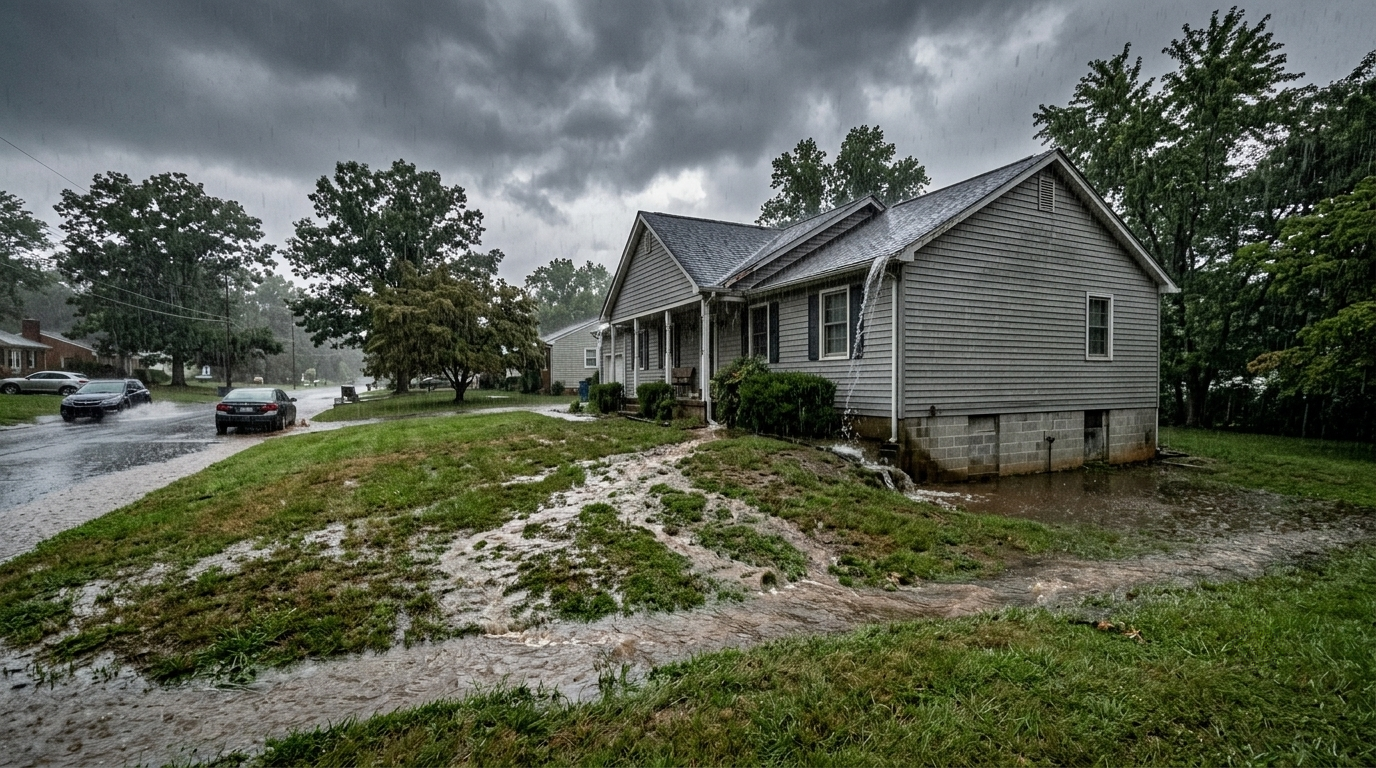
Saturated soil after heavy rain. Water is heavy, roughly 62 pounds per cubic foot, and when the soil around a foundation becomes saturated after a significant rain event, that weight translates into lateral pressure against the wall. In Hampton Roads, where summer storms can drop two to three inches of rain in a short window and the water table in many neighborhoods is already close to the surface, saturation events happen regularly. Every time the soil around the foundation becomes fully saturated, it’s pushing hard against the wall. Over enough cycles, that pressure causes movement. The USGS documents the direct connection between surface rainfall and rising groundwater levels, which is why foundation wall pressure in this region is a seasonal problem, not just a one-storm event.
Expansive clay soil. The clay-heavy soils common in Chesapeake and the surrounding area expand when they absorb moisture and contract when they dry out. That expansion exerts pressure against whatever is in its way, and foundation walls are directly in its way. The pressure during a wet cycle is significant, and the repeated expansion and contraction over years of seasonal change causes cumulative stress on the wall that eventually manifests as cracking or inward movement.
Freeze-thaw cycles. Water in soil expands by roughly nine percent when it freezes. In the mid-Atlantic winter, ground temperatures in Hampton Roads fluctuate above and below freezing enough times in a season to produce meaningful freeze-thaw pressure cycles against foundation walls. This is less severe here than in areas with harder winters, but it’s a contributing factor in older foundations that are already dealing with clay pressure and saturation.
Inadequate drainage and grading. A yard that slopes toward the house rather than away from it directs storm runoff straight to the foundation. Clogged gutters that overflow at the foundation line do the same thing. Over time, the soil immediately adjacent to the foundation stays wetter than it should, maintaining higher baseline lateral pressure against the wall than would exist with proper drainage management.
Age and original construction. Older concrete block foundations, which are common in the older housing stock throughout Norfolk, Portsmouth, and parts of Chesapeake, are more vulnerable to bowing than poured concrete walls. Block walls have mortar joints that can deteriorate over decades, reducing the wall’s overall lateral strength. A block foundation that handled the original soil pressure fine when it was new may begin to show movement as mortar joints weaken and soil conditions put sustained pressure on an older, less cohesive wall.
Warning Signs of a Bowing Foundation Wall
Some of these are visible from inside the basement or crawl space. Others show up elsewhere in the house as the wall movement affects the structure above it.
Horizontal cracks running across the wall. This is the most direct indicator of lateral pressure. A horizontal crack, particularly one that runs across the middle third of a wall, is the wall telling you it’s being bent. The middle of the wall is where bending stress is highest when lateral pressure is applied from outside. Horizontal cracks are more serious than vertical or diagonal cracks in foundation walls because they indicate active bending force rather than settlement or shrinkage.
Stair-step cracks in block walls. In concrete block or brick foundations, lateral pressure often produces cracks that follow the mortar joints in a stair-step pattern. This is the block or brick equivalent of a horizontal crack and carries the same concern: the wall is moving in response to outside pressure.
Visible inward lean or bow. Sometimes you can see it directly. Standing at one end of the wall and looking along its length, a wall that’s bowing inward shows a curve rather than a straight line. Even a slight inward lean, one that seems minor visually, represents meaningful structural movement that has already occurred and will continue without intervention.
Gaps at the top of the wall where it meets the floor above. When a foundation wall pushes inward at its base or middle, it can separate slightly from the floor framing above it. This gap at the top of the wall is a sign of movement and can allow moisture intrusion in addition to indicating structural change.
Doors and windows that have changed in function. Wall movement in the foundation can transmit to the framing above, causing door frames to rack slightly and windows to bind. If first-floor doors or windows that used to operate correctly have started sticking or not latching without an obvious reason, it’s worth looking at the foundation walls as a potential cause.
The key thing to understand about all of these signs is that they represent movement that has already happened. The question is whether that movement is ongoing and what’s driving it, which is what an inspection is meant to determine.
How Bowing Foundation Walls Get Repaired
The right repair method depends on how much the wall has moved, what’s causing the pressure, and the construction type of the wall. In Hampton Roads, Hawk uses a few primary approaches depending on what the inspection finds.
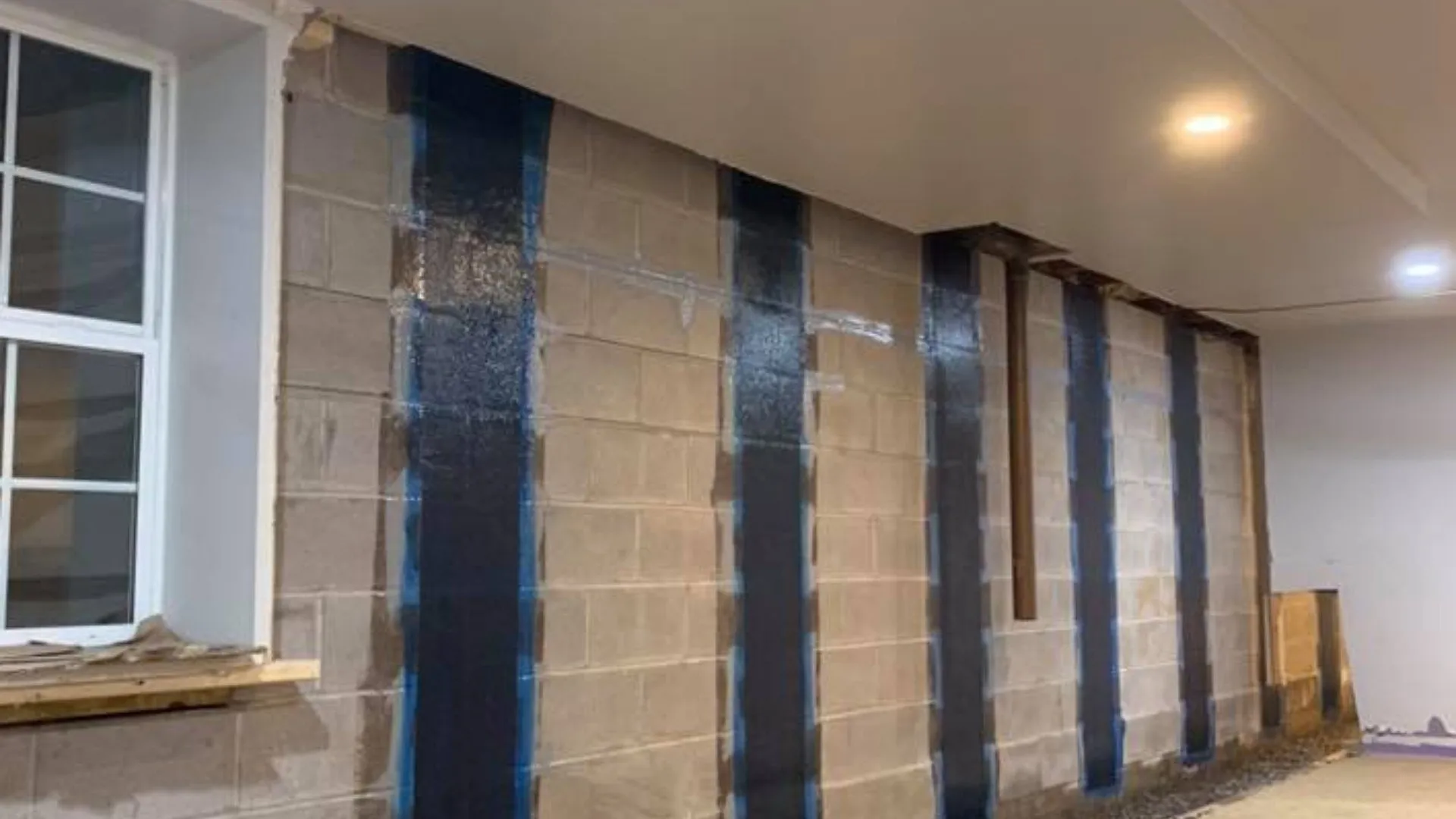
Carbon fiber straps. For walls that have bowed inward by roughly two inches or less, carbon fiber straps are typically the recommended repair. Carbon fiber is extremely strong in tension, and the straps work by anchoring the wall against further inward movement. They’re epoxy-bonded to the wall surface and attached at the top and bottom to the floor framing and footing, effectively tying the wall into the structure so lateral pressure can’t push it further in. The installation is minimally invasive, doesn’t require excavation outside the home, and leaves a relatively low-profile repair on the interior wall surface. Carbon fiber straps don’t push the wall back to its original position but they stop the movement from progressing, which is the primary goal for walls in the two-inch or less range. Hawk’s bowed wall repair services cover this method for qualifying walls throughout the service area.
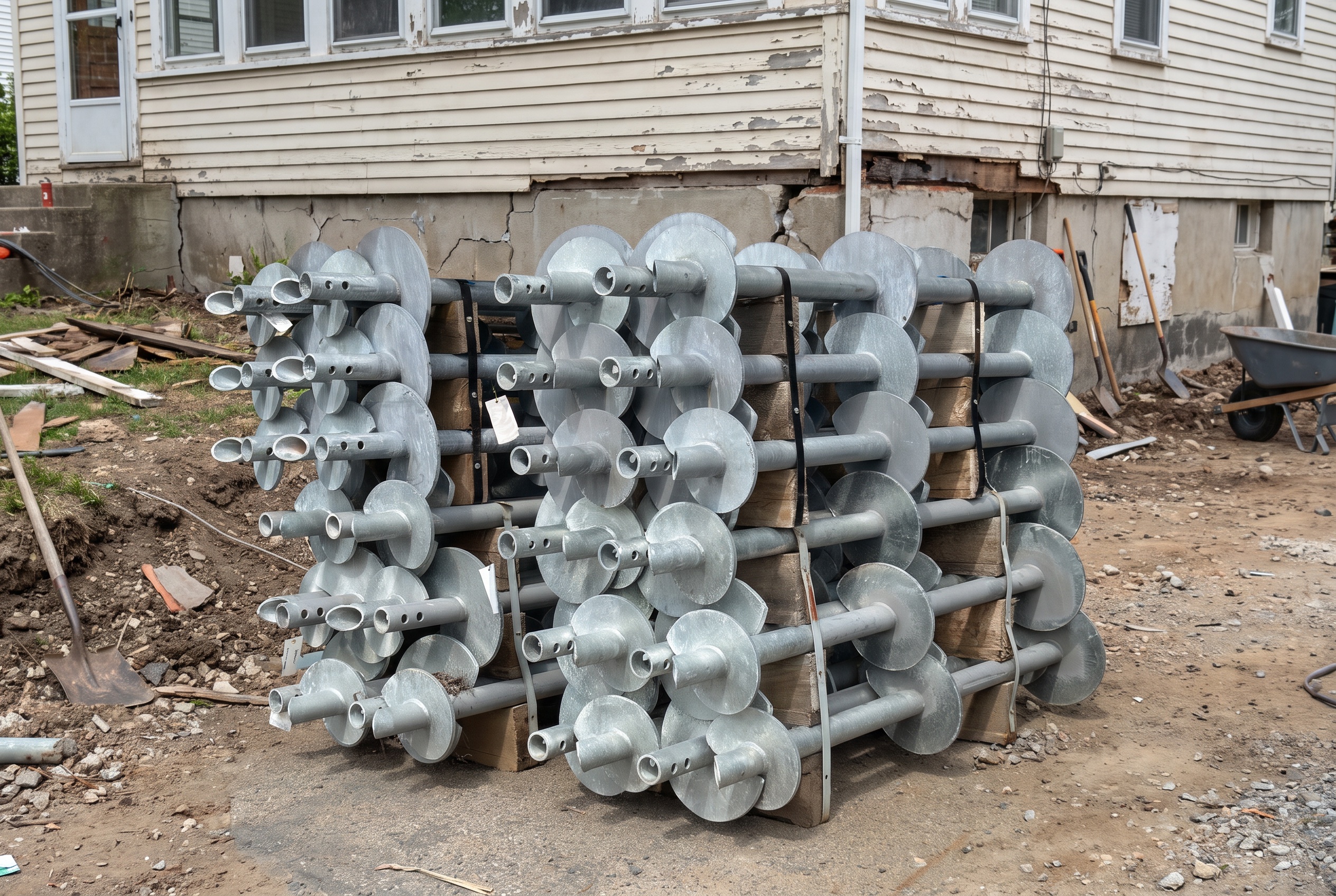
Wall anchors. For walls with more significant movement or where the soil conditions make a purely internal repair insufficient, wall anchors are another option. This method involves installing steel plates on the interior wall surface, connected by steel rods driven through the wall and into the soil outside, where they anchor to a buried steel plate. Tightening the anchor system over time can actually work to straighten the wall gradually, which is an advantage over carbon fiber straps for walls that have moved beyond the two-inch threshold. The installation does require some excavation outside to place the outer anchor plate, but it’s significantly less disruptive than a full wall replacement.
Addressing drainage alongside the repair. Neither carbon fiber straps nor wall anchors change the soil pressure being applied to the exterior of the wall. A repair that stabilizes the wall without improving drainage is stabilizing it against a force that’s going to keep pushing. This is why most bowing wall repairs in this region include a recommendation for drainage improvements: regrading, downspout extensions, and in cases with active water intrusion, a French drain or sump pump to intercept water before it saturates the soil against the foundation. Managing the water source reduces the lateral pressure that caused the bowing in the first place and extends the life of the repair. Foundation repair and stabilization services at Hawk are typically assessed together with drainage conditions for exactly this reason.
Wall replacement. In severe cases where a wall has moved significantly, has extensive cracking throughout its height, or is a block wall with badly deteriorated mortar that can’t be effectively stabilized in place, full or partial wall replacement may be the most practical solution. This is a more significant undertaking that involves excavation and shoring, but for walls beyond the range where straps or anchors provide adequate stabilization it may be the only option that produces a truly reliable result. A professional structural assessment is what determines whether a wall is a candidate for stabilization or replacement.
When to Stop Watching and Start Acting
Bowing wall repairs have better outcomes and lower costs the earlier they happen. A wall that has moved less than two inches is a straightforward carbon fiber strap repair. A wall that has moved four inches and has significant cracking throughout is a much more involved scope. The soil pressure that caused the movement doesn’t stop while a homeowner is deciding whether to get it looked at, which means the wall is likely continuing to move the whole time.
If you’ve noticed horizontal cracks, stair-step cracking, or any visible inward lean in your basement or crawl space walls, getting a professional inspection is the right next step. At Hawk, inspections are free and there’s no obligation. We’ll assess the wall condition, measure any movement, evaluate the drainage situation around the foundation, and give you a straight recommendation on what repair approach makes sense for what we find. Schedule your free inspection here.
Frequently Asked Questions
Is a bowing foundation wall dangerous?
It can be, depending on severity and how quickly it’s progressing. A wall with minor bowing that has been stable for years is less immediately concerning than one with active movement and significant cracking. In severe cases, an inward-leaning foundation wall can compromise the structural integrity of the floor system above it and in extreme cases risk partial collapse of the wall. Most bowing wall situations don’t reach that point if addressed in a reasonable timeframe, but the underlying pressure doesn’t stop on its own. Getting it assessed and monitored is the appropriate response to any visible wall movement.
Can I buy a house with a bowing foundation wall?
It depends on the severity and whether the repair is included in the transaction. Minor bowing with a documented repair plan or completed repair from a licensed contractor is a manageable situation. Significant bowing with no repair history and active movement is a real concern that affects both the safety of the home and its financing eligibility. Many lenders won’t approve mortgages on properties with unresolved structural issues. If you’re buying a home with a bowing wall, having an independent structural assessment done before closing is worth the cost.
Will carbon fiber straps straighten my wall?
No, and this is an important distinction. Carbon fiber straps prevent further inward movement by tying the wall into the structure above and below. They don’t push the wall back to its original position. For walls that have moved two inches or less, stopping the movement is generally considered a successful repair outcome. For walls where the movement is more significant and straightening is a goal, wall anchors that can be gradually tightened over time are the more appropriate method. Which approach is right depends on how far the wall has already moved and what the structural assessment recommends.
How long does bowing wall repair take?
Carbon fiber strap installation is typically completed in a day for a standard residential wall section. The number of straps required depends on the length and condition of the wall, but the installation process itself is relatively quick since it doesn’t involve excavation or major structural disruption. Wall anchor installation takes longer due to the exterior work involved. Full wall replacement is a multi-day project requiring excavation, shoring, and new wall construction. The timeline for any specific job is something your contractor should walk you through after the inspection, once the scope is clear.