
Helical Pier Installation: What It Is, How It Works, and When You Need It
Helical piers come up in two very different conversations. The first is the one nobody wants to have: a foundation is sinking, cracks are spreading, and something has to be done. The second is a conversation that doesn’t happen nearly enough: a homeowner is planning a deck or addition and wants to know the right way to support it on soil that won’t hold a standard concrete footing. Both conversations end up in the same place, because helical piers are the answer to both problems. This post covers what they are, how installation works, and the full range of situations where they make sense.
What Helical Piers Are and Why They Work
A helical pier is a steel shaft with helix-shaped plates welded along its length, engineered to be screwed into the ground using hydraulic equipment until it reaches soil with enough density and stability to support a structural load. The helix plates do the work: as the pier rotates, they advance through unstable upper soil layers and drive the shaft downward until it locks into competent bearing material below. Think of it as a giant structural screw, purpose-built to bypass whatever is happening near the surface and anchor into ground that won’t move.
One of the more useful aspects of helical pier installation is that load capacity can be verified during the installation itself. The torque required to advance the pier through the soil correlates directly to the bearing capacity of the soil at that depth. When the torque reaches the value that corresponds to the required load capacity for that pier location, installation stops. There’s no waiting for concrete to cure, no guessing whether the footing is adequate. The capacity is confirmed in real time as the pier goes in.
The shafts are typically fabricated from galvanized steel, which provides corrosion resistance in the wet, often acidic soils common throughout Hampton Roads. Properly installed helical piers are engineered for extremely long service lives, well beyond the lifespan of the structure they support. FEMA’s coastal construction guidance identifies deep foundation systems as the appropriate solution for structures on coastal plain soils where shallow foundations are subject to movement from soil instability, high water tables, and erosion, which describes most of Hampton Roads.
Why Coastal Virginia Soil Makes Helical Piers the Right Choice
Standard shallow foundations, concrete footings poured at or near the surface, rely on the soil immediately beneath them to carry the load of the structure. In a geologically stable area with dense, well-drained soil, that works reliably. In Hampton Roads it’s a more complicated picture.
The region sits on coastal plain soils with significant clay content and a water table that in many neighborhoods is only a few feet below the surface. Clay soil expands when wet and contracts when dry, and that seasonal movement is relentless. A footing sitting in clay that swells, shifts, and shrinks year after year is a footing that’s going to move. The water table complicates things further: during wet seasons and after heavy storms, groundwater rises and saturates the soil, reducing its load-bearing capacity at exactly the depths where shallow footings are trying to find support.
Helical piers solve this by going deep enough to bypass the problem layer entirely. Depending on soil conditions at a specific site, piers may need to reach 15, 25, or in some cases significantly deeper to find the stable bearing strata that won’t move with seasonal moisture changes. Once they’re there, the structure above is anchored to ground that the clay cycle at the surface simply can’t affect.
Helical Piers for Foundation Repair and Stabilization
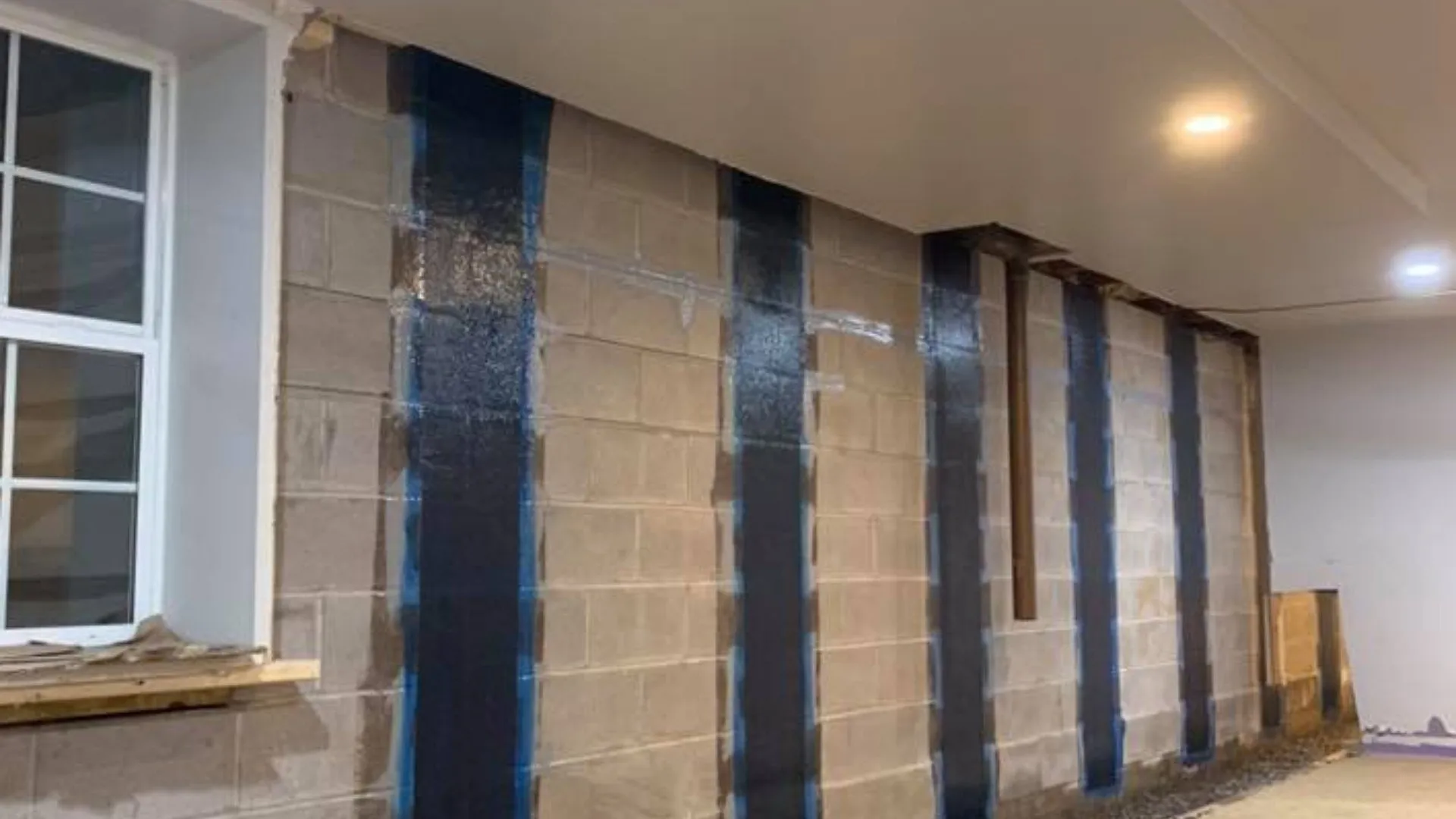
The most common reason homeowners call about helical piers is a foundation that’s already showing signs of movement. Diagonal cracks in brick or drywall, doors and windows that have stopped operating correctly, floors that have developed a noticeable slope, gaps opening up between walls and ceilings: these are the symptoms of a foundation that has lost adequate support and is settling unevenly.
In these situations, helical piers are installed at intervals around the affected section of the foundation. Brackets are attached to the existing foundation wall or footing, the piers are driven through those brackets to the required depth, and the load is transferred from the unstable shallow soil to the pier system anchored in stable ground below. In some cases, hydraulic lifting equipment allows the settled foundation to be raised incrementally back toward its original elevation before the load is locked onto the piers, which can close cracks and restore door and window operation that the settlement disrupted.
The installation process is relatively low-impact compared to older underpinning methods. Access holes are small, there’s no large excavation required along the foundation perimeter, and the work is typically completed in a day or two for a residential foundation repair scope. Interior disruption is minimal since most of the work happens outside or in the crawl space. You can read more about the full scope of foundation repair services and how helical piers fit into the remediation process.
Helical Piers for New Additions, Decks, and New Construction
This is the application that doesn’t get talked about enough, and it’s one of the more valuable services Hawk provides for contractors, builders, and homeowners planning significant projects.
When you add a room addition, a sunroom, a garage, or a large deck to an existing home in Hampton Roads, that new structure needs a foundation. The instinct is usually to pour concrete footings, which works fine in stable soil conditions. In coastal Virginia, where the soil near the surface is often clay-heavy and the water table is close by, a new concrete footing is betting that the soil will behave. Sometimes it does. Sometimes the addition settles at a different rate than the original house over the following years, which produces separation cracks, structural gaps, and in serious cases, a new addition that’s visibly pulling away from the home it was built to extend.
Helical piers eliminate that risk by giving the new structure the same deep, stable foundation that a remediated existing foundation has. The piers are installed first, before any framing goes up, and the new structure is built on top of a foundation system that’s anchored well below the zone of soil movement. The cost difference between helical pier footings and standard concrete footings is real, but it’s a fraction of what it costs to remediate a settled addition a few years after construction.
For decks specifically, helical piers are an increasingly common alternative to standard concrete tube footings, and for good reason. A deck footing poured in clay soil is subject to the same heave and movement as any other shallow foundation. In Hampton Roads, deck posts that started out plumb and level can develop noticeable lean or movement within a few seasons as the soil beneath shifts. Helical piers driven to stable bearing depth stay where they’re put regardless of what the surface soil does above them.
Beach house additions and elevated structures near the water have even more reason to consider helical piers. Coastal soils tend to be looser and more saturated than inland areas, and structures near the water deal with additional considerations around erosion and storm surge that make shallow foundations a higher-risk choice. A helical pier foundation for a coastal addition or elevated deck is built for the conditions it’s actually going to face rather than conditions that exist in a drier, more stable environment.
What the Installation Process Looks Like
For both repair and new construction applications, the installation process follows a similar sequence. Hydraulic drive equipment, usually mounted on a compact machine that can access tight spaces including alongside existing structures, advances the pier into the ground by rotation. Each pier section is added as the shaft goes deeper, with sections coupled together until the required depth and torque are reached.
For new construction and addition projects, the piers are typically installed before any concrete work or framing begins, and the structural elements of the new build connect directly to the pier heads. For existing foundation repair, the bracket system connects the pier to the existing footing and transfers the load after the pier is in place.
Installation speed is one of the practical advantages of helical piers for larger projects. A residential repair or small addition scope typically involves four to eight piers installed in a day. Larger commercial or multi-pier projects can move significantly faster. And unlike poured concrete, helical piers can be loaded immediately after installation since there’s no curing time involved. For contractors working on a schedule, that’s a meaningful advantage over alternatives that require waiting days before proceeding.
Is a Helical Pier System Right for Your Project?
If you’re dealing with an existing foundation that’s showing signs of settlement, the answer is almost certainly worth exploring through a professional inspection. If you’re planning an addition, deck, or new structure on Hampton Roads soil and haven’t thought about what the foundation situation looks like below the surface, it’s a conversation worth having before construction starts rather than after.
At Hawk, we work with both homeowners dealing with existing foundation problems and contractors and builders who need reliable deep foundation solutions for new projects. Our inspections are free and there’s no obligation. Get in touch here and we’ll give you a straight assessment of what your project needs and whether helical piers are the right fit.
Frequently Asked Questions
How deep do helical piers need to go?
It depends on the soil profile at the specific site. In Hampton Roads, where unstable clay and high water tables are common near the surface, piers often need to reach 15 to 25 feet or more to find adequate bearing material. In some areas with particularly deep soft soil layers, greater depths are needed. The installation process itself determines the required depth: the pier advances until the torque readings confirm that it has reached soil with sufficient density to support the design load. There’s no predetermined depth that applies universally across different sites.
Can helical piers be installed in a tight space or next to an existing structure?
Yes, and this is one of their practical advantages over other deep foundation methods. The hydraulic drive equipment used for helical pier installation is compact enough to work in confined spaces, including alongside existing foundations, in crawl spaces with adequate clearance, and in tight urban lots where larger equipment can’t access. For addition projects built adjacent to an existing home, this matters: the foundation work for the new structure can be completed without disturbing the existing building or requiring large excavation equipment that wouldn’t fit on a typical residential lot.
Are helical piers a permanent solution?
Yes. The galvanized steel shafts are engineered for corrosion resistance in the soil conditions they’re installed in, and the load transfer to stable bearing strata means the pier system isn’t subject to the same seasonal movement that affects shallow foundations. Properly installed helical piers are designed to outlast the structures they support. The brackets and connection hardware at the foundation are also engineered for long-term performance, and the system as a whole is a permanent structural fix rather than a temporary stabilization measure.
Do helical piers work for both residential and commercial projects?
Yes. Helical pier systems are engineered and load-rated for a wide range of applications, from residential foundation repair and deck footings to commercial building foundations, infrastructure support, and specialty applications like utility pole bases and EV charging station foundations. The design load for each pier is determined by the specific structural requirements of the project, and the installation is verified against those requirements through the torque monitoring process. Hawk works across both residential and commercial scopes. You can read more about commercial foundation applications on our foundation services page.
Share with others

Contact Forever Guard Today!
Forever Guard will do everything we can to ensure your experience with us is excellent.