
Foundation Jacks: What They Are, When You Need Them, and What to Expect
If someone has told you that your crawl space needs foundation jacks, or if you’ve noticed sagging floors, sticking doors, or cracks in the drywall and started researching what might be causing them, you’ve probably come across the term. Foundation jacks are one of the more common structural repairs in older Hampton Roads homes, and they’re also one of the more misunderstood ones. This post covers what they are, what problem they solve, and what a proper installation actually looks like.
What Foundation Jacks Are and What They Do
Foundation jacks, sometimes called crawl space jacks or adjustable steel columns, are heavy-duty support posts installed beneath the main beams and floor joists of a crawl space home. Their job is to provide or restore vertical support to a floor system that has lost it, whether because the original support posts have failed, rotted, shifted off their bases, or because the floor was never adequately supported to begin with.
A crawl space foundation system works as a chain: the subfloor sits on floor joists, the joists bear on beams, the beams bear on support posts or columns, and those posts bear on concrete pads sitting on the ground. When any link in that chain fails, the floor above it loses support and starts to sag. Foundation jacks address that by replacing or supplementing the failing support element with a new steel column that can carry the load and, critically, be adjusted over time.
That adjustability matters more than it might seem. Lifting a sagging floor back toward level isn’t something you do all at once. Wood framing that has been carrying a deflected load for months or years has memory, and raising it too aggressively too quickly can crack interior drywall, stress the framing above, and cause more cosmetic damage than the sag itself. Adjustable steel jacks allow a contractor to raise the floor incrementally, a small amount at a time over weeks or months if needed, until it reaches the target elevation without causing collateral damage in the process.
Foundation Jacks vs. Crawl Space Jacks: What’s the Difference
The terms get used interchangeably but there’s a technical distinction worth knowing. Crawl space jacks typically refer to the adjustable steel columns installed specifically within the crawl space to support the floor beam system above, replacing or supplementing original wood or concrete block posts. Foundation jacks is a broader term that can refer to both those interior support columns and to jacking systems used to lift and stabilize the foundation structure itself, including the perimeter walls and footings.
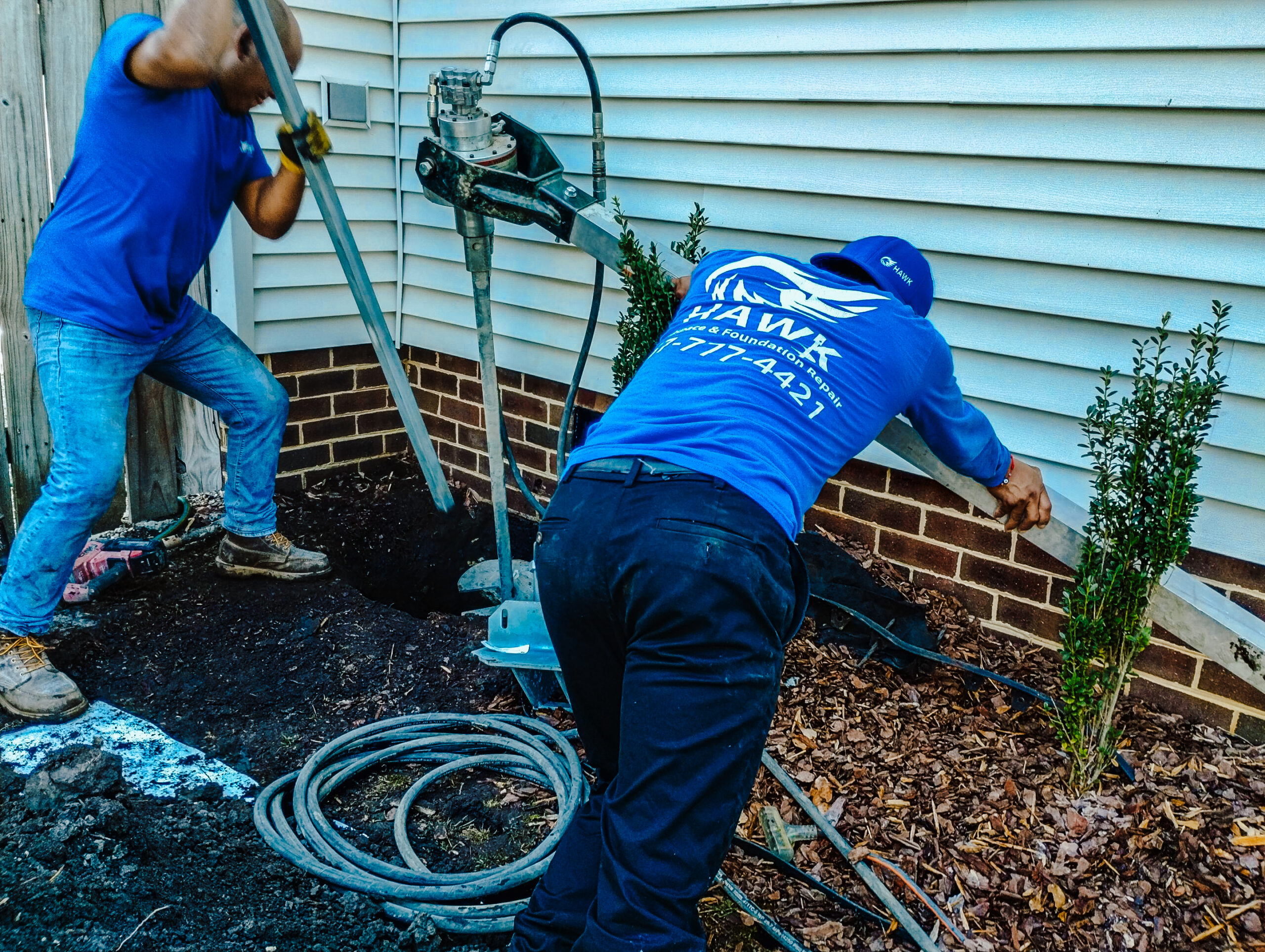
In practice, most residential calls in this region involve the crawl space support column application: failing or inadequate posts beneath the main girder beams that are allowing the floor to sag. That’s the scenario this post is primarily focused on. If the issue involves the perimeter foundation walls or footings rather than the interior support grid, that’s typically addressed through helical piers or wall stabilization, which is a different scope of work covered in our post on helical pier installation.
Why Crawl Space Support Posts Fail in Hampton Roads
The support posts in a crawl space can fail for a few different reasons, and in coastal Virginia, moisture is usually involved directly or indirectly.
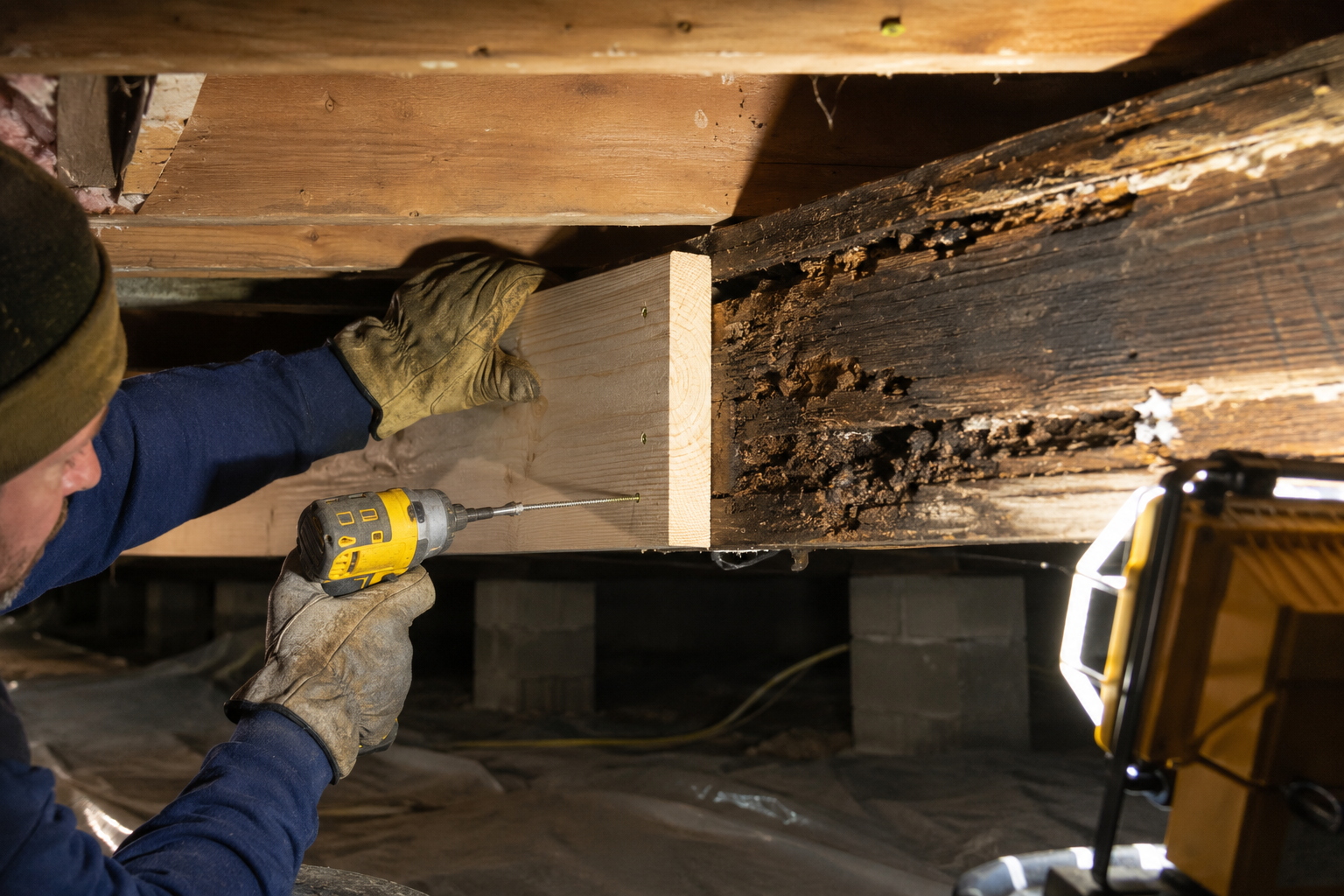
Original wood posts rot. It’s straightforward: wood in a persistently damp crawl space absorbs moisture and eventually decays. The process is slow and invisible until it isn’t. A post that looks structurally sound from outside can be significantly compromised internally by fungal decay, and by the time the floor above starts to show movement, the post may have lost most of its load-carrying capacity. Homes in Hampton Roads with unencapsulated crawl spaces, which describes a large portion of the older housing stock in Chesapeake, Norfolk, and Portsmouth, are dealing with this moisture environment year-round.
Concrete block pads shift or sink. The pads that original wood posts sit on are only as stable as the soil beneath them, and Hampton Roads soil, with its clay content and seasonal moisture fluctuation, is not always stable. A pad that shifts laterally or sinks slightly can leave a post leaning or effectively unsupported. A post that’s leaning is carrying its load in compression at an angle rather than straight down, which is significantly less efficient and can lead to the post eventually buckling or shifting further.
Termite damage hollows out wood posts and beams. Subterranean termites are common throughout the region and favor the dark, damp, undisturbed environment of a crawl space. A post or beam section that’s been colonized by termites can be structurally hollow while still looking intact from the outside. By the time the floor gives any sign of a problem, the damage is usually well established. The EPA notes that termites cause billions in structural damage annually in the US, with crawl space framing among the most commonly affected areas.
Inadequate original support. Some homes, particularly those that have had additions built without proper engineering or older homes built to standards that wouldn’t pass current code, simply don’t have enough support posts beneath the main beams. Joists spanning too far without intermediate support deflect under load over time, producing a floor that bounces or sags even without any damage to the existing posts.
Signs That Foundation Jacks Might Be Needed
Most of these overlap with general sagging floor symptoms, which makes sense since that’s usually the problem they’re solving. The ones most directly associated with failing crawl space support posts are:
A floor with a noticeable low point toward the center of a room, often directly above where a support beam runs, is a common presentation. The center of a span is where deflection shows up first and most dramatically when support is lost. A floor that’s bouncy or springy underfoot, particularly in a concentrated area, points to the same issue.
Doors on the first floor that have changed in how they operate, dragging at the top or the floor, or no longer latching correctly, can indicate the floor framing has shifted enough to rack the door frames slightly. If multiple doors in the same area of the house are having issues simultaneously, that’s a clearer signal than one problem door that’s always been slightly off.
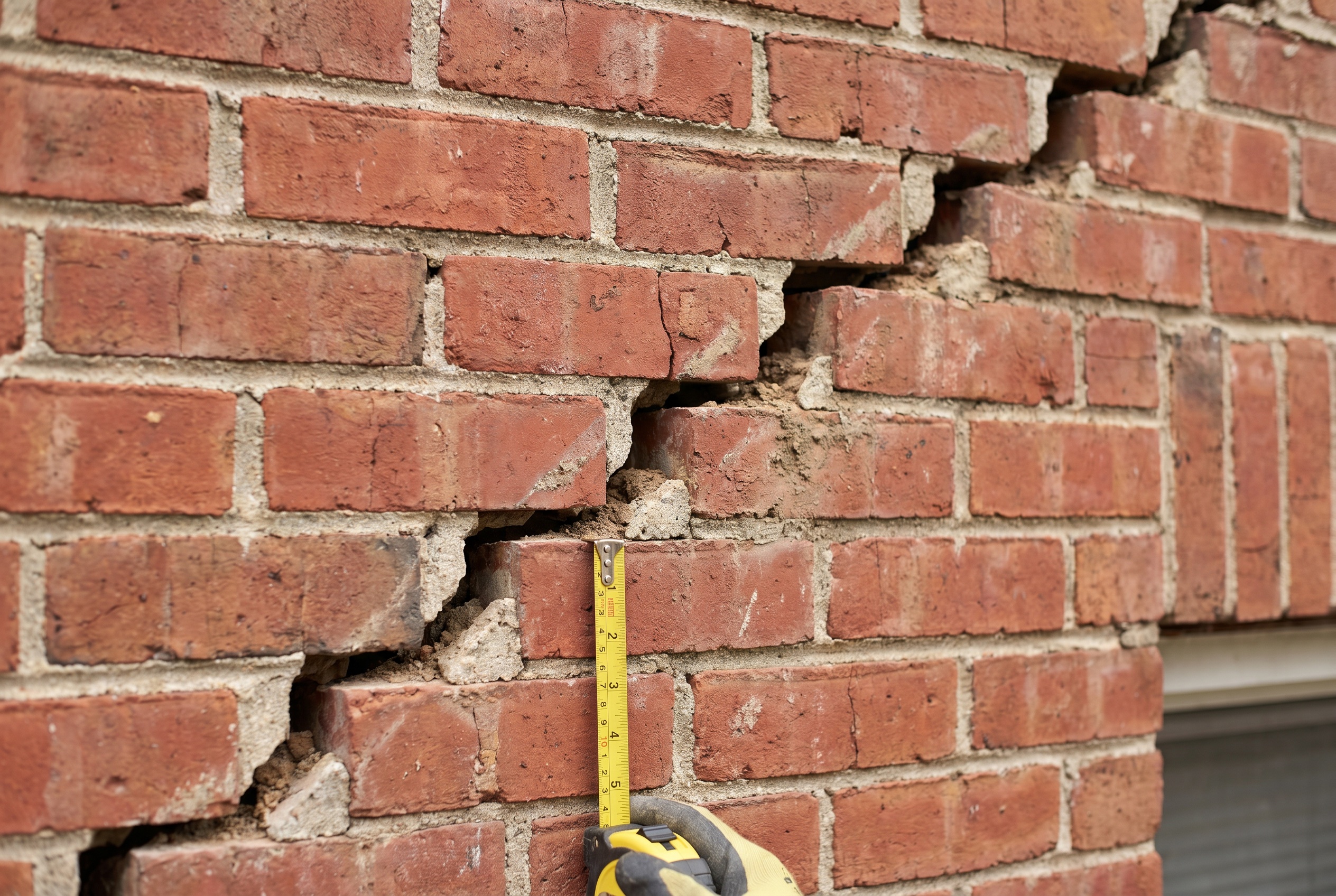
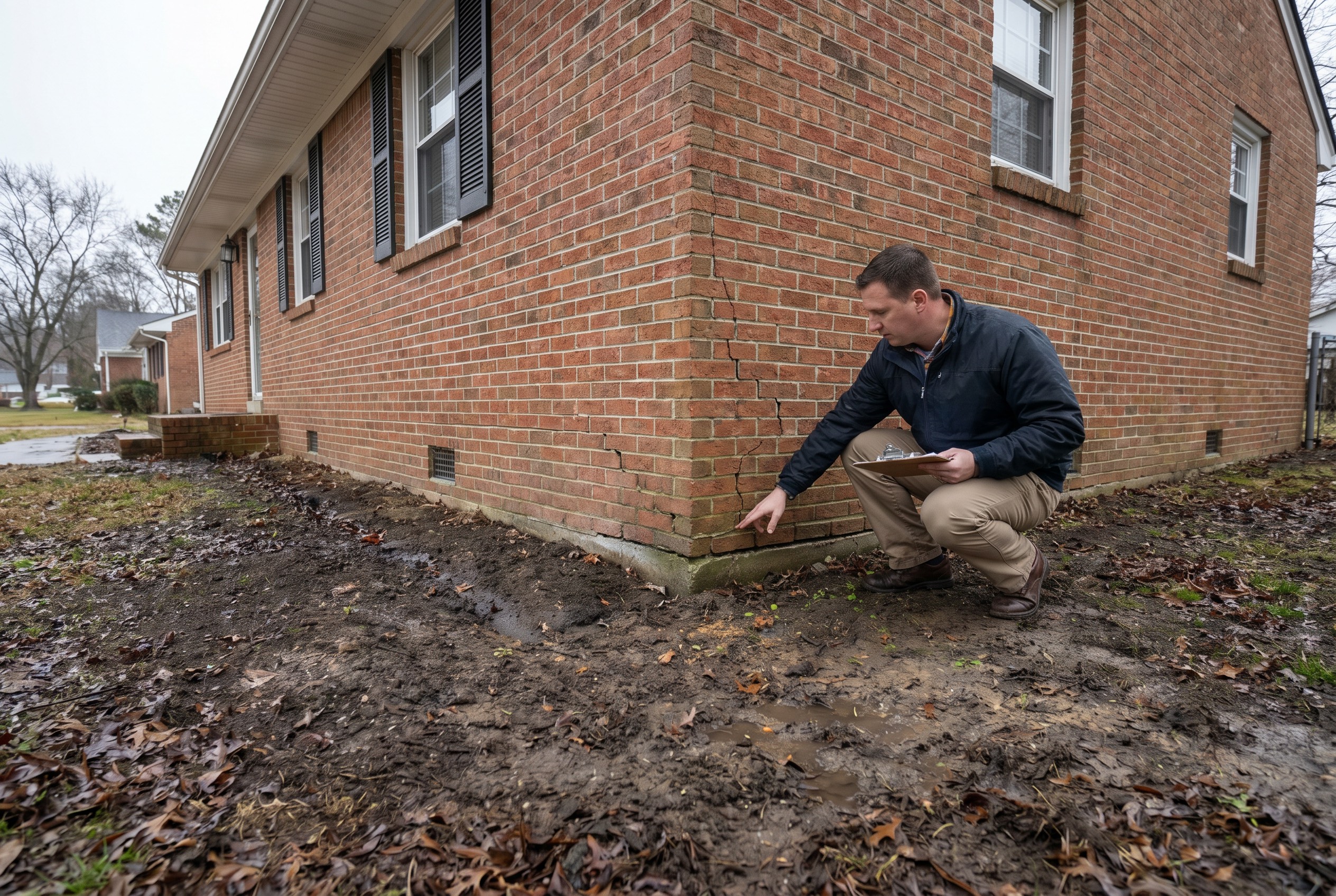
Gaps opening between the baseboard and the floor in a specific area, or between the floor and a threshold, suggest the floor has dropped in that zone. Diagonal cracks in drywall near the floor, particularly at the corners of doorways, can accompany floor movement for the same reason they accompany foundation movement: the framing is shifting and the rigid drywall cracks at the stress points.
If you’ve gotten into the crawl space and can see posts that are leaning, sitting off-center on their pads, visibly rotted or soft, or in some cases missing entirely where a previous owner removed them without replacement, those are the most direct indicators that support is inadequate and needs to be addressed.
What a Proper Foundation Jack Installation Involves
The installation process starts with a thorough assessment of what’s actually happening in the crawl space. The contractor needs to identify which posts or sections of the beam system are failing, whether the existing bearing pads are adequate or need to be replaced, what condition the beams themselves are in, and whether there’s any moisture or structural damage that needs to be addressed before new supports go in. Installing a jack against a rotted beam is not a repair.
New concrete bearing pads are poured or placed where needed to give the jack a stable base. These need to be sized appropriately for the load being transferred and placed on undisturbed soil or properly compacted fill. This is a step that less careful contractors skip or shortcut, and it matters because a jack sitting on an inadequate pad will eventually shift just like the original post did.
The steel jack columns are installed and set to the appropriate height to make contact with the beam above without loading it aggressively. From there, any lifting happens gradually. Depending on how much the floor has sagged and how long it’s been that way, the target elevation may be reached in one visit or over a series of incremental adjustments. The goal is a floor that’s functionally level and properly supported, not necessarily one that’s been forced back to its original position at the cost of cracking everything above it.
One thing worth knowing: there’s a distinction between adjustable jack posts designed for permanent installation and the telescoping split-post columns sometimes used as temporary shoring during construction. Split jack posts are not rated for permanent structural use in the US, and any home inspector worth their license will flag them as a deficiency if they’re being used as a permanent support. A proper foundation jack installation uses columns engineered and rated for permanent load-bearing applications. It’s a reasonable question to ask any contractor before work begins.
Addressing the Moisture Problem Alongside the Repair
If the original support posts failed because of moisture-driven rot or termite damage in a persistently damp crawl space, installing new steel jacks without addressing the crawl space moisture environment is an incomplete fix. Steel doesn’t rot the way wood does, but new wood framing used to replace damaged beams or joists will face the same conditions that degraded the original material. And a crawl space that stays wet is a crawl space that’s going to keep producing structural problems over time.
A complete repair in a moisture-compromised crawl space pairs the structural work with moisture control: at minimum a quality vapor barrier, and in most Hampton Roads conditions a full crawl space encapsulation with sealed vents and active dehumidification. The structural fix stops the immediate problem. The moisture fix stops it from recurring. You can read more about what encapsulation involves and why it matters for structural longevity in our post on crawl space encapsulation.
At Hawk we offer free inspections with no obligation. We’ll get into the crawl space, assess the support structure, identify what’s failing and why, and give you a clear picture of what the repair involves and what moisture control measures need to accompany it. Schedule your free inspection here.
Frequently Asked Questions
How many foundation jacks does a crawl space need?
It depends on the span of the beams, the load above them, and how many of the existing support points are failing or inadequate. A typical residential crawl space might have support posts at eight to ten foot intervals beneath the main girder beams. If several of those points are compromised, multiple jacks go in. If only one section has settled or failed, the repair may be more localized. The inspection is what determines the scope, and a contractor who gives you a jack count before looking at the crawl space is guessing.
Will foundation jacks fix my sagging floors permanently?
Steel jack columns installed on adequate bearing pads in a moisture-controlled crawl space are a long-term structural solution. They don’t rot, they’re adjustable if settling occurs over time, and they’re rated for permanent load-bearing use. The durability of the repair depends heavily on whether the underlying moisture problem was addressed at the same time. New supports in a crawl space that stays wet are better than failing old ones, but the environment is still working against the framing above them. The structural repair and the moisture fix belong together for a truly durable result.
Can foundation jacks be installed in a low crawl space?
Yes, though it affects the labor involved. Crawl spaces in this region vary significantly in height, and a tight 18-inch crawl space requires more time and effort to work in than a 36-inch one. Most professional contractors have the equipment and experience to work in confined spaces, but it’s worth discussing the access situation during the inspection so there are no surprises about scope or timeline. Tighter spaces also sometimes limit what equipment can be brought in, which can affect which repair approaches are practical.
Are foundation jacks the same as helical piers?
No, though both are structural support solutions. Foundation jacks are adjustable steel columns installed within the crawl space to support the interior beam and joist system. They address failing or inadequate interior support posts. Helical piers are deep foundation elements screwed into the ground to stabilize or lift the foundation structure itself, including perimeter walls and footings, or to provide deep foundation support for new construction on unstable soil. Both may be part of the solution for a home with significant structural issues, but they address different parts of the structural system. You can read more about the helical pier application in our post on helical pier installation.