2530 Centerville Turnpike S, Chesapeake, VA 23322

How Summer Storms Affect Your Foundation

How Summer Storms Affect Your Foundation

Summer in Hampton Roads means heat, humidity, and storms that can drop two or three inches of rain in under an hour. Most homeowners watch the weather, wait for it to pass, and move on. But what’s happening under and around your house during those storms, and in the days after, is worth paying attention to. Foundations in this region take a beating from the seasonal weather cycle, and the damage tends to be cumulative rather than dramatic. You won’t usually see a storm crack your foundation in one shot. You’ll see the effects of five years of storms that nobody addressed.

What Summer Storms Actually Do to the Soil Around Your Foundation

The soil in Chesapeake and the surrounding area is the starting point for most storm-related foundation issues. A significant portion of it is clay-heavy, and clay behaves in ways that put real stress on foundations over time. When rain saturates clay soil, it expands. When it dries out, it contracts and pulls away. That cycle happens every season, and every cycle puts some amount of movement and pressure on whatever is sitting in or on that soil.

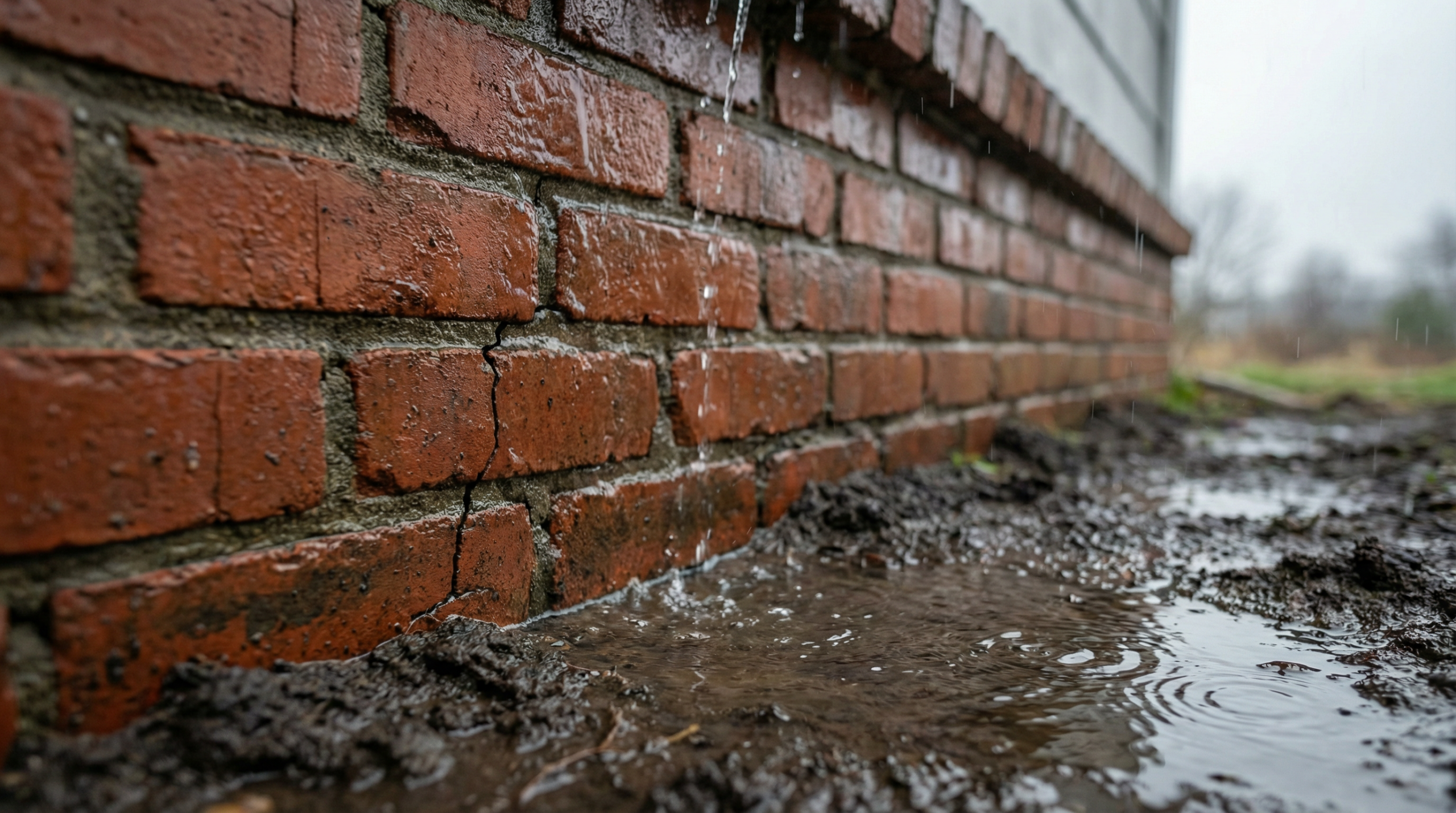
During a heavy summer storm, saturated soil becomes heavy and exerts lateral pressure against foundation walls. This is hydrostatic pressure, and it’s not trivial. Water weighs about 62 pounds per cubic foot, and when the soil around your foundation is holding that water against your walls, the force adds up quickly. Over time, that pressure is what causes foundation walls to crack, bow inward, and in serious cases, fail structurally.

The flip side happens when things dry out. After the storm passes and a dry stretch follows, that same clay soil shrinks back. If it shrinks unevenly, which it usually does, the foundation loses support in some spots and not others. That differential movement is what produces the diagonal cracks in brick and drywall that are so common in older Hampton Roads homes. The USGS has documented ongoing land subsidence in the Hampton Roads region, which compounds the natural movement already happening from soil expansion and contraction.

Drainage Problems That Make It Worse

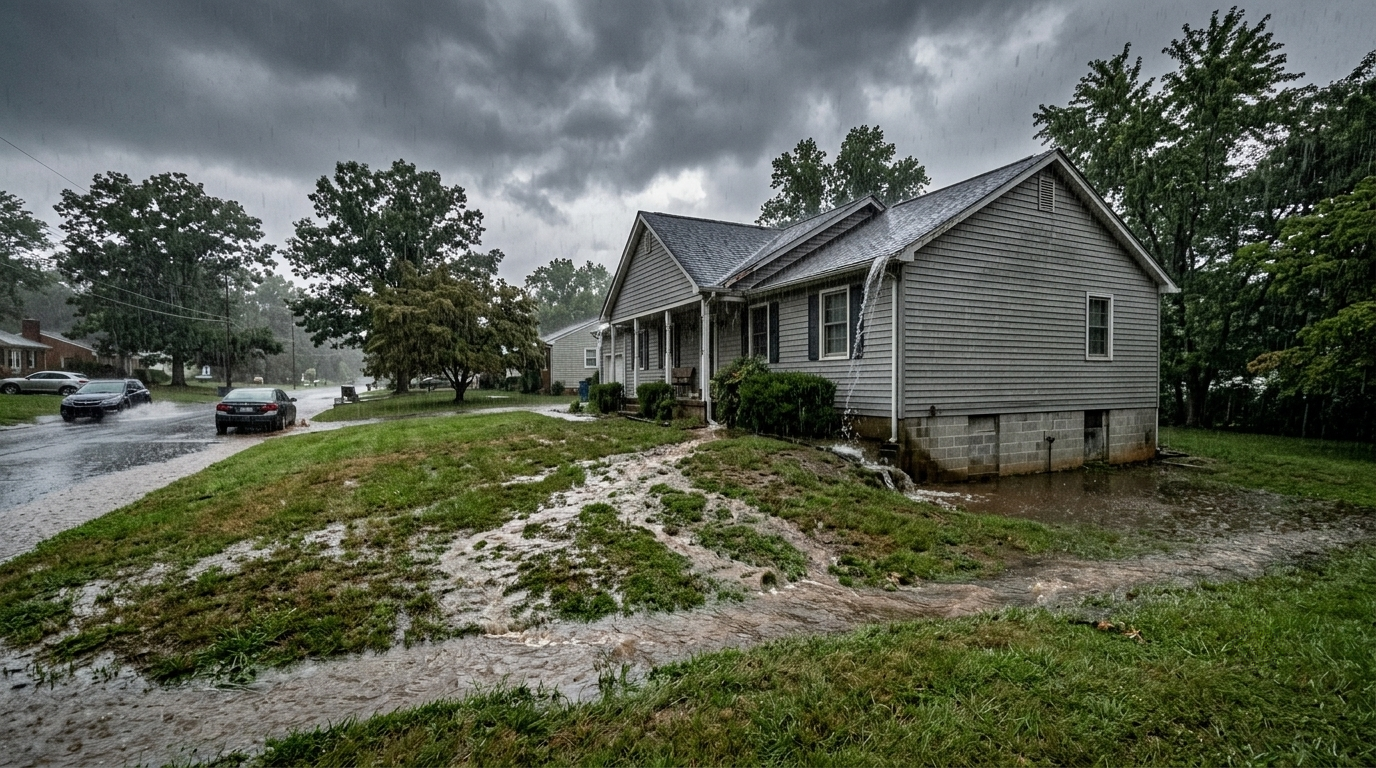
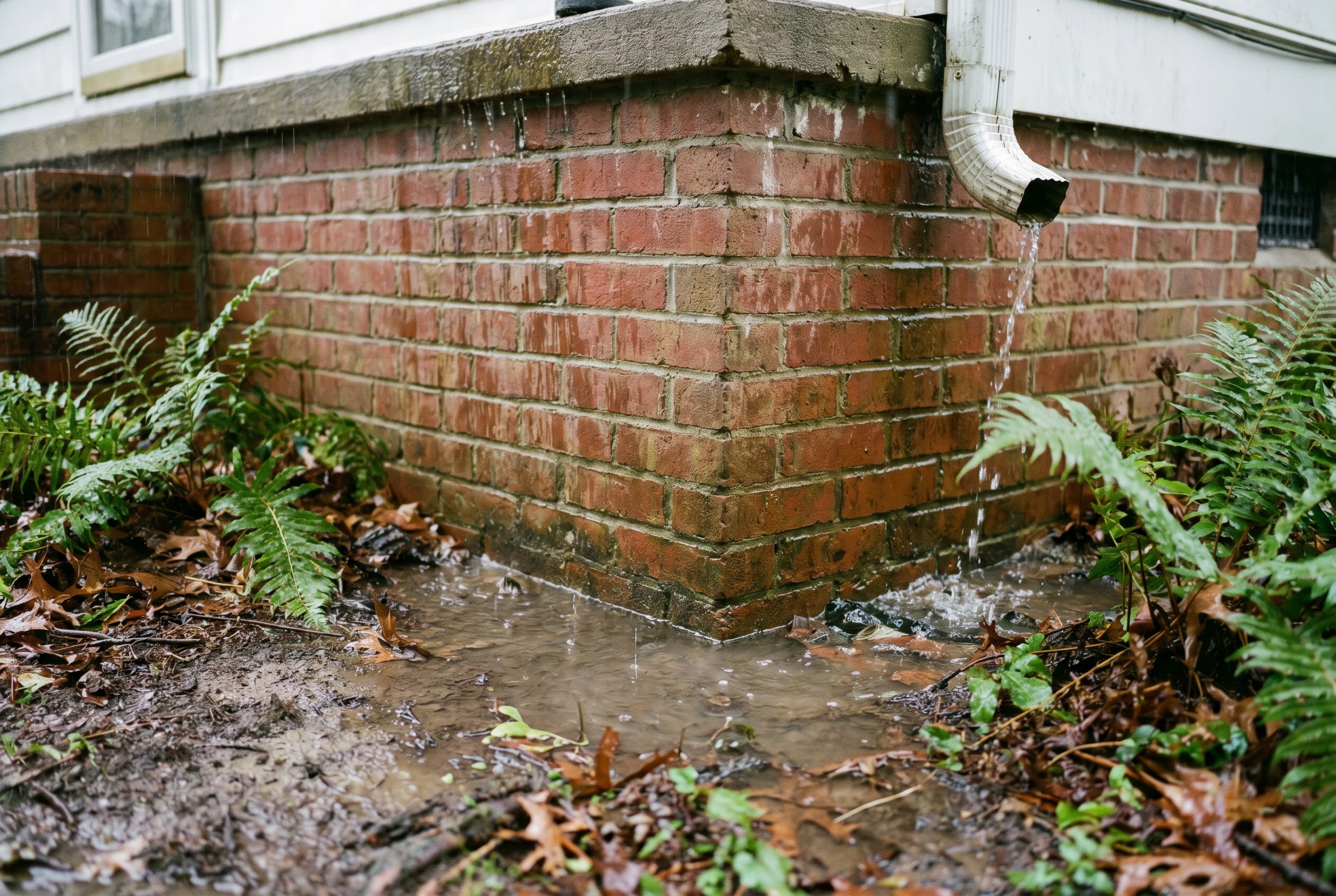
A well-drained yard handles storm water before it ever becomes a foundation problem. The issue is that a lot of homes in this area, especially older ones, have grading or drainage situations that work against them. If the ground slopes toward the house, water from a heavy storm funnels directly toward the foundation. If gutters are dumping runoff at the base of the wall rather than carrying it away, every storm is adding water to the soil right where you don’t want it.

Clogged or undersized gutters are a surprisingly common contributor to foundation issues. When gutters overflow, water pours down the exterior wall and saturates the soil at the foundation line repeatedly. It’s easy to overlook because the damage is invisible and slow, but the soil right next to the footing is getting soaked storm after storm while the rest of the yard drains normally. Over a few years that adds up.

French drains and proper perimeter grading are what address this at the source. A French drain intercepts water before it reaches the foundation and redirects it away from the house. It’s not the most exciting solution, but it’s one of the more effective ones for homes dealing with repeated storm-related water intrusion. Combined with downspout extensions that carry water at least six feet from the foundation, the drainage situation around a home can usually be improved significantly without major work. You can read more about foundation drainage and stabilization services and how they apply to storm-related issues.

What to Look For After a Major Storm

You don’t need to be a contractor to do a useful post-storm check. There are a few things worth looking at after any storm that brought significant rainfall.

Walk the perimeter of the house and look for pooling water, especially near the foundation. Note any areas where water seems to be sitting longer than the rest of the yard. Check your gutters and downspouts to make sure they’re clear and directing water away from the house. Look at the foundation walls themselves for any new cracking or for efflorescence, the white chalky mineral deposits that show up where water has been moving through concrete or block repeatedly.

Inside, pay attention to doors and windows that suddenly feel harder to operate than they did before the storm. A door that racked slightly, meaning the frame shifted just enough that the door no longer closes cleanly, can indicate foundation movement. Check the basement or crawl space for water intrusion, new cracks in the walls, or any change in how the space looks or smells. A musty odor that wasn’t there before a storm is often the first sign that water got in somewhere.

None of these signs on their own necessarily mean something catastrophic is happening. But patterns matter. If you’re noticing the same things after every major storm, or if something that was minor last summer is visibly worse this year, that’s worth having looked at. FEMA’s coastal construction guidance specifically identifies drainage management and soil behavior as central concerns for foundations in coastal plain environments like Hampton Roads, not secondary considerations.

When Storm Damage Becomes a Foundation Repair Problem

The line between “keep an eye on it” and “get this fixed” comes down to whether the symptoms are active and progressing. Stable cracks that have been the same for years are usually just evidence of past settling. Cracks that are widening, walls that are visibly bowing, or floors that have changed noticeably over a season are signs of ongoing movement that isn’t going to stop on its own.

Repeated storm flooding in a crawl space is in the same category. One flood that dries up quickly is different from a crawl space that holds water for days after every major rain. The second situation means the framing is getting repeatedly wetted and dried, which is exactly the cycle that leads to rot, mold, and eventually structural damage to the floor system. A proper crawl space encapsulation with drainage addresses this at the source rather than just cleaning up after each event.

For foundation walls dealing with cracking or movement from hydrostatic pressure, the repair approach depends on severity. Minor cracking with no active movement can often be monitored. Bowing walls or cracks that are widening need stabilization before the next storm season adds more pressure to an already stressed wall. Waiting on those tends to make the eventual repair more involved and more expensive.

If you’ve had a rough storm season and want to know where your foundation and crawl space actually stand, a free inspection is the most straightforward way to find out. At Hawk we’ll get under the house, check the foundation, and give you a straight read on what we find. Schedule yours here.

Frequently Asked Questions

Can a single storm cause serious foundation damage?

It’s possible but not common. Most foundation damage from storms is cumulative, the result of repeated wetting and drying cycles over several seasons rather than one catastrophic event. A major storm can accelerate existing issues or make underlying problems visible for the first time, but it rarely creates a serious structural problem in a foundation that was otherwise in good shape. The exception would be extreme flooding or erosion that removes soil support from beneath the footing, which is less common in most residential situations.

How do I know if my foundation cracks are from storm damage or something else?

Context and pattern help a lot here. Cracks that appeared or visibly widened after a wet season, especially diagonal cracks near corners of windows and doors or stair-step cracks in brick, are consistent with differential settlement driven by soil movement. Horizontal cracks in a basement or crawl space wall are more associated with lateral pressure from saturated soil. A professional inspection can usually tell you whether a crack is active, what’s causing it, and whether it needs repair or just monitoring. You can read more about what to watch for in our post on signs of foundation problems.

Should I fill foundation cracks myself after a storm?

Filling a crack without understanding why it appeared doesn’t fix anything, and it can actually make it harder to track whether the crack is still growing. Hydraulic cement or epoxy injection has its place as part of a proper repair, but slapping something in a crack to make it look better doesn’t address the soil or drainage conditions causing it. If a crack is new or has changed recently, get it looked at before doing anything to it.

How does storm season in Hampton Roads compare to other regions for foundation risk?

Hampton Roads is genuinely one of the more challenging environments for foundations in the mid-Atlantic. The combination of expansive clay soils, a water table that’s close to the surface in many neighborhoods, regular tropical storm activity, and high baseline humidity creates conditions that put consistent stress on foundations throughout the year. The storm season just intensifies a moisture environment that’s already working on homes year-round, which is why proactive drainage and crawl space management matters here more than it would in a drier or more geologically stable region.
Water in Your Crawl Space After Rain: What’s Happening and What to Do

Water in Your Crawl Space After Rain: What’s Happening and What to Do

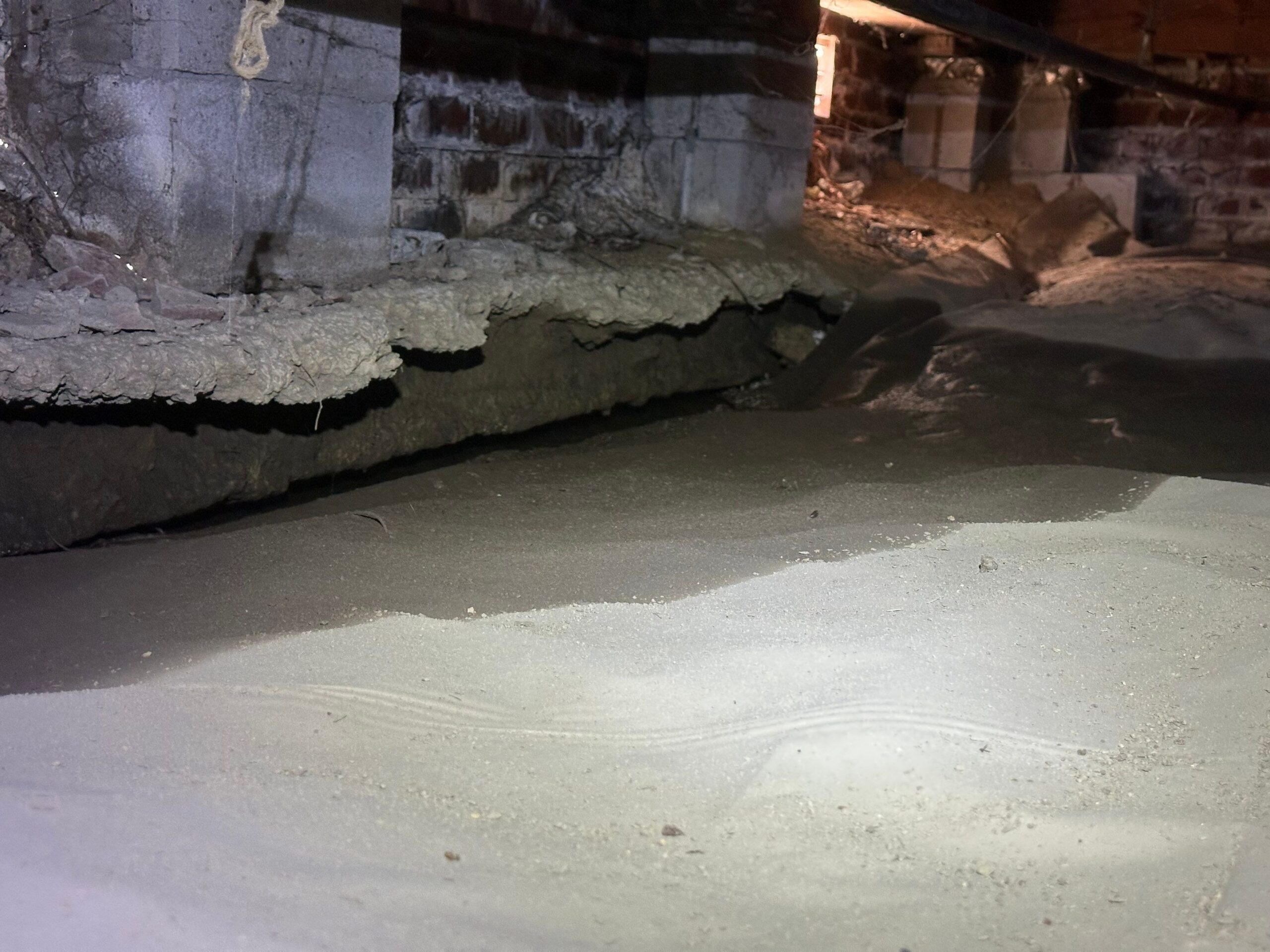
If you’ve gotten under your house after a heavy storm and found water down there, or if you’re seeing the signs without actually looking, musty smells, floors that feel softer than usual, humidity that seems worse on the first floor, you’re not alone. Water in the crawl space after rain is one of the most common calls we get in Hampton Roads, and it makes sense why. This region gets hit hard in the summer. When a few inches of rain falls in a short window, a lot of it ends up exactly where you don’t want it.

The good news is that crawl space water intrusion is a solvable problem. The less good news is that it doesn’t solve itself, and the longer it sits, the more work it’s doing to the wood framing and air quality in your home.

Why Water Gets Into Crawl Spaces After Rain

Water finds its way into a crawl space through a few different routes, and understanding which one applies to your home matters for figuring out the right fix.

Surface water intrusion. This is the most straightforward cause. When rain falls faster than the soil around your home can absorb it, water pools against the foundation and eventually finds its way in through cracks, gaps around penetrations, or open crawl space vents. Homes with flat or poorly graded yards, where the ground slopes toward the house rather than away from it, are especially vulnerable. After a heavy summer storm, that water has nowhere to go except down and in.

Groundwater and hydrostatic pressure. Hampton Roads sits on coastal plain soil with a water table that in many neighborhoods is only a few feet below the surface. After significant rainfall, that water table rises. When it gets high enough, it pushes upward through the soil floor of the crawl space and through any cracks or gaps in the foundation walls. This is hydrostatic pressure, and it doesn’t require any visible entry point. The water just comes up through the ground. Homes in low-lying parts of Chesapeake, near the waterways in Norfolk, or in any neighborhood that tends to stay soggy after rain are dealing with this regularly. The USGS notes that surface water and groundwater are directly connected, meaning heavy rainfall above ground translates quickly to rising groundwater below it.

Condensation from humid outside air. This one doesn’t require a storm at all, but summer weather makes it worse. Traditional crawl space vents were designed to let outside air circulate under the house. In a climate like coastal Virginia’s, where summer air is hot and saturated with moisture, venting the crawl space just pumps humid air into a cooler space, where it condenses on the wood framing and the ground. After a storm, when outdoor humidity spikes even further, this effect gets worse. It’s a slow drip compared to flooding, but it contributes to the same moisture accumulation over time.

What That Water Is Doing While It Sits There

Water in a crawl space isn’t just an inconvenience. It’s actively working on the structure of your home the whole time it’s down there.

Wood framing, the floor joists, sill plates, and support beams, absorbs moisture from a wet environment even without direct contact. As relative humidity stays elevated, the wood stays damp, and damp wood is exactly the environment that wood-destroying fungi need to establish themselves. Rot doesn’t happen overnight, but a crawl space that floods repeatedly and never fully dries out is accumulating damage with each event. The EPA is clear that mold and wood decay require sustained moisture, and a wet crawl space after every summer storm qualifies as sustained.

Beyond the framing, standing water raises the humidity of the entire crawl space environment. Through the stack effect, where warm air rises through the home and draws air upward from the crawl space, that humid air ends up on your first floor and above. Musty smells, worsening allergies, and air that feels heavier than it should inside the house are all downstream effects of a crawl space that’s holding moisture. The crawl space and the living space above it aren’t as separate as most homeowners assume.

Repeated water intrusion also puts ongoing pressure on the foundation itself. Soil that’s saturated expands and exerts lateral pressure against foundation walls. Over many cycles of wetting and drying, that pressure contributes to cracking and wall movement. It’s a slow process, but it’s directional. Things don’t improve on their own.

What to Check After a Heavy Storm

If you’re comfortable getting into your crawl space, or if you have someone who can, here’s what’s worth looking at after a significant rain event.

Look for standing water first. Even a shallow layer across part of the crawl space floor is worth noting and addressing. Check the ground near the foundation walls and around any floor drain or sump pit if you have one. If water is pooling near the walls, that’s surface intrusion or hydrostatic pressure at work.

Look at the wood framing, specifically the sill plates along the top of the foundation walls and any floor joists you can see. Dark staining, soft spots, or visible mold growth indicate that moisture has been an ongoing issue, not just a one-storm problem. A screwdriver pushed into the wood with minimal resistance is a sign of rot.

Check whether the existing vapor barrier, if there is one, is intact and in place. Old plastic sheeting tends to tear, bunch up, and separate from the walls over time. A barrier that’s partially covering the ground isn’t doing much.

Outside the house, walk the perimeter and look at how water is moving. Are there areas where it’s pooling against the foundation? Are the gutters and downspouts directing water away from the house, or is it dumping at the base of the wall? Grading and drainage at the surface level have a direct impact on what ends up in the crawl space.

How the Problem Gets Fixed

The right solution depends on where the water is coming from and what condition the crawl space is already in.

For surface water intrusion driven by poor grading or drainage, the fix often starts outside the house: regrading the yard to slope away from the foundation, extending downspout runs, and sometimes installing a French drain system around the perimeter to intercept water before it reaches the foundation. These are unglamorous solutions but effective ones when surface drainage is the root cause.

For groundwater pressure, a sump pump system is usually part of the answer. A properly sized sump pit with a reliable pump actively removes water that would otherwise accumulate under the house. In areas with a persistently high water table, a sump pump isn’t optional, it’s what keeps the crawl space dry between rain events.

For the broader moisture environment, crawl space encapsulation is the most comprehensive solution. A full encapsulation seals the ground and walls with a heavy-duty liner, closes off the foundation vents, and pairs the barrier with a dehumidifier to actively control humidity. This addresses not just flooding events but the ongoing condensation and moisture vapor that accumulate between storms. Crawl space encapsulation is particularly well-suited to Hampton Roads conditions because it addresses all three moisture sources at once rather than just one of them.

If the water has already caused structural damage, rotted joists, compromised sill plates, or failing support posts, that framing work needs to happen alongside or before the moisture control. There’s no point in waterproofing a crawl space without addressing damaged framing, and there’s no point in replacing framing without fixing the moisture problem that damaged it. The two go together. You can read more about what crawl space structural repair involves when moisture damage has already reached the framing.

If you’ve had water in your crawl space after recent storms and want to know what you’re actually dealing with, we offer free inspections with no obligation. We’ll get under there, document the condition, and give you a clear picture of what’s going on and what it would take to fix it. Schedule your free inspection here.

Frequently Asked Questions

How much water in a crawl space is too much?

Any standing water after a storm is worth addressing. A thin layer that dries up within a day or two is less urgent than water that persists, but even occasional flooding contributes to cumulative moisture damage over time. If your crawl space floods every time it rains hard, that’s a drainage problem that’s actively working on your framing and foundation with each event.

Can I just run a dehumidifier in my crawl space instead of encapsulating it?

A dehumidifier helps with humidity but it doesn’t address water intrusion. If water is getting in through the ground or the walls after rain, a dehumidifier is working against an active source rather than maintaining a controlled environment. Encapsulation first, then dehumidification as part of the system, is the right order of operations. A dehumidifier in an unencapsulated crawl space is a bit like running the AC with the windows open.

Will homeowner’s insurance cover water damage in my crawl space?

It depends on the cause and your specific policy. Sudden water damage from a burst pipe may be covered. Gradual moisture damage, flooding from groundwater, or damage resulting from lack of maintenance typically isn’t. Most standard homeowner’s policies exclude flood damage, and groundwater intrusion generally falls into that category. It’s worth a call to your insurer to understand your coverage, but most crawl space moisture repairs are out-of-pocket expenses.

How do I know if the water in my crawl space is a new problem or something that’s been happening for a while?

The condition of the wood framing is usually the best indicator. Fresh water intrusion in a crawl space with clean, solid framing looks different from a crawl space that’s been dealing with moisture for years. Staining on the joists, visible mold or mildew, soft spots in the wood, and deteriorated or displaced vapor barrier material all suggest the problem predates the most recent storm. An inspection that includes probing the framing gives a much clearer picture of the timeline than surface observation alone.

Chesapeake Waterproofing: How to Protect Your Basement, Crawlspace, and Foundation

Chesapeake Waterproofing: How to Protect Your Home from Moisture Damage

Chesapeake waterproofing is an important part of protecting homes in coastal Virginia from moisture damage. Between heavy rainfall, high humidity, low-lying areas, and soil that holds water after storms, many homes in Chesapeake face ongoing moisture pressure around the crawlspace, basement, or foundation.

If you’ve noticed a musty smell indoors, condensation on pipes under the house, damp insulation, or standing water where it should not be, you are not alone. These are common issues for homeowners throughout Hampton Roads. Understanding what causes them is the first step toward choosing the right solution.

Why Chesapeake Homes Are Vulnerable to Moisture

Chesapeake’s coastal climate creates conditions that make moisture problems more likely. Rainwater can collect around the foundation, humid air can move into vented crawlspaces, and damp soil can release moisture upward into the space beneath the home.

NOAA/NCEI Climate Normals data from weather stations around the Chesapeake area show average annual precipitation of around 51 inches. Combined with coastal humidity, low-lying terrain, and moisture-retaining soil, that rainfall helps explain why waterproofing is such an important concern for local homeowners.

When the soil around a foundation becomes saturated, water can press against basement or foundation walls. This pressure may force moisture through small cracks, gaps, or porous materials. In crawlspace homes, moisture can also rise directly from exposed soil and collect on wood framing, insulation, ductwork, and pipes.

Older homes may be especially vulnerable if drainage systems are outdated, crawlspace vents remain open year-round, or no vapor barrier is installed. Over time, these conditions can lead to mold growth, wood rot, poor indoor air quality, and structural concerns.

Warning Signs of a Waterproofing Problem

Some moisture problems are obvious, but others develop slowly. A homeowner may notice symptoms inside the home before ever seeing the crawlspace or basement.

Common warning signs include musty odors, standing water in the crawlspace, damp or falling insulation, visible mold, foundation cracks, water stains on basement walls, or white mineral deposits on masonry. Floors that feel soft, uneven, or unusually cold can also point to moisture issues beneath the home.

These symptoms do not always mean there is a major structural problem, but they do mean the home should be evaluated. Moisture rarely improves on its own, and small issues can become more expensive when they are ignored.

Waterproofing Solutions for Chesapeake Homes

The right waterproofing solution depends on where the moisture is coming from. A wet basement may need a different approach than a vented crawlspace with high humidity. That is why a professional inspection is important before deciding on a repair plan.

Crawlspace Encapsulation

Crawlspace encapsulation is one of the most effective ways to manage moisture beneath a home. The process typically includes sealing the crawlspace floor and walls with a durable vapor barrier, closing or sealing outside air entry points, and adding moisture control equipment when needed.

For many Chesapeake homes, encapsulation helps turn a damp crawlspace into a cleaner, drier, more controlled environment. It can reduce humidity, limit mold growth, protect wood framing, and improve the comfort of the living space above.

Interior Drainage Systems

When water is actively entering a basement or crawlspace, an interior drainage system may be needed. These systems collect water and direct it to a sump pump, where it can be moved safely away from the home.

This approach is often helpful for homes that experience recurring water intrusion during heavy rain or prolonged wet weather.

Sump Pump Installation

A sump pump is often a key part of a waterproofing system. It removes collected water before it can pool beneath the home or damage finished basement areas. In storm-prone areas, battery backup systems can provide added protection during power outages.

Vapor Barriers and Moisture Control

Even when there is no visible standing water, ground moisture can still create problems. A properly installed vapor barrier helps block moisture from rising out of the soil and into the crawlspace air.

Vapor barriers are often part of a larger crawlspace waterproofing strategy that may also include drainage improvements, dehumidification, and insulation updates.

Foundation Crack Repair

Cracks in poured concrete or block foundation walls can become entry points for water. Repairing these cracks and identifying the cause can help prevent water intrusion and protect the structure. If you’ve noticed cracks forming in your foundation, it is worth having them evaluated before they worsen.

Why Waterproofing Is Worth Addressing Early

Waterproofing is about more than keeping an area dry. Moisture beneath a home can affect wood framing, insulation, indoor air quality, and the long-term stability of the structure. Left alone, water in the crawlspace or basement can contribute to mold, rot, and foundation deterioration. The U.S. Environmental Protection Agency recommends controlling moisture as a key step in preventing mold growth indoors. For homes with crawlspaces or basements, that makes waterproofing and moisture control an important part of long-term home maintenance.

A dry, well-maintained crawlspace or basement can also make a home easier to maintain and more appealing during a future inspection or sale. Buyers and inspectors pay attention to moisture issues, especially in regions like Hampton Roads.

Frequently Asked Questions About Chesapeake Waterproofing

How do I know if I need crawlspace waterproofing or full encapsulation?

It depends on the severity of the moisture problem and the condition of the crawlspace. Minor moisture issues may be improved with a vapor barrier and drainage corrections. More persistent problems, including high humidity, mold, or standing water, often require a more complete encapsulation system.

Does foundation waterproofing in Chesapeake, VA require exterior excavation?

Not always. Many waterproofing solutions, including interior drainage systems, sump pumps, vapor barriers, and encapsulation, can be installed from inside the home or crawlspace. Exterior work may be needed in some cases, but it depends on the source of the problem.

How long does crawlspace encapsulation last?

A properly installed crawlspace encapsulation system can last for many years when quality materials are used and the system is maintained. Components like sump pumps and dehumidifiers may require routine service or replacement over time.

Can waterproofing help lower energy bills?

In some homes, yes. Moisture and humidity can make a home harder to heat and cool. Encapsulation and moisture control can help create a more stable environment beneath the home, which may reduce strain on the HVAC system.

Get a Free Waterproofing Inspection in Chesapeake

If you are concerned about moisture beneath your home, Hawk Crawlspace & Foundation Repair offers free inspections for homeowners throughout Chesapeake and the surrounding Hampton Roads communities. Our team can evaluate your crawlspace, basement, or foundation, explain what we find, and recommend practical solutions based on your home’s needs.

Contact Hawk Crawlspace & Foundation Repair today to schedule your inspection and take the first step toward a drier, healthier home.

Why Spring 2026 Is the Right Time to Protect Your Foundation and Basement in Virginia

Why Spring 2026 Is the Right Time to Protect Your Foundation and Basement in Virginia

As we move into March here in Hampton Roads, homeowners across Chesapeake, Norfolk, and Virginia Beach are preparing for the heavy rains that tend to define our spring season. While the rain helps lawns and gardens, it also creates the most stressful conditions of the year for your home’s foundation.

Spring is when small foundation and moisture issues become visible. Addressing them now can prevent much larger repairs later.

1. Hydrostatic Pressure and Saturated Soil

When prolonged rain saturates the clay-heavy soils common in our area, the ground expands and holds water against your foundation walls. This creates hydrostatic pressure, a steady force pushing inward against basement and crawlspace walls.

Over time, that pressure can:

  • Force water through hairline cracks
  • Exploit weak mortar joints
  • Contribute to wall movement or bowing
  • Worsen existing settlement issues

In crawlspaces and basements that aren’t properly waterproofed, spring rain is often when problems first show up.

2. Why Basement and Crawlspace Protection Matters

Water intrusion isn’t just about visible leaks. Persistent moisture affects your home in several ways:

  • Increased indoor humidity
  • Mold growth
  • Wood rot in framing members
  • Higher HVAC load
  • Declining structural stability over time

A properly installed vapor barrier system, drainage solution, sump pump, and dehumidifier work together to manage moisture before it causes damage.

Encapsulation and waterproofing are not cosmetic upgrades. They are structural maintenance decisions that protect the longevity of the home.

3. Foundation Warning Signs to Look For This Spring

Spring is a good time to walk through your home and check for subtle changes. Watch for:

  • Nail pops or small drywall cracks
  • Gaps forming around trim or crown molding
  • Doors or windows that suddenly stick
  • Stair-step cracks in brick veneer
  • New pooling water in your crawlspace or basement

These don’t automatically mean major structural failure, but they are signals that movement or moisture may be increasing.

Early intervention is always less invasive and less costly than waiting.

4. Protecting Your Home’s Equity

In the Hampton Roads real estate market, foundation and moisture issues are among the first things inspectors flag. Even minor problems can delay closings or trigger repair negotiations.

Maintaining a dry, stable crawlspace or basement protects more than comfort. It protects your home’s resale value and long-term durability.

The Hawk Approach

Hawk Crawlspace & Foundation Repair focuses on practical, proven solutions. As a veteran-owned company led by a Norfolk firefighter, our team approaches foundation and waterproofing work with a safety-first mindset and a long-term perspective.

Whether that means installing carbon fiber reinforcement, helical piers, interior drainage systems, or full crawlspace encapsulation, our goal is simple: address the root cause and build solutions that last.

If you’ve noticed signs of moisture or structural movement this season, spring is the right time to schedule a professional inspection.

Call 757-908-2362 to schedule a free evaluation, or visit https://hawkcrawlspaceandfoundationrepair.com to request your FREE 2026 spring inspection.

Foundation Waterproofing: Protect Your Home from the Ground Up

Your home’s foundation is one of its most critical structural elements, yet it’s often the most overlooked. Moisture intrusion, groundwater pressure, and poor drainage can slowly weaken your foundation, leading to costly repairs if left untreated. That’s where Foundation Waterproofing plays a vital role. At Hawk Crawlspace & Foundation Repair, we help homeowners protect their properties by keeping foundations dry, strong, and stable year-round.

Why Foundation Waterproofing Is So Important

Water is one of the biggest threats to any foundation. Over time, excess moisture can seep through small cracks, porous concrete, or unprotected foundation walls. This can cause issues such as mold growth, musty odors, wall cracks, bowing walls, and even structural instability.

Foundation Waterproofing creates a protective barrier that prevents water from entering your foundation. By managing moisture effectively, you reduce the risk of long-term damage and preserve your home’s structural integrity. More importantly, waterproofing helps maintain a healthier living environment for your family.

Common Signs Your Foundation Needs Waterproofing

Many homeowners don’t realize they have a moisture problem until the damage becomes obvious. Some early warning signs include:

  • Damp basement or crawl space floors
  • Water stains on foundation walls
  • Peeling paint or efflorescence (white chalky residue)
  • Musty smells or visible mold growth
  • Cracks in foundation walls or floors

If you notice any of these issues, it’s time to consider professional Foundation Waterproofing services from Hawk Crawlspace & Foundation Repair.

Our Foundation Waterproofing Solutions

Every home is different, which is why we offer customized waterproofing solutions based on your foundation’s condition. Our experienced team begins with a thorough inspection to identify the source of moisture and the most effective solution.

Our Foundation Waterproofing services may include:

  • Interior and exterior drainage systems
  • Foundation crack sealing and repair
  • Vapor barriers for crawl spaces
  • Sump pump installation and maintenance
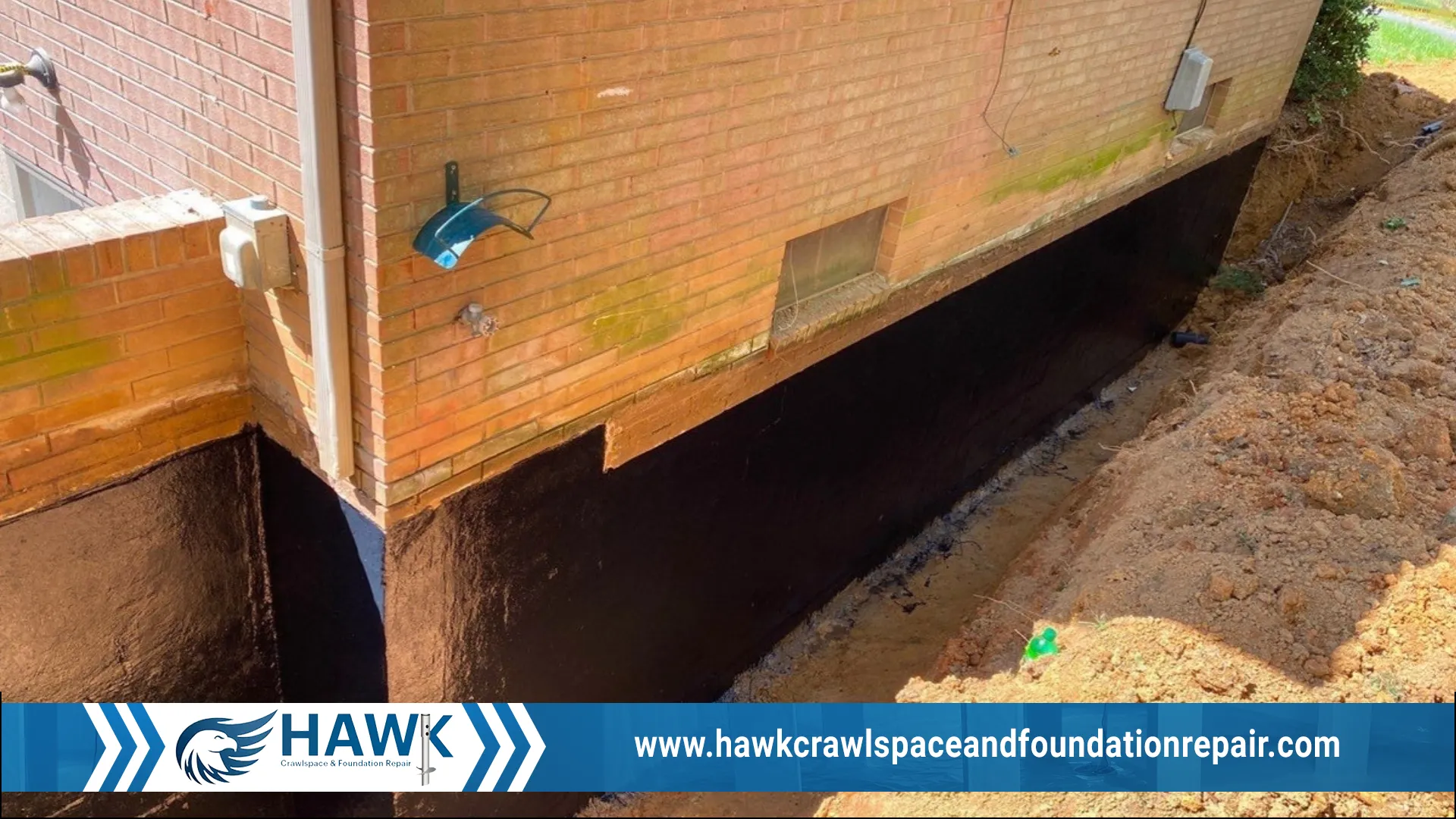
  • Wall waterproof coatings and membranes

By combining proven techniques with high-quality materials, Hawk Crawlspace & Foundation Repair ensures long-lasting protection for your home.

Benefits of Professional Foundation Waterproofing

Investing in professional Foundation Waterproofing offers benefits that go beyond keeping water out. Waterproofing helps:

  • Prevent structural damage and costly repairs
  • Improve indoor air quality by reducing mold and mildew
  • Increase energy efficiency by keeping insulation dry
  • Protect your home’s resale value
  • Provide peace of mind during heavy rain or storms

A dry foundation is a strong foundation, and proactive waterproofing can save you thousands in future repair costs.

Why Choose Hawk Crawlspace & Foundation Repair?

At Hawk Crawlspace & Foundation Repair, we understand how stressful foundation issues can be. That’s why we focus on honest assessments, clear communication, and dependable workmanship. Our team is committed to providing reliable Foundation Waterproofing solutions that address the root cause of moisture problems, not just the symptoms.

We take pride in treating every home as if it were our own, delivering results you can trust and service you can feel confident about.