2530 Centerville Turnpike S, Chesapeake, VA 23322

Foundation Repair in Chesapeake, VA: What the Process Actually Looks Like

If you’ve gotten to the point where you’re searching for foundation repair in Chesapeake, VA, chances are you’ve already noticed something: a crack that won’t stay patched, a door that doesn’t close right anymore, or maybe a contractor already told you there’s an issue and you want to understand what you’re actually getting into. This article isn’t going to spend a lot of time re-explaining the warning signs. Instead, it’s going to walk through what foundation repair actually involves once you’ve decided to move forward, what methods are commonly used, and what to expect from the process.

Foundation repair sounds like one thing, but it’s really a category that covers a range of solutions depending on what’s wrong and why. The right approach for a home with a few settling cracks is very different from what’s needed for a home with a foundation wall that’s actively bowing inward.

Why Chesapeake Foundations Need Different Solutions Than Other Regions

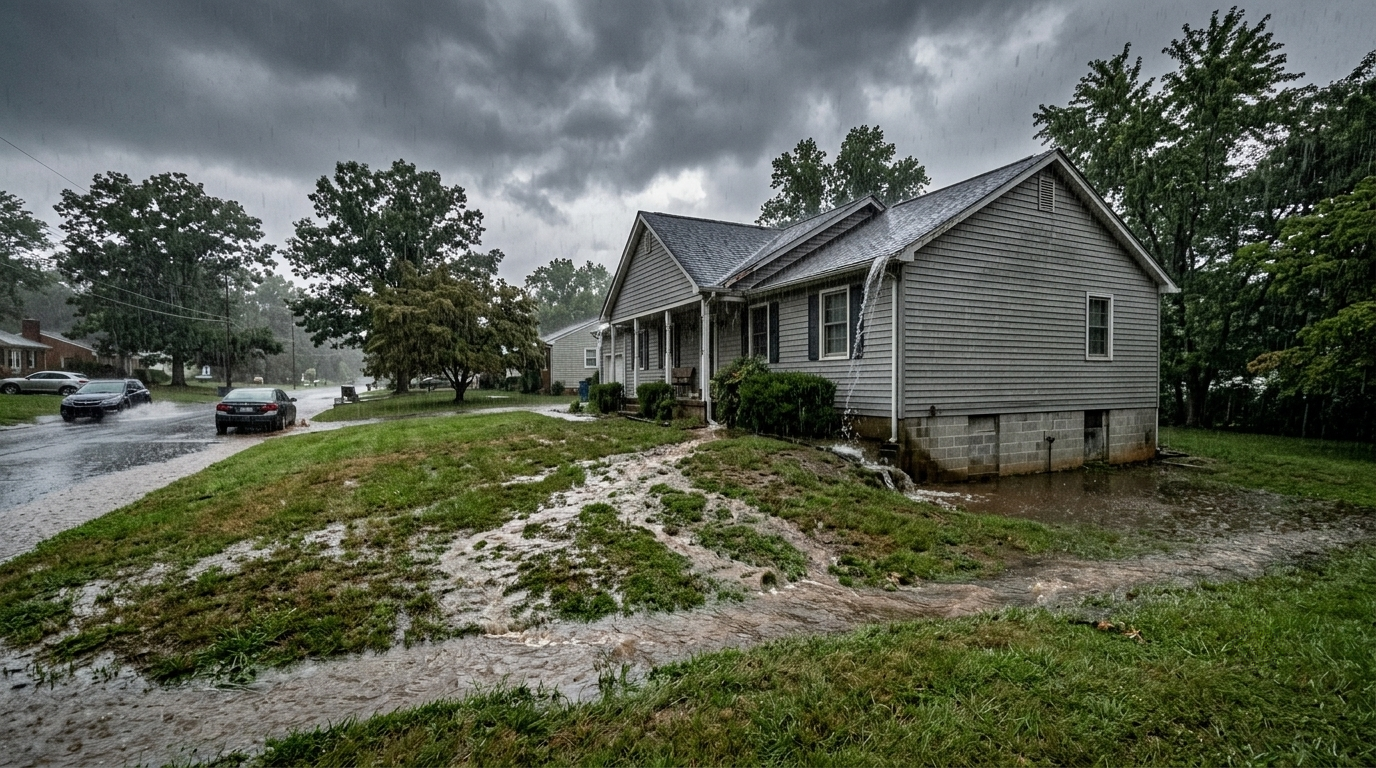
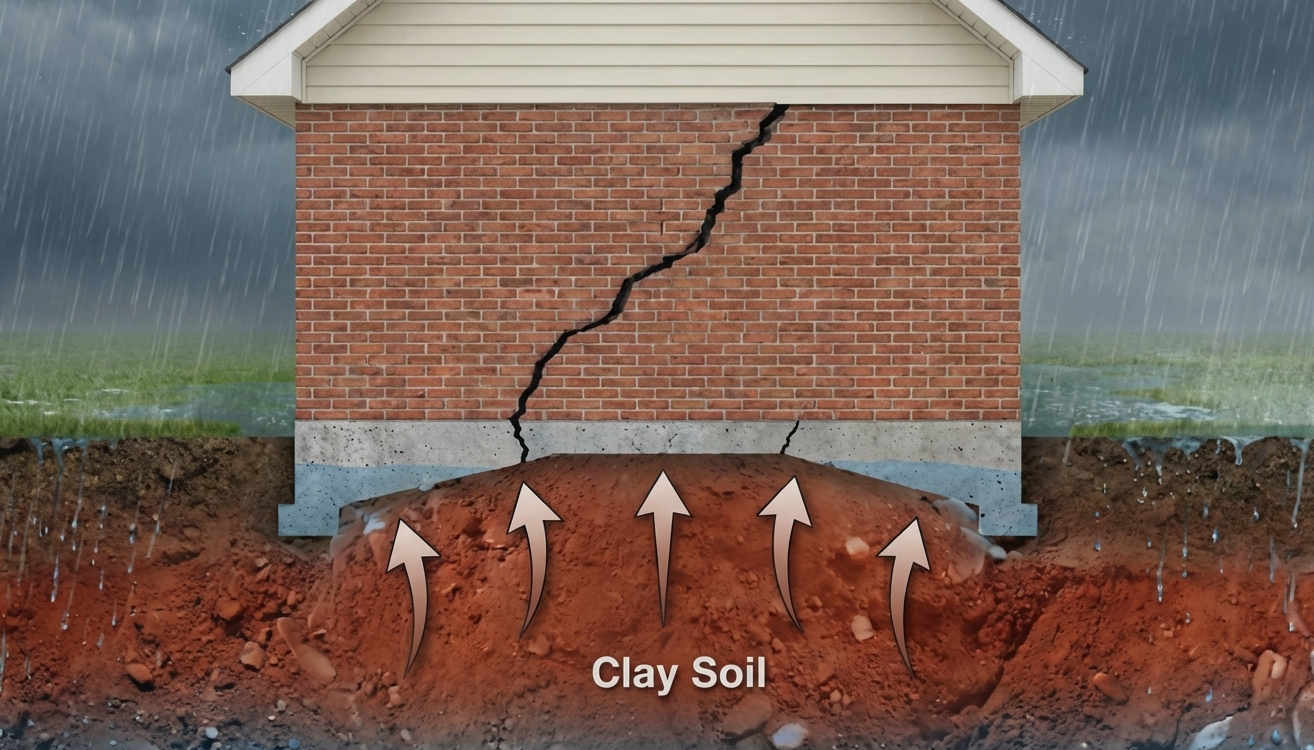
Foundation repair methods aren’t one-size-fits-all, and the reason comes down to soil. Chesapeake and the broader Hampton Roads area sit on coastal plain soils with significant clay content and a water table that, in a lot of neighborhoods, isn’t far below the surface. Clay soil swells when it’s wet and shrinks when it dries, and that cycle repeats every year with the seasons. Add in groundwater pressure from a high water table, and you’ve got soil conditions that put ongoing, uneven stress on a foundation.

This matters for repair because a fix that works great in a region with stable, well-drained soil might not hold up here. A repair method has to account for soil that’s going to keep moving. That’s part of why deep foundation solutions, ones that bypass the unstable upper soil layers entirely and anchor into more stable strata below, have become the standard for serious foundation issues in this region.

Common Foundation Repair Methods Used in Chesapeake

Unfortunately, there isn’t a single, one-size-fits-all foundation repair technique. The right method depends on what’s causing the problem and how severe it’s gotten.

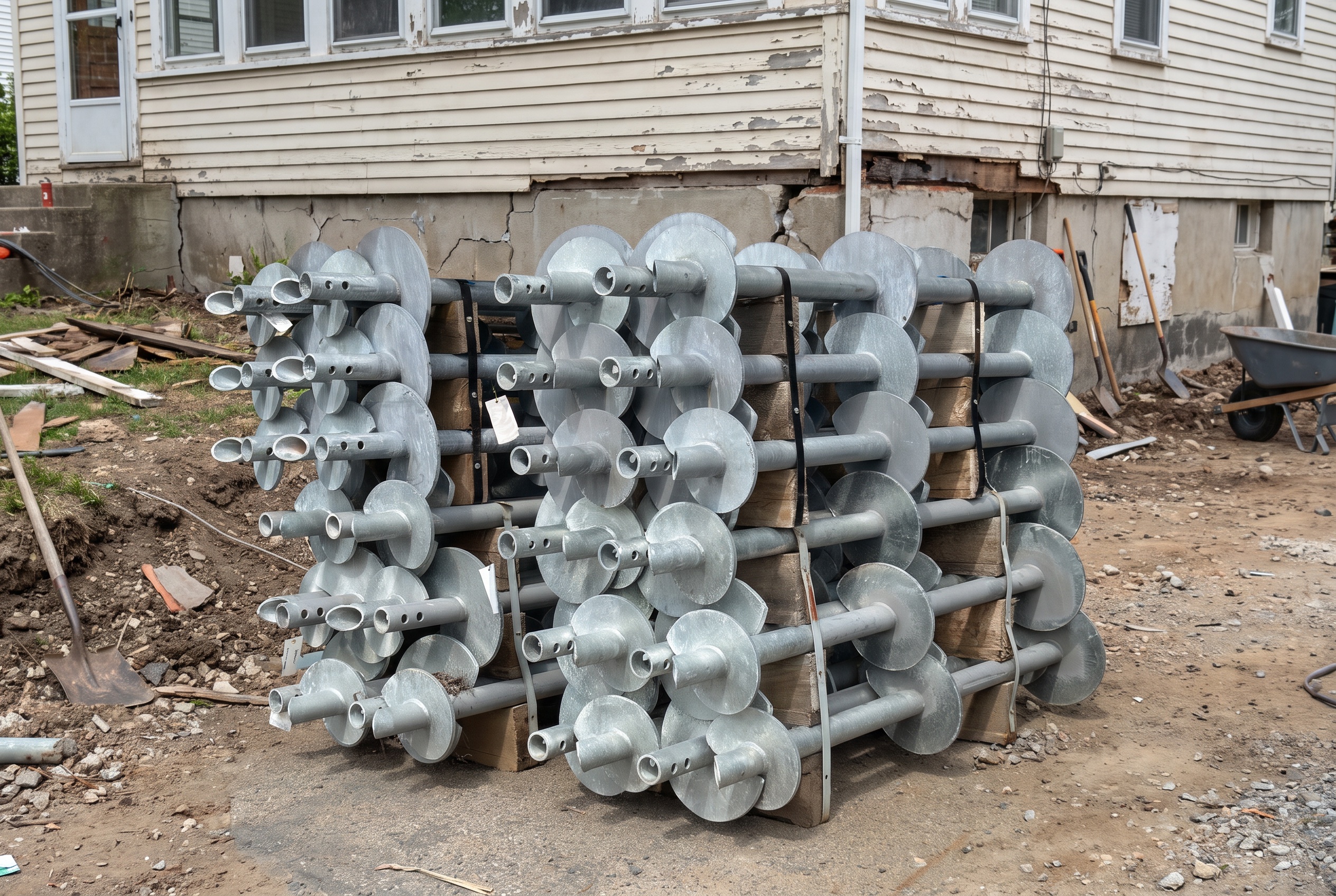
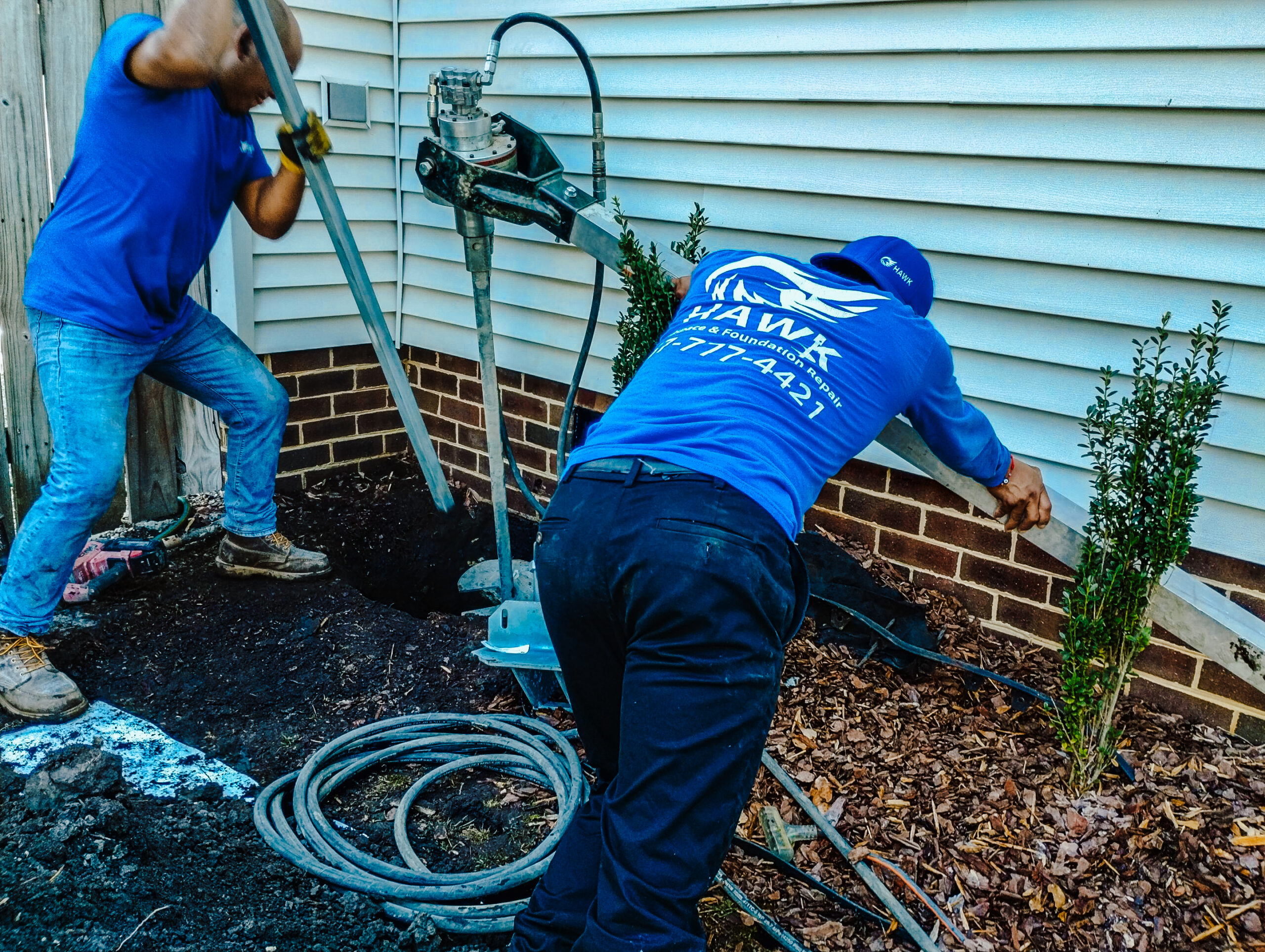
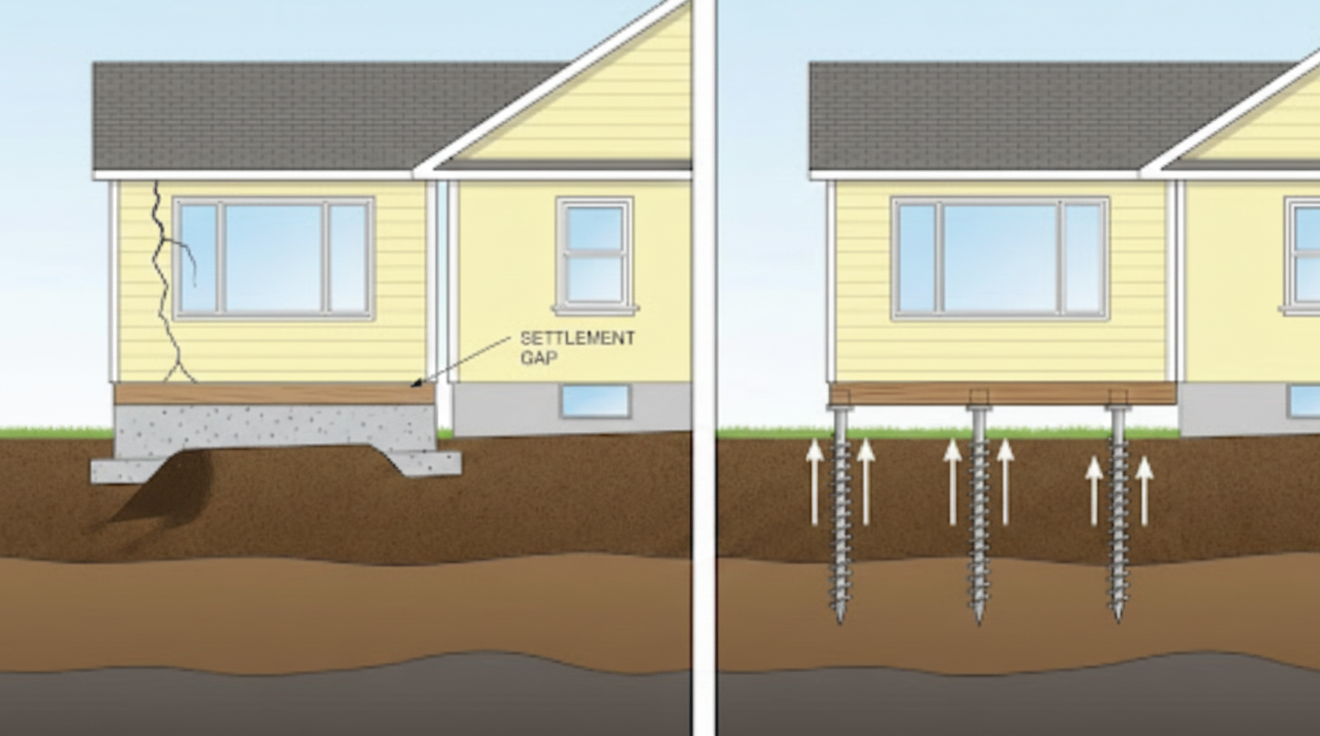
Helical piers. For homes dealing with significant settlement, helical piers are often the most reliable long-term solution. These are steel shafts with helix-shaped plates that get screwed into the ground using hydraulic equipment, similar in concept to a giant screw, until they reach load-bearing soil deep enough to provide stable support. One of the practical advantages of helical piers is that the torque required to install them correlates directly with their load-bearing capacity, so the contractor can verify during installation that each pier is actually capable of supporting the structure’s weight. They’re installed with minimal excavation, which means less disruption to your yard and landscaping compared to older underpinning methods. You can read more about helical pier installation and how it applies to different foundation types.

Foundation jacks and post-pier repair. For homes with crawl space foundations, sagging floors are often caused by failing support posts or rotted sill plates rather than a problem with the foundation walls themselves. In these cases, heavy-duty adjustable steel jacks get installed at intervals beneath the main support beams. Unlike older methods involving concrete blocks or wood shims, steel jacks allow for incremental adjustment over time, which matters in a region where soil movement is ongoing rather than a one-time event. If the original wood framing has rot or termite damage, that damaged material needs to be replaced before new supports go in, otherwise you’re just adding support to compromised wood.

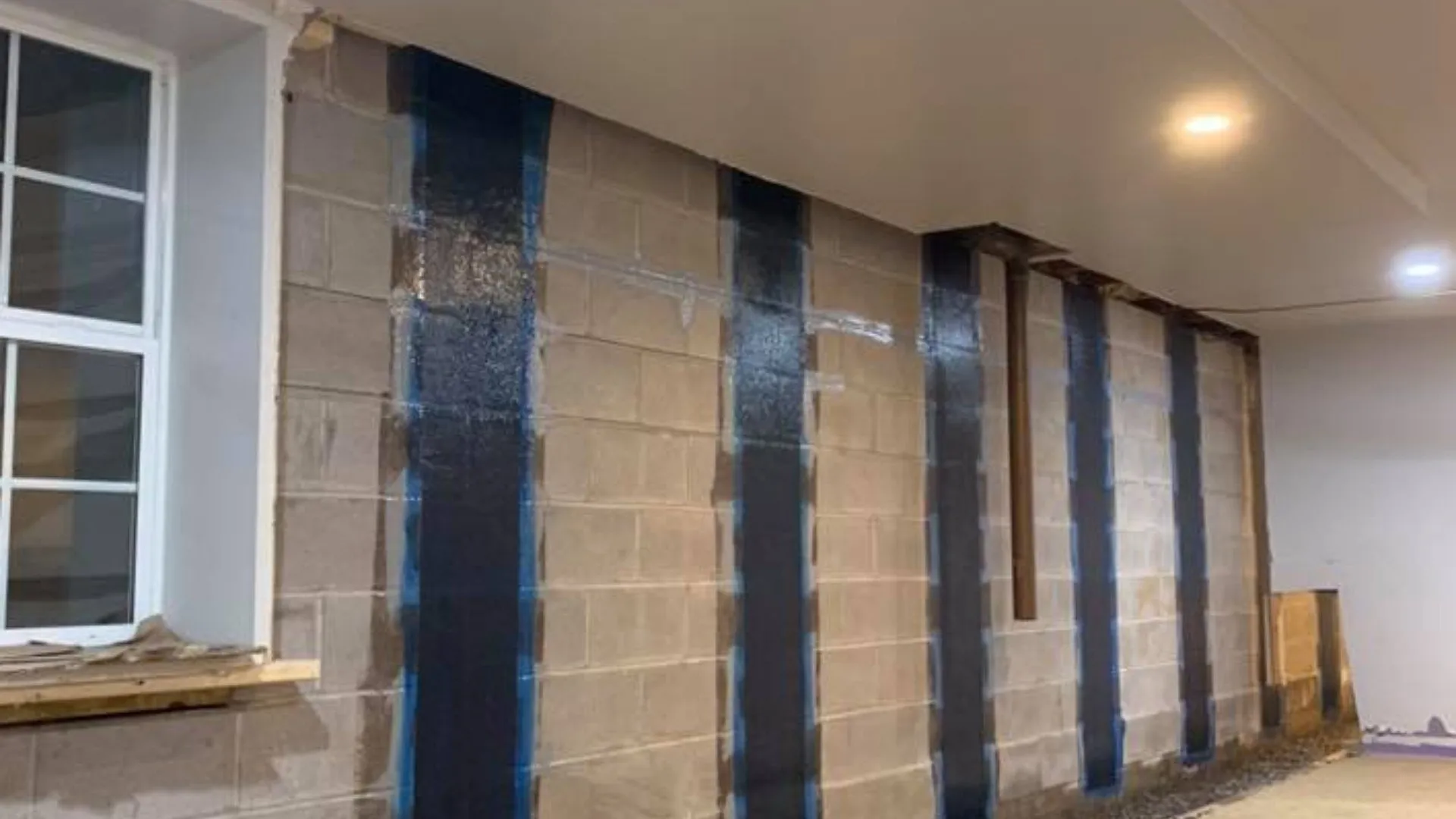
Wall stabilization for bowing or cracked foundation walls. If a basement or crawl space wall is bowing inward, that’s a sign of lateral pressure from saturated soil pushing against it. Stabilization typically involves installing supports, either steel braces or anchoring systems, that counteract that pressure and prevent further movement. In some cases this is paired with addressing the drainage issue causing the pressure in the first place, since stabilizing a wall without dealing with the water behind it just means the same pressure keeps building.

Drainage and waterproofing as part of the repair. A lot of foundation problems in this region trace back to water, whether it’s hydrostatic pressure against walls or moisture causing soil to expand unevenly beneath footings. Because of that, foundation repair often includes a drainage component: French drains, sump pumps, or grading improvements that redirect water away from the foundation. Skipping this step on a repair is a bit like fixing a leak in your roof but leaving the hole in the ceiling that’s letting water in. The structural fix and the water management need to work together. Basement waterproofing and foundation repair frequently go hand in hand for exactly this reason.

What to Expect During the Repair Process

The process generally starts with an inspection, and a thorough one matters more than people often realize. A good inspection isn’t just looking at the visible cracks, it’s looking at the soil around the foundation, the drainage situation, the crawl space if there is one, and trying to understand why the movement is happening, not just where it shows up. Two homes with similar-looking cracks can have completely different underlying causes, and the repair plan should reflect that.

From there, the contractor should walk you through what they found and what they’re recommending, including why. This is a good point to ask questions. If something doesn’t make sense, or if the recommendation seems to jump straight to the most expensive option without much explanation, that’s worth pushing back on. The EPA’s guidance on moisture control in buildings notes that addressing moisture sources is foundational to long-term structural performance, which is a good reminder that a repair plan focused only on the symptom (the crack, the sag) without addressing the cause (water, soil movement) is incomplete.

Installation timelines vary a lot depending on scope. A handful of helical piers for a residential foundation might be completed in a day or two. A larger project involving multiple repair methods, drainage work, and structural reinforcement could take longer. Most of this work is done from outside the home or in the crawl space, so disruption to daily life inside the house is usually minimal, though there will be some noise and equipment in the yard during the process.

How Much Does It Cost, and Is It Worth It?

This is the question everyone wants a number for, and the honest answer is that it depends entirely on what’s being repaired. A few helical piers for localized settlement is a very different scope than a full perimeter stabilization with integrated drainage. The factors that drive cost include how many piers or jacks are needed, how deep they need to go (which depends on soil conditions specific to your property), whether drainage or waterproofing work is part of the scope, and how much existing damage, like rotted framing, needs to be addressed before structural repairs can even begin.

What’s worth keeping in mind is that foundation problems driven by soil movement and water don’t resolve themselves. They tend to progress, and the cost of repair generally goes up the longer the underlying issue continues. A free inspection is the best way to get an actual number for your situation rather than guessing based on a range you found online.

Getting Started

If you’re at the point of looking into foundation repair, the most useful next step is a professional inspection that tells you specifically what’s going on with your home and what it would take to fix it. At Hawk, our inspections are free and there’s no obligation, and you don’t need to be home for us to take a look. Get in touch here to schedule one, and we’ll walk you through exactly what we find and what your options look like.

Frequently Asked Questions

How long do foundation repairs last?

It depends heavily on the method. Helical piers are engineered for very long lifespans, often cited at well over a century, since the steel shafts are typically galvanized for corrosion resistance and anchored into stable soil layers below the zone affected by seasonal movement. Other repairs, like foundation jacks or wall stabilization, are also designed as long-term or permanent solutions, but their durability depends on whether the underlying moisture or drainage issues were addressed at the same time. A repair that ignores the water problem causing the movement is more likely to need follow-up work down the road.

Will foundation repair disrupt my landscaping or yard?

Some methods cause more disruption than others. Helical pier installation involves minimal excavation, generally just small access points where each pier goes in, so the impact on landscaping is usually limited. Drainage work, like installing a French drain around the perimeter, involves more digging along the affected area. Any reputable contractor should be able to tell you upfront what kind of yard disruption to expect for your specific repair plan, and most will work with you on restoring the area afterward.

Can I sell my house if it’s had foundation repair?

Yes, and in many cases documented foundation repair from a licensed contractor can actually be a positive in a real estate transaction. Buyers and inspectors are often more concerned about unresolved or undisclosed foundation issues than about a problem that was professionally addressed with proper documentation. Many foundation repair systems come with transferable warranties, which can provide additional reassurance to a buyer. The bigger red flag for resale is foundation movement that was patched cosmetically without addressing the structural cause.

Do I need foundation repair if I’m only seeing minor cracks?

Not necessarily, but it’s worth having it looked at. Minor, stable cracks that haven’t changed in years are often just normal settling and may not need structural repair. The concern is when cracks are new, growing, or appearing alongside other symptoms like sticking doors or sloping floors, which can indicate active movement. A free inspection can tell you whether what you’re seeing is cosmetic or an early sign of something that’s worth addressing now while the scope of repair is smaller.

Signs of Foundation Problems Chesapeake Homeowners Should Watch For

Signs of Foundation Problems Chesapeake Homeowners Should Watch For

Most foundation problems don’t announce themselves all at once. They show up quietly, often in places you’d dismiss as normal wear and tear. A door that starts sticking in the summer. A crack in the drywall you patch and repaint. A floor that feels a little soft near one wall. In coastal Virginia, where expansive clay soils and a high water table are the norm, these kinds of symptoms tend to appear gradually and get written off until the damage is significant enough that it can’t be ignored anymore.

The signs of foundation problems are worth knowing, because catching them early is almost always cheaper than dealing with them after they’ve had time to develop. This isn’t about alarming anyone, it’s about helping homeowners recognize what’s worth a closer look versus what’s probably nothing.

Why Chesapeake Homes Are Particularly Vulnerable

Before getting into specific symptoms, it helps to understand why Hampton Roads is such a challenging environment for foundations in the first place.

The soil in much of Chesapeake, Norfolk, and the surrounding area contains significant clay content. Clay soil expands when it absorbs water and contracts when it dries out. That constant movement, driven by seasonal rainfall, summer droughts, and the region’s consistently high humidity, puts ongoing stress on foundations. Over time, that stress adds up. The U.S. Geological Survey has documented land subsidence as an ongoing issue in the Hampton Roads region, compounding the natural movement of expansive soils.

Add in a water table that in some neighborhoods sits just a few feet below the surface, and you have conditions that put real, sustained pressure on foundations that were built to sit on stable ground. Homes near Great Bridge, Deep Creek, or low-lying parts of Virginia Beach deal with this more acutely than properties on higher ground, but no home in this region is completely insulated from it.

The Most Common Signs of Foundation Problems

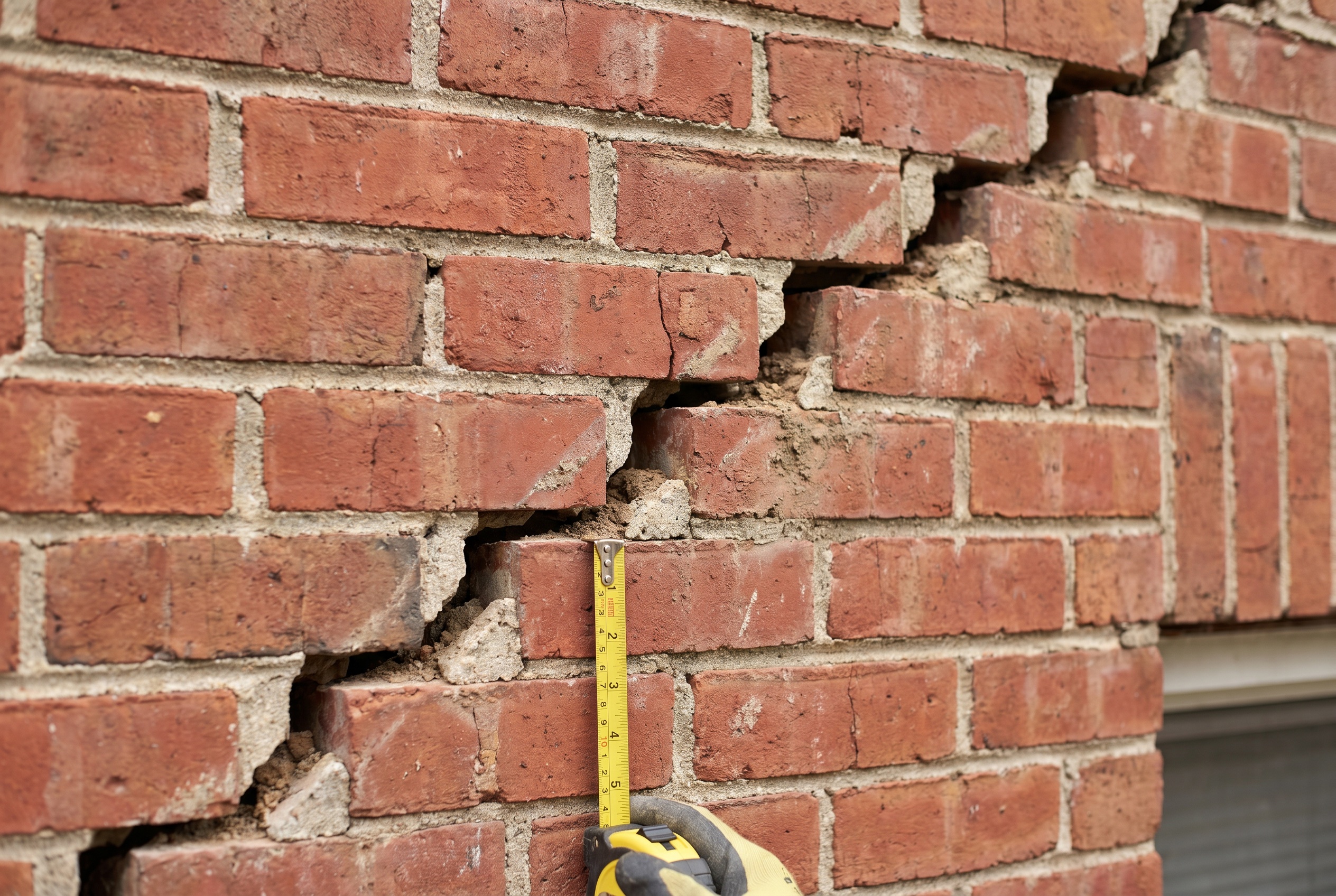
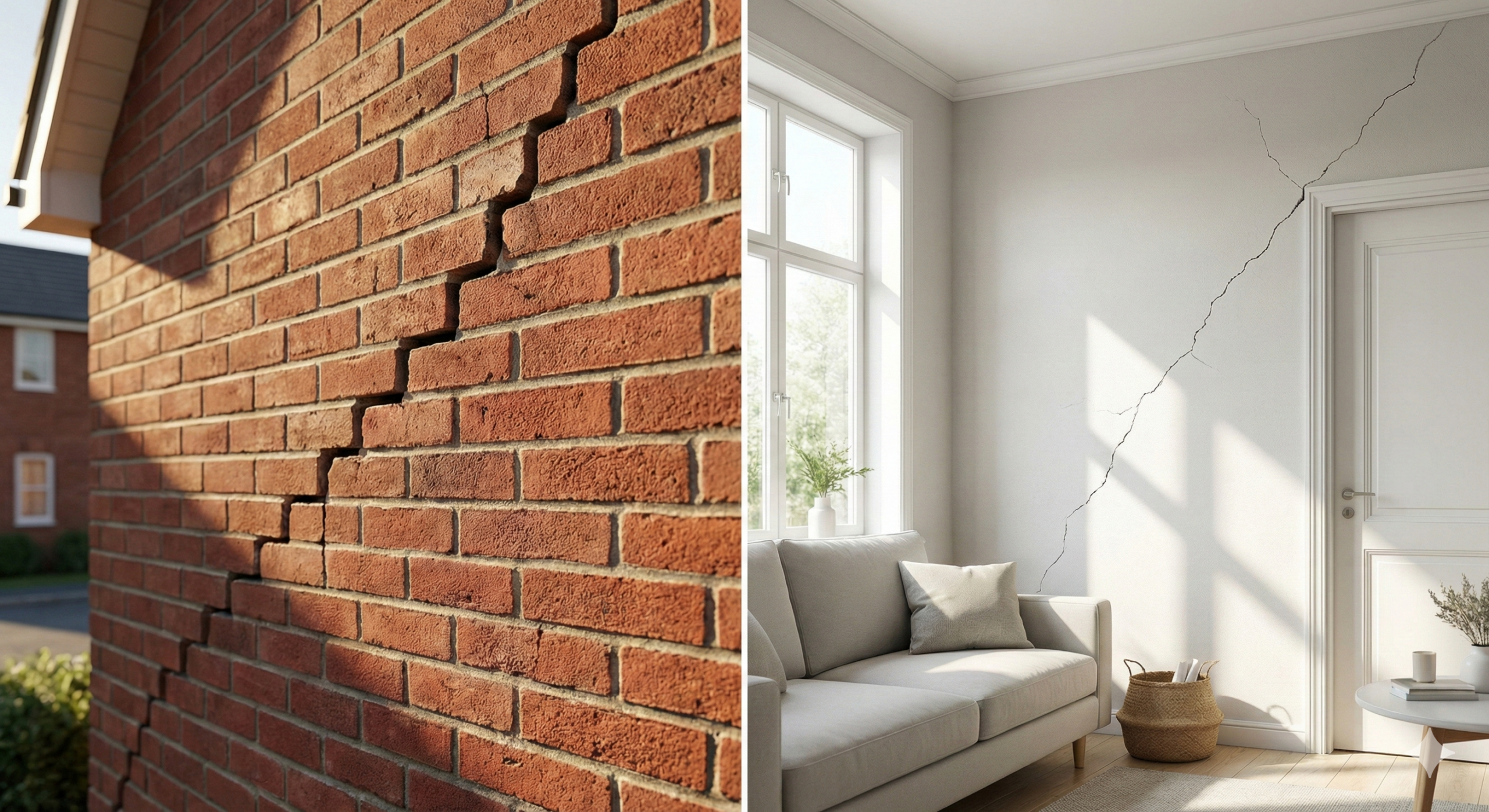
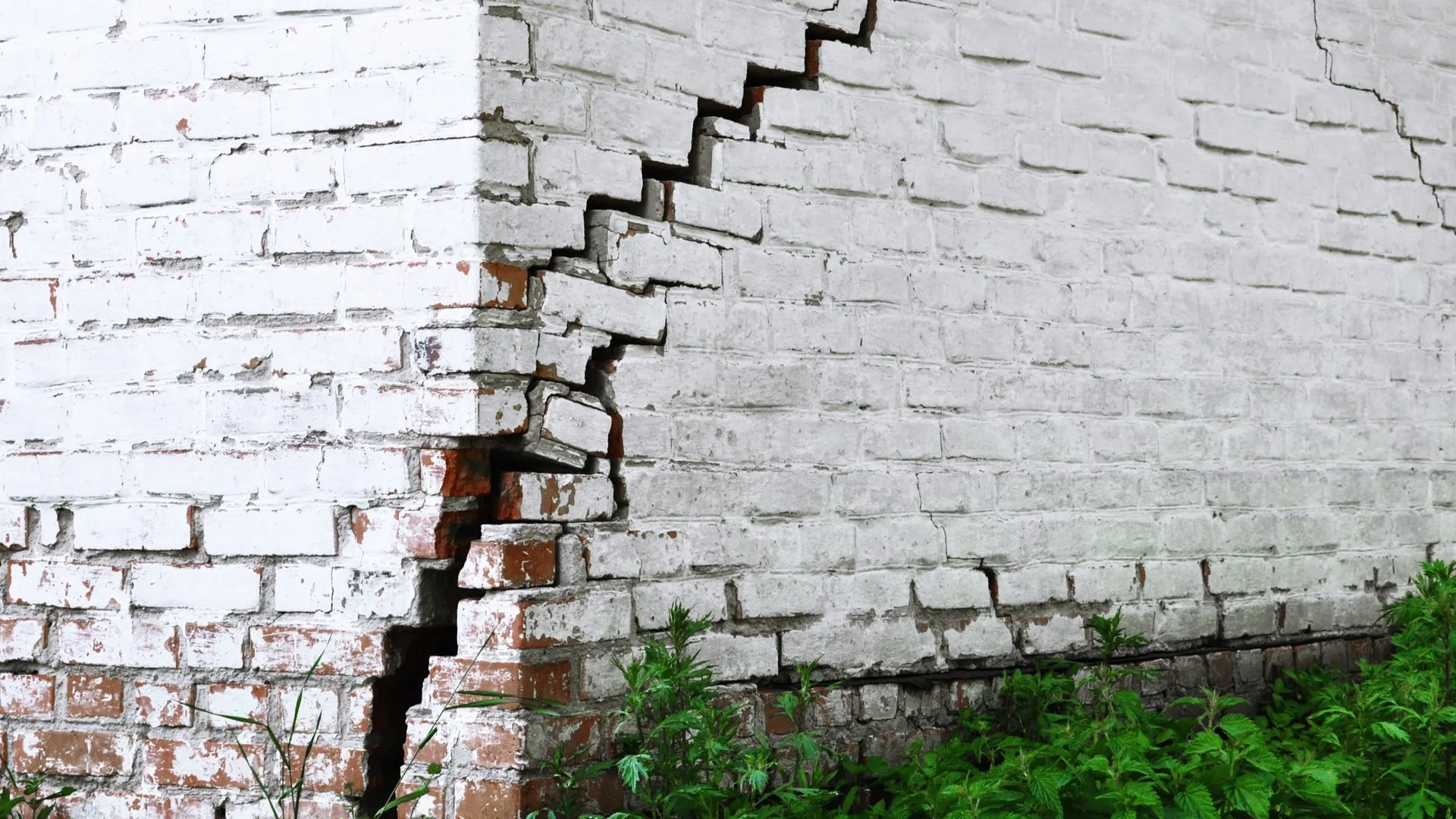
Cracks in the interior drywall or plaster. Not every crack in your walls is a foundation issue. Hairline cracks that run horizontally along seams are usually just normal settling or seasonal movement. The ones worth paying attention to are diagonal cracks, particularly those that run at a 45-degree angle from the corners of windows and door frames. These patterns typically indicate differential settlement, where one part of the foundation is moving at a different rate than another. Stair-step cracking in brick or block exterior walls follows the same logic and is one of the clearer visual indicators of foundation movement.

Doors and windows that stick or won’t close properly. This one gets blamed on humidity constantly, and humidity is sometimes the culprit. Wood framing does expand in Virginia’s muggy summers. But when a door that used to close fine starts dragging on the floor or catching at the top of the frame, and the problem doesn’t improve in drier weather, that’s worth investigating. Foundation movement shifts the structural frame of the house, and doors and windows are often the first places that show it because they require precise alignment to operate correctly.

Uneven or sloping floors. You might notice this as a subtle sensation when you walk through a room, or you might spot it when furniture starts sitting unevenly. In crawl space homes, which make up a large portion of the housing stock in older parts of Norfolk, Portsmouth, and Chesapeake, floor sag often points to failing support posts, rotted sill plates, or inadequate joist support rather than the foundation itself. But the two issues are related. Moisture that comes up through an unencapsulated crawl space is what rots the wood framing, and moisture problems in crawl spaces often trace back to foundation conditions that allow water to collect near the structure.

Gaps between walls and ceilings or floors. When a foundation settles unevenly, the framing above it moves. That movement shows up as separation at the joints where walls meet ceilings, or where the baseboard meets the floor. Small gaps that appear uniformly around a room aren’t usually alarming. Large gaps, or gaps that are noticeably worse in one area of the house, suggest movement in that section of the foundation.

Bowing or leaning walls in the basement or crawl space. If you have a basement, get down there and look at the walls. Walls that bow inward at the center are under lateral pressure from the soil outside. This is a more serious symptom that warrants prompt attention. In a crawl space, leaning or deteriorating block piers, cracked concrete footings, or posts that have shifted off their bases are all indicators that the structural support system has been compromised.

Water intrusion or chronic dampness. Water in your basement or crawl space isn’t a direct sign of foundation failure, but it’s a strong indicator that conditions exist which can lead to it. Hydrostatic pressure from saturated soil pushes against foundation walls constantly. Over time, that pressure causes cracks, wall movement, and eventually more significant structural issues. If you’re seeing water stains, efflorescence (the white chalky deposits on concrete or block), or standing water after rain, those are worth addressing before they become structural problems.

What Not to Panic About

It’s worth saying plainly that not every crack or creak means your foundation is failing. Homes move. Seasonal changes cause wood to expand and contract, and older homes in particular have usually done a fair amount of settling over the decades. A single hairline crack that hasn’t changed in years is usually not a crisis.

The pattern to watch for is change. A crack that’s been stable for a long time is different from a crack that keeps growing. A door that started sticking recently is more concerning than one that’s always been a little tight. If you’re noticing multiple symptoms at the same time, or symptoms that seem to be getting worse, that’s when it makes sense to have someone take a look.

When to Call a Foundation Contractor

If you’re seeing diagonal cracking in multiple locations, doors or windows that have noticeably changed in how they operate, floors with a visible slope, or any bowing in your basement walls, those warrant a professional inspection. The same goes for any situation where water is regularly getting into the basement or crawl space.

A good contractor will do more than look at the symptoms. They’ll want to understand what’s happening beneath them: the soil conditions around the foundation, the drainage situation, and whether the issue is active or has stabilized. FEMA’s coastal construction guidance emphasizes that in coastal plain environments like Hampton Roads, soil behavior and drainage are central to foundation performance, not just afterthoughts.

At Hawk, we offer free structural inspections with no obligation, and you don’t need to be home for us to take a look. If something you’ve seen around your house has been nagging at you, that’s usually reason enough to have it checked. Schedule a free inspection here and we’ll tell you honestly what we find.

Frequently Asked Questions

How do I know if a crack in my wall is a foundation issue or just normal settling?

The shape and location of the crack matters more than the size. Horizontal or stair-step cracks in masonry, and diagonal cracks running from the corners of door and window frames, are more associated with foundation movement than straight vertical hairline cracks along drywall seams. If a crack has been stable for years and isn’t accompanied by other symptoms, it’s probably not an emergency. If it’s new, growing, or appearing alongside sticky doors or sloping floors, get it looked at.

Can foundation problems get worse if I ignore them?

Yes, and usually they do. Foundation issues driven by soil movement or water pressure are ongoing processes. The forces causing the problem don’t stop just because the repair hasn’t happened yet. What starts as a small crack or minor settlement can develop into more significant structural movement over time, and the cost of repair tends to increase with the severity of the damage. Early intervention is almost always the more cost-effective path.

Do foundation problems affect home value?

Significantly, yes. Foundation issues are one of the most common deal-killers in real estate transactions. Home inspectors flag them, buyers get nervous, and lenders sometimes won’t approve financing on a property with unresolved structural problems. Even cosmetically repaired symptoms, like patched cracks, often get flagged during inspection if the underlying cause hasn’t been addressed. Having documented repairs from a licensed contractor is much better for resale than a history of visible problems with no resolution. You can read more about our foundation repair services and what a proper fix involves.

Are foundation problems common in Chesapeake and Hampton Roads?

More common here than in many other parts of Virginia, yes. The combination of expansive clay soils, a high water table in many neighborhoods, and the coastal humidity creates conditions that put consistent stress on foundations. Homes built before modern moisture management practices were standard, particularly pier-and-beam homes in older parts of Norfolk and Portsmouth, tend to show foundation and structural symptoms more frequently. But newer construction isn’t immune either, especially in areas with poor site drainage or on lots that weren’t properly graded.

Planning an Addition? Why Helical Piers Beat Concrete Footings in Hampton Roads


Are you planning to add a sunroom or a master suite to your Chesapeake home? Before you pour a single yard of concrete, you need to consider the “settlement gap.” In Hampton Roads, standard concrete footings are often insufficient for new additions, leading to the new structure pulling away from the original home within just a few years.


The Problem with Shallow Footings

Standard footings sit in the “active zone” of the soil—the top few feet where moisture levels fluctuate. Because your original home has had decades to settle, and your new addition is fresh, they will settle at different rates. This leads to cracked drywall and leaking roofs where the two structures join.


The Helical Pier Advantage: Prevention over Cure

Helical piers are steel shafts with screw-like plates that are bored deep into the ground until they reach stable, load-bearing strata.

  • Deep Anchor: They bypass the “active” clay soil entirely.
  • One-Day Installation: We can often install the piers for a new addition in a single day.
  • Immediate Loading: Unlike concrete, which needs days to cure, helical piers can support weight immediately.


By choosing helical piers for your addition, you are ensuring that your new space remains perfectly level with your original home for the life of the structure. It is the ultimate “Prevention over Cure” investment for any Hampton Roads homeowner.


A Firefighter’s Guide to Structural Safety Precision in the “Rescue” Mentality


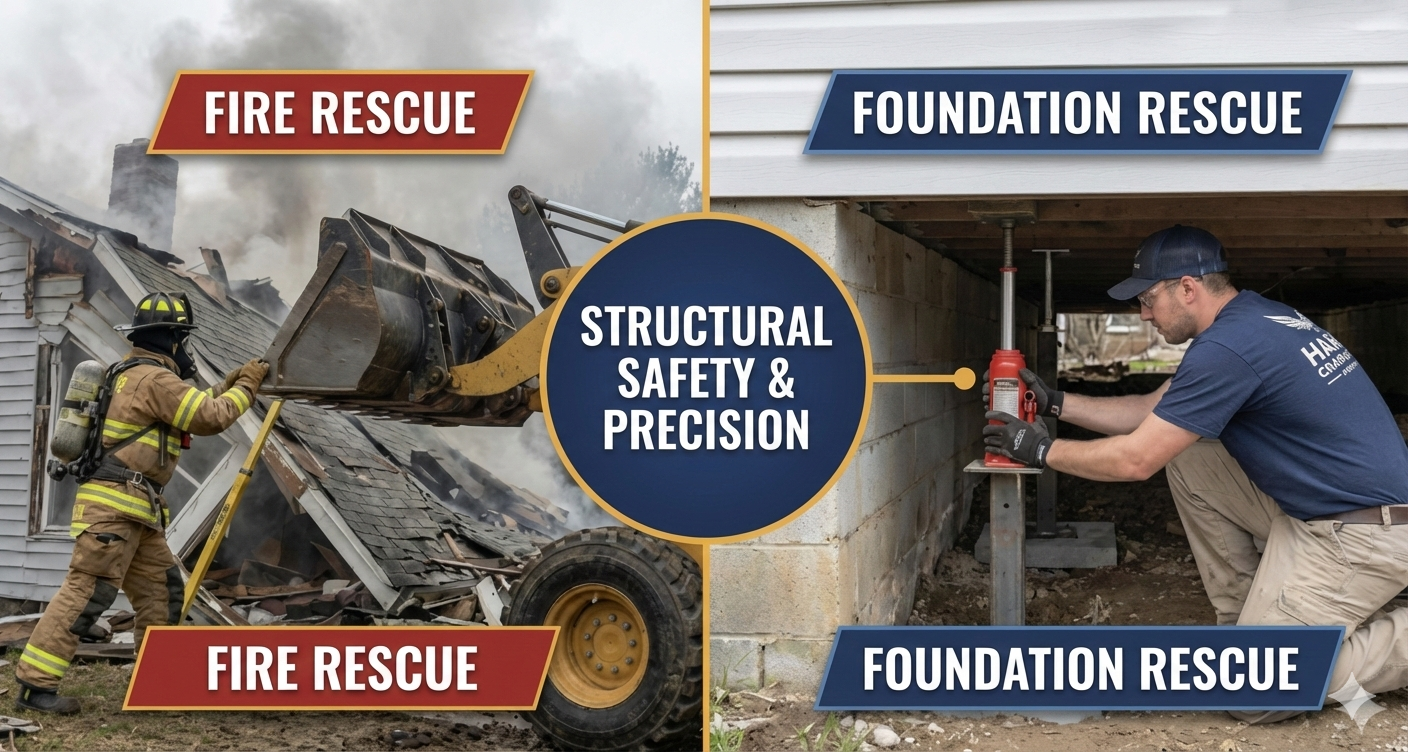
When you hire a foundation contractor, you are trusting someone with the very skeleton of your home. At Hawk Crawlspace and Foundation Repair, that trust is built on a foundation of service. Our owner, Robert Brant, spent 21 years as a Norfolk Fire Captain, and that experience defines every “rescue” we perform on a sinking home.


The Technical Rescue Lens

In the fire service, a “Technical Rescue” involves stabilizing a collapsed or burning structure to make it safe for entry. It requires an obsession with physics, load-bearing points, and structural integrity under duress. Robert brings this same “Safety First” mentality to residential repair.

While a standard contractor might look for the quickest fix, a firefighter looks for the safest and most permanent solution. We view a sagging floor or a cracked foundation not just as a job, but as a structure in need of stabilization.


A Culture of Excellence

This background has fostered a unique culture within our team:

  • Precision: We measure in fractions of an inch, not “close enough.”
  • Integrity: We provide honest assessments, even if the “fix” is simpler than you feared.
  • Service: We treat your home with the respect it deserves, knowing it is your family’s primary sanctuary.


When your home is in trouble, you don’t just need a contractor—you need a team trained to stabilize the situation with the precision of a rescue operation.


Cracks in the Wall? 5 Signs Your Foundation Needs Immediate Repair


Every house “settles.” As the soil beneath your home shifts with the changing Virginia seasons—from our humid summers to our wet winters—it is normal for the structure to adjust slightly. However, there is a very fine line between natural settling and a foundation failure that threatens your home’s safety and value.

At Hawk Crawlspace & Foundation Repair, we see homeowners every day who aren’t sure if that new crack in the living room is a cosmetic nuisance or a structural emergency. To help you protect your biggest investment, we’ve put together the five most critical signs that your foundation needs professional attention.


  1. The Dreaded “Stair-Step” Crack

If you have a brick or concrete block exterior, pay close attention to the joints. A vertical crack might just be a sign of minor expansion, but a stair-step crack—one that follows the mortar lines up and across like a set of stairs—is a major red flag. This usually indicates that one corner of your home is sinking faster than the rest, a process known as differential settlement.


  1. Doors and Windows That “Stick”

Have you noticed a door that suddenly won’t latch? Or a window that requires two people to pry open? When your foundation shifts, it pulls the house’s frame out of “square.” Even a fraction of an inch of movement can warp a door or window frame, causing it to stick. If you see diagonal cracks radiating from the upper corners of these frames, the house is literally pulling itself apart at its weakest points.


  1. Horizontal Cracks in the Basement or Crawl Space

In the world of basement crack repair, not all cracks are created equal. Vertical cracks are often caused by the concrete shrinking as it cures. However, horizontal cracks are much more serious. These are typically caused by hydrostatic pressure—the weight of water-saturated soil pushing against your foundation walls. If left untreated, these walls can eventually “bow” inward or collapse entirely.


  1. Sloping or Bouncy Floors

Your floors should be level. If you feel like you’re walking slightly “downhill” in the kitchen, or if you notice a gap between your baseboards and the floor, your support system is failing. In many Virginia homes, this is caused by moisture in the crawl space weakening the wooden floor joists. We often remedy this using foundation jacks to provide the necessary lift and stabilization.


  1. Separating Chimneys or Porches

Because chimneys and porches are often built on a separate foundation “pad” from the rest of the house, they are often the first things to show signs of trouble. If you see a gap forming between your chimney and the siding, or if your front porch seems to be pulling away from the main structure, the soil underneath is no longer supporting the weight.


Why You Can’t Afford to Wait

Foundation problems are like a toothache—they never get better on their own, and the “medicine” only gets more expensive the longer you wait. A small crack today can be fixed with basement waterproofing or simple injections. A foundation that has shifted two inches may require helical pier installation to pin the house to stable bedrock.


Get a Professional Perspective

At Hawk Crawlspace & Foundation Repair, we believe in honesty first. Not every crack needs a $20,000 fix. Sometimes, all you need is better gutter drainage or a vapor barrier. But you won’t know until an expert takes a look.

As a local company led by a Norfolk Firefighter, we treat your home’s safety with the same urgency we treat our own. We offer free, no-obligation inspections across Chesapeake and Hampton Roads.

Is your home trying to tell you something? Don’t ignore the signs. Call Hawk Crawlspace & Foundation Repair at 757-908-2362 or click HERE to schedule your free inspection today.

The Chesapeake Clay Cycle: How Regional Soil Impacts Foundation Integrity


If you live in Chesapeake or Suffolk, you aren’t just living on dirt; you’re living on a geological sponge. The Tidewater region is notorious for its high concentration of expansive clay. For homeowners, this soil creates a relentless “swell-and-shrink” cycle that acts as a slow-motion wrecking ball for traditional shallow foundations.


The Science of “Soil Heave”

When our heavy Virginia rains arrive, the clay particles in the ground absorb water and expand significantly. This creates hydrostatic pressure—a massive force of water-saturated soil pushing against your crawlspace walls. When the soil expands upward, it’s known as “soil heave.” Conversely, during our humid but dry summer stretches, the clay shrinks, leaving voids beneath your footings.


The Signature of Damage

This constant movement is more than the house “settling.” It is structural fatigue. You’ll often see the evidence in your home’s exterior:

  • Diagonal “Step” Cracks: These typically appear in brickwork, following the mortar lines in a stair-step pattern.
  • Sticking Doors and Windows: When the foundation shifts, the frames become trapezoids rather than rectangles.
  • Gaps in Trim: Crown molding or baseboards pulling away from the wall.


At Hawk Crawlspace and Foundation Repair, we understand that you can’t change the soil, but you can change how your home interacts with it. By stabilizing your foundation with deep-foundation solutions, we help your home remain “the rock” even when the ground beneath it is anything but.


Foundation Repair Done Right: Protect Your Home with Hawk Crawl Space & Foundation Repair

Your home’s foundation is one of the most critical elements of its structural integrity. When foundation problems go unnoticed or untreated, they can lead to severe damage, costly repairs, and even safety risks. At Hawk Crawl Space & Foundation Repair, we provide expert Foundation Repair services to help homeowners protect what matters most—their homes and families.

Why Foundation Repair Matters

A failing foundation can impact your entire home. From uneven floors and cracked walls to doors that won’t close properly, structural issues can slowly creep in and compromise the safety and value of your property.

Addressing foundation problems early can:

  • Prevent structural damage

  • Improve your home’s resale value

  • Restore safety and stability

  • Stop moisture and pest intrusion

  • Save thousands in future repairs

At Hawk Crawl Space & Foundation Repair, we don’t just patch surface issues—we get to the root of the problem to provide long-lasting, engineered solutions.

Signs You May Need Foundation Repair

Not sure if your home needs foundation attention? Here are some common warning signs:

  • Cracks in walls, floors, or ceilings

  • Bowing or leaning basement walls

  • Uneven or sloping floors

  • Gaps around windows or doors

  • Water intrusion or musty smells in the basement

  • Chimney leaning or pulling away from the house

If you notice one or more of these issues, it’s time to call the professionals at Hawk Crawl Space & Foundation Repair for a thorough inspection.

Our Proven Foundation Repair Process

We take pride in providing comprehensive, customized Foundation Repair services based on your home’s unique needs. Our process includes:

Detailed Inspection

Our trained technicians perform a full structural assessment to identify the root cause of your foundation issues.

Tailored Repair Solutions

From wall stabilization and pier installation to crack sealing and waterproofing, we design solutions that fit your home, soil type, and structure.

Expert Installation

Our skilled crew uses industry-leading equipment and methods to ensure your repairs are effective and long-lasting.

Warrantied Work

We stand behind our craftsmanship with warranties that provide long-term peace of mind.

Why Choose Hawk Crawl Space & Foundation Repair?

Homeowners choose Hawk Crawl Space & Foundation Repair because we’re not just another contractor—we’re a trusted partner. With years of experience in Foundation Repair, we bring:

  • Local knowledge and expert diagnostics

  • Transparent pricing and honest recommendations

  • Quality materials and proven techniques

  • Timely project completion and clean job sites

  • Exceptional customer service every step of the way

Don’t Wait—Protect Your Home Today

Foundation issues never fix themselves. The longer you wait, the more damage (and cost) you may face. Let Hawk Crawl Space & Foundation Repair provide the reliable, professional service you deserve.

Trusted Foundation Repair Solutions – Hawk Crawl Space & Foundation Repair

Your home’s foundation is one of the most critical components of its structural integrity. Over time, factors like soil movement, moisture, and aging can cause foundation issues that, if left untreated, may lead to serious structural damage. At Hawk Crawl Space & Foundation Repair, we specialize in providing reliable Foundation Repair solutions to keep your home safe, secure, and stable.

Signs Your Foundation Needs Repair

Recognizing early signs of foundation damage can help prevent costly repairs. Look out for these warning signals:
Cracks in Walls or Floors – Visible cracks, especially those widening over time, can indicate foundation shifts.
Uneven or Sloping Floors – A sinking or sloping floor suggests foundation settling.
Sticking Doors & Windows – Difficulty in opening or closing doors and windows could mean your foundation is shifting.
Gaps Around Doors & Windows – Structural movement may create noticeable gaps.
Bowing or Leaning Walls – This is a serious sign of foundation failure and should be addressed immediately.

Our Expert Foundation Repair Solutions

At Hawk Crawl Space & Foundation Repair, we use advanced techniques and high-quality materials to restore the stability of your home. Our Foundation Repair  solutions include:

Foundation Piering & Underpinning – We use steel or helical piers to stabilize sinking foundations and prevent further movement.
Crawl Space & Basement Repairs – From waterproofing to reinforcement, we ensure your crawl space and basement remain dry and strong.
Crack Repair & Sealing – Our team expertly repairs foundation cracks to prevent water infiltration and further damage.
Wall Stabilization & Reinforcement – Bowing or leaning walls are corrected using support beams or anchors to restore their strength.
Drainage Solutions – Proper drainage helps prevent water buildup, reducing the risk of foundation weakening.

Why Choose Hawk Crawl Space & Foundation Repair?

Experienced Professionals – Our skilled team has years of expertise in Foundation Repairs .
Custom Solutions – We assess your home’s unique needs and provide tailored repair solutions.
High-Quality Materials – We use industry-leading materials to ensure long-lasting results.
Customer Satisfaction Guaranteed – Our goal is to provide exceptional service and peace of mind to homeowners.

Protect Your Home’s Foundation Today

If you notice any signs of foundation issues, don’t wait! The longer you delay, the more severe and costly the damage can become. Contact Hawk Crawl Space & Foundation Repair today for a free inspection and consultation. Our team is ready to help you protect your home with trusted Foundation Repair  solutions.