
Signs of Foundation Problems Chesapeake Homeowners Should Watch For
Most foundation problems don’t announce themselves all at once. They show up quietly, often in places you’d dismiss as normal wear and tear. A door that starts sticking in the summer. A crack in the drywall you patch and repaint. A floor that feels a little soft near one wall. In coastal Virginia, where expansive clay soils and a high water table are the norm, these kinds of symptoms tend to appear gradually and get written off until the damage is significant enough that it can’t be ignored anymore.
The signs of foundation problems are worth knowing, because catching them early is almost always cheaper than dealing with them after they’ve had time to develop. This isn’t about alarming anyone, it’s about helping homeowners recognize what’s worth a closer look versus what’s probably nothing.
Why Chesapeake Homes Are Particularly Vulnerable
Before getting into specific symptoms, it helps to understand why Hampton Roads is such a challenging environment for foundations in the first place.
The soil in much of Chesapeake, Norfolk, and the surrounding area contains significant clay content. Clay soil expands when it absorbs water and contracts when it dries out. That constant movement, driven by seasonal rainfall, summer droughts, and the region’s consistently high humidity, puts ongoing stress on foundations. Over time, that stress adds up. The U.S. Geological Survey has documented land subsidence as an ongoing issue in the Hampton Roads region, compounding the natural movement of expansive soils.
Add in a water table that in some neighborhoods sits just a few feet below the surface, and you have conditions that put real, sustained pressure on foundations that were built to sit on stable ground. Homes near Great Bridge, Deep Creek, or low-lying parts of Virginia Beach deal with this more acutely than properties on higher ground, but no home in this region is completely insulated from it.
The Most Common Signs of Foundation Problems
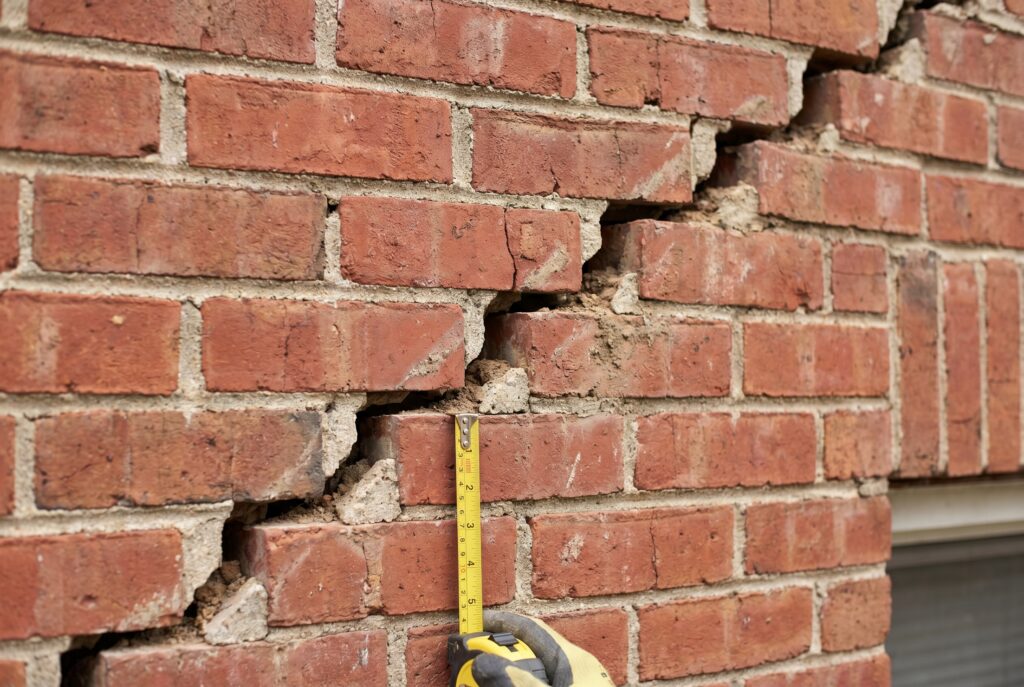
Cracks in the interior drywall or plaster. Not every crack in your walls is a foundation issue. Hairline cracks that run horizontally along seams are usually just normal settling or seasonal movement. The ones worth paying attention to are diagonal cracks, particularly those that run at a 45-degree angle from the corners of windows and door frames. These patterns typically indicate differential settlement, where one part of the foundation is moving at a different rate than another. Stair-step cracking in brick or block exterior walls follows the same logic and is one of the clearer visual indicators of foundation movement.
Doors and windows that stick or won’t close properly. This one gets blamed on humidity constantly, and humidity is sometimes the culprit. Wood framing does expand in Virginia’s muggy summers. But when a door that used to close fine starts dragging on the floor or catching at the top of the frame, and the problem doesn’t improve in drier weather, that’s worth investigating. Foundation movement shifts the structural frame of the house, and doors and windows are often the first places that show it because they require precise alignment to operate correctly.
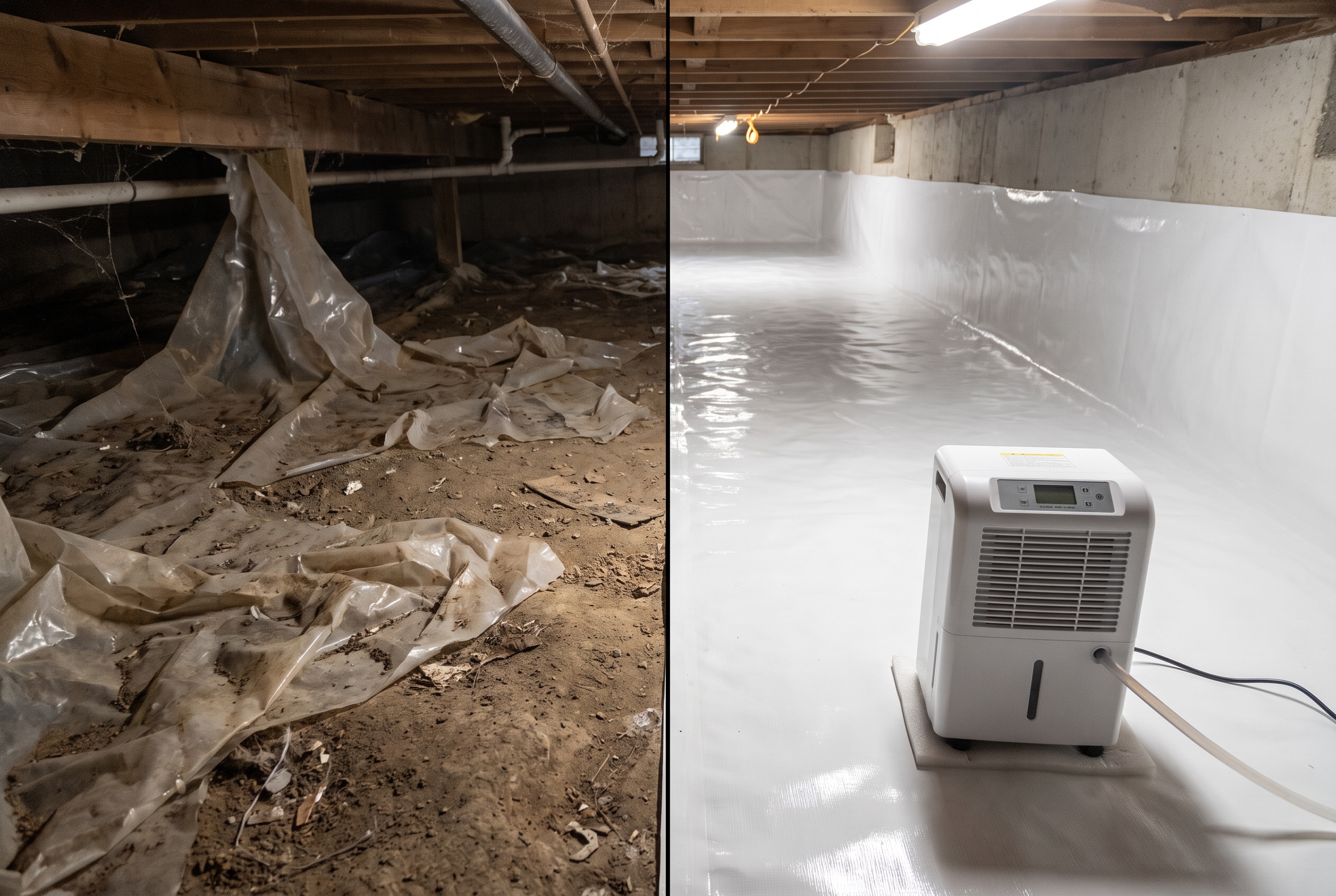
Uneven or sloping floors. You might notice this as a subtle sensation when you walk through a room, or you might spot it when furniture starts sitting unevenly. In crawl space homes, which make up a large portion of the housing stock in older parts of Norfolk, Portsmouth, and Chesapeake, floor sag often points to failing support posts, rotted sill plates, or inadequate joist support rather than the foundation itself. But the two issues are related. Moisture that comes up through an unencapsulated crawl space is what rots the wood framing, and moisture problems in crawl spaces often trace back to foundation conditions that allow water to collect near the structure.
Gaps between walls and ceilings or floors. When a foundation settles unevenly, the framing above it moves. That movement shows up as separation at the joints where walls meet ceilings, or where the baseboard meets the floor. Small gaps that appear uniformly around a room aren’t usually alarming. Large gaps, or gaps that are noticeably worse in one area of the house, suggest movement in that section of the foundation.
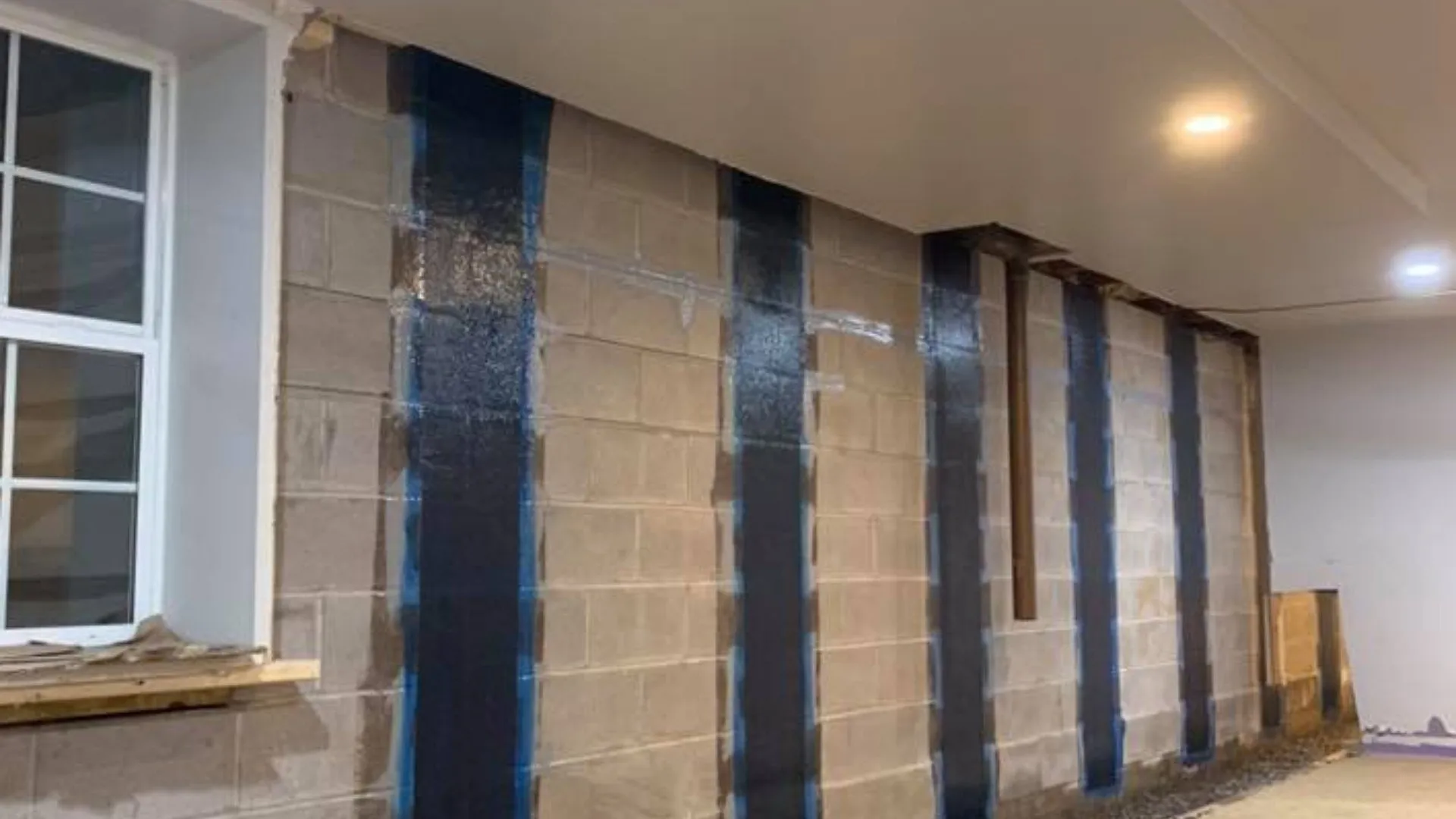
Bowing or leaning walls in the basement or crawl space. If you have a basement, get down there and look at the walls. Walls that bow inward at the center are under lateral pressure from the soil outside. This is a more serious symptom that warrants prompt attention. In a crawl space, leaning or deteriorating block piers, cracked concrete footings, or posts that have shifted off their bases are all indicators that the structural support system has been compromised.
Water intrusion or chronic dampness. Water in your basement or crawl space isn’t a direct sign of foundation failure, but it’s a strong indicator that conditions exist which can lead to it. Hydrostatic pressure from saturated soil pushes against foundation walls constantly. Over time, that pressure causes cracks, wall movement, and eventually more significant structural issues. If you’re seeing water stains, efflorescence (the white chalky deposits on concrete or block), or standing water after rain, those are worth addressing before they become structural problems.
What Not to Panic About
It’s worth saying plainly that not every crack or creak means your foundation is failing. Homes move. Seasonal changes cause wood to expand and contract, and older homes in particular have usually done a fair amount of settling over the decades. A single hairline crack that hasn’t changed in years is usually not a crisis.
The pattern to watch for is change. A crack that’s been stable for a long time is different from a crack that keeps growing. A door that started sticking recently is more concerning than one that’s always been a little tight. If you’re noticing multiple symptoms at the same time, or symptoms that seem to be getting worse, that’s when it makes sense to have someone take a look.
When to Call a Foundation Contractor
If you’re seeing diagonal cracking in multiple locations, doors or windows that have noticeably changed in how they operate, floors with a visible slope, or any bowing in your basement walls, those warrant a professional inspection. The same goes for any situation where water is regularly getting into the basement or crawl space.
A good contractor will do more than look at the symptoms. They’ll want to understand what’s happening beneath them: the soil conditions around the foundation, the drainage situation, and whether the issue is active or has stabilized. FEMA’s coastal construction guidance emphasizes that in coastal plain environments like Hampton Roads, soil behavior and drainage are central to foundation performance, not just afterthoughts.
At Hawk, we offer free structural inspections with no obligation, and you don’t need to be home for us to take a look. If something you’ve seen around your house has been nagging at you, that’s usually reason enough to have it checked. Schedule a free inspection here and we’ll tell you honestly what we find.
Frequently Asked Questions
How do I know if a crack in my wall is a foundation issue or just normal settling?
The shape and location of the crack matters more than the size. Horizontal or stair-step cracks in masonry, and diagonal cracks running from the corners of door and window frames, are more associated with foundation movement than straight vertical hairline cracks along drywall seams. If a crack has been stable for years and isn’t accompanied by other symptoms, it’s probably not an emergency. If it’s new, growing, or appearing alongside sticky doors or sloping floors, get it looked at.
Can foundation problems get worse if I ignore them?
Yes, and usually they do. Foundation issues driven by soil movement or water pressure are ongoing processes. The forces causing the problem don’t stop just because the repair hasn’t happened yet. What starts as a small crack or minor settlement can develop into more significant structural movement over time, and the cost of repair tends to increase with the severity of the damage. Early intervention is almost always the more cost-effective path.
Do foundation problems affect home value?
Significantly, yes. Foundation issues are one of the most common deal-killers in real estate transactions. Home inspectors flag them, buyers get nervous, and lenders sometimes won’t approve financing on a property with unresolved structural problems. Even cosmetically repaired symptoms, like patched cracks, often get flagged during inspection if the underlying cause hasn’t been addressed. Having documented repairs from a licensed contractor is much better for resale than a history of visible problems with no resolution. You can read more about our foundation repair services and what a proper fix involves.
Are foundation problems common in Chesapeake and Hampton Roads?
More common here than in many other parts of Virginia, yes. The combination of expansive clay soils, a high water table in many neighborhoods, and the coastal humidity creates conditions that put consistent stress on foundations. Homes built before modern moisture management practices were standard, particularly pier-and-beam homes in older parts of Norfolk and Portsmouth, tend to show foundation and structural symptoms more frequently. But newer construction isn’t immune either, especially in areas with poor site drainage or on lots that weren’t properly graded.
Share with others

Contact Forever Guard Today!
Forever Guard will do everything we can to ensure your experience with us is excellent.