If you’ve gotten to the point where you’re searching for foundation repair in Chesapeake, VA, chances are you’ve already noticed something: a crack that won’t stay patched, a door that doesn’t close right anymore, or maybe a contractor already told you there’s an issue and you want to understand what you’re actually getting into. This article isn’t going to spend a lot of time re-explaining the warning signs. Instead, it’s going to walk through what foundation repair actually involves once you’ve decided to move forward, what methods are commonly used, and what to expect from the process.
Foundation repair sounds like one thing, but it’s really a category that covers a range of solutions depending on what’s wrong and why. The right approach for a home with a few settling cracks is very different from what’s needed for a home with a foundation wall that’s actively bowing inward.
Why Chesapeake Foundations Need Different Solutions Than Other Regions
Foundation repair methods aren’t one-size-fits-all, and the reason comes down to soil. Chesapeake and the broader Hampton Roads area sit on coastal plain soils with significant clay content and a water table that, in a lot of neighborhoods, isn’t far below the surface. Clay soil swells when it’s wet and shrinks when it dries, and that cycle repeats every year with the seasons. Add in groundwater pressure from a high water table, and you’ve got soil conditions that put ongoing, uneven stress on a foundation.
This matters for repair because a fix that works great in a region with stable, well-drained soil might not hold up here. A repair method has to account for soil that’s going to keep moving. That’s part of why deep foundation solutions, ones that bypass the unstable upper soil layers entirely and anchor into more stable strata below, have become the standard for serious foundation issues in this region.
Common Foundation Repair Methods Used in Chesapeake
Unfortunately, there isn’t a single, one-size-fits-all foundation repair technique. The right method depends on what’s causing the problem and how severe it’s gotten.
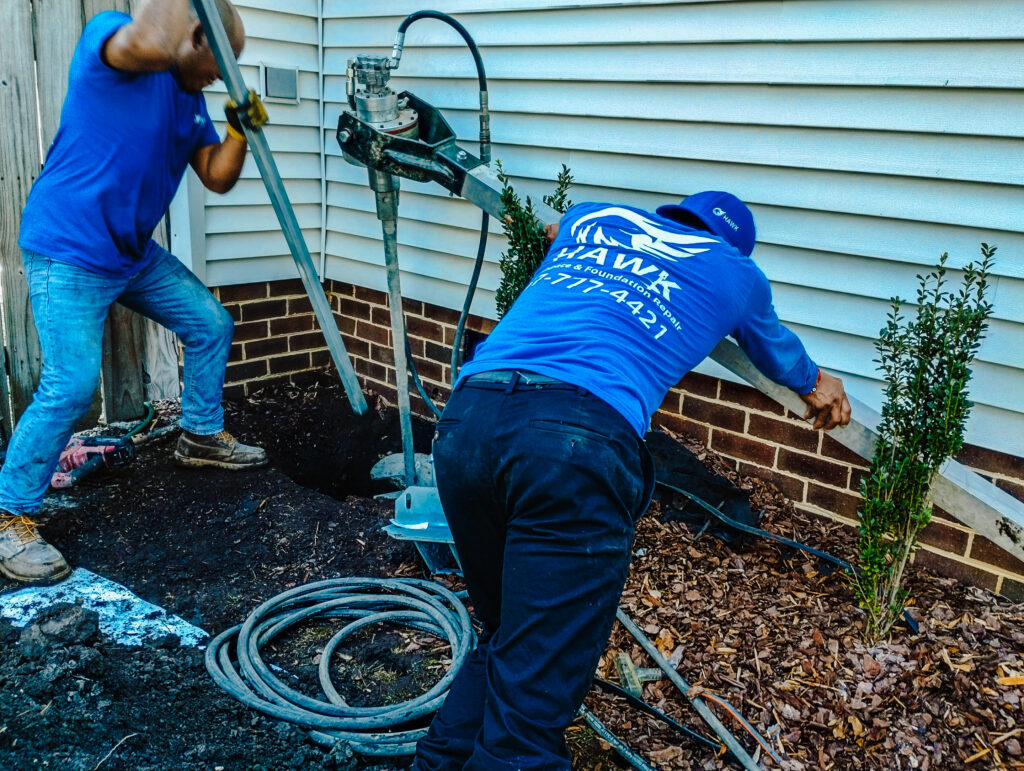
Helical piers. For homes dealing with significant settlement, helical piers are often the most reliable long-term solution. These are steel shafts with helix-shaped plates that get screwed into the ground using hydraulic equipment, similar in concept to a giant screw, until they reach load-bearing soil deep enough to provide stable support. One of the practical advantages of helical piers is that the torque required to install them correlates directly with their load-bearing capacity, so the contractor can verify during installation that each pier is actually capable of supporting the structure’s weight. They’re installed with minimal excavation, which means less disruption to your yard and landscaping compared to older underpinning methods. You can read more about helical pier installation and how it applies to different foundation types.
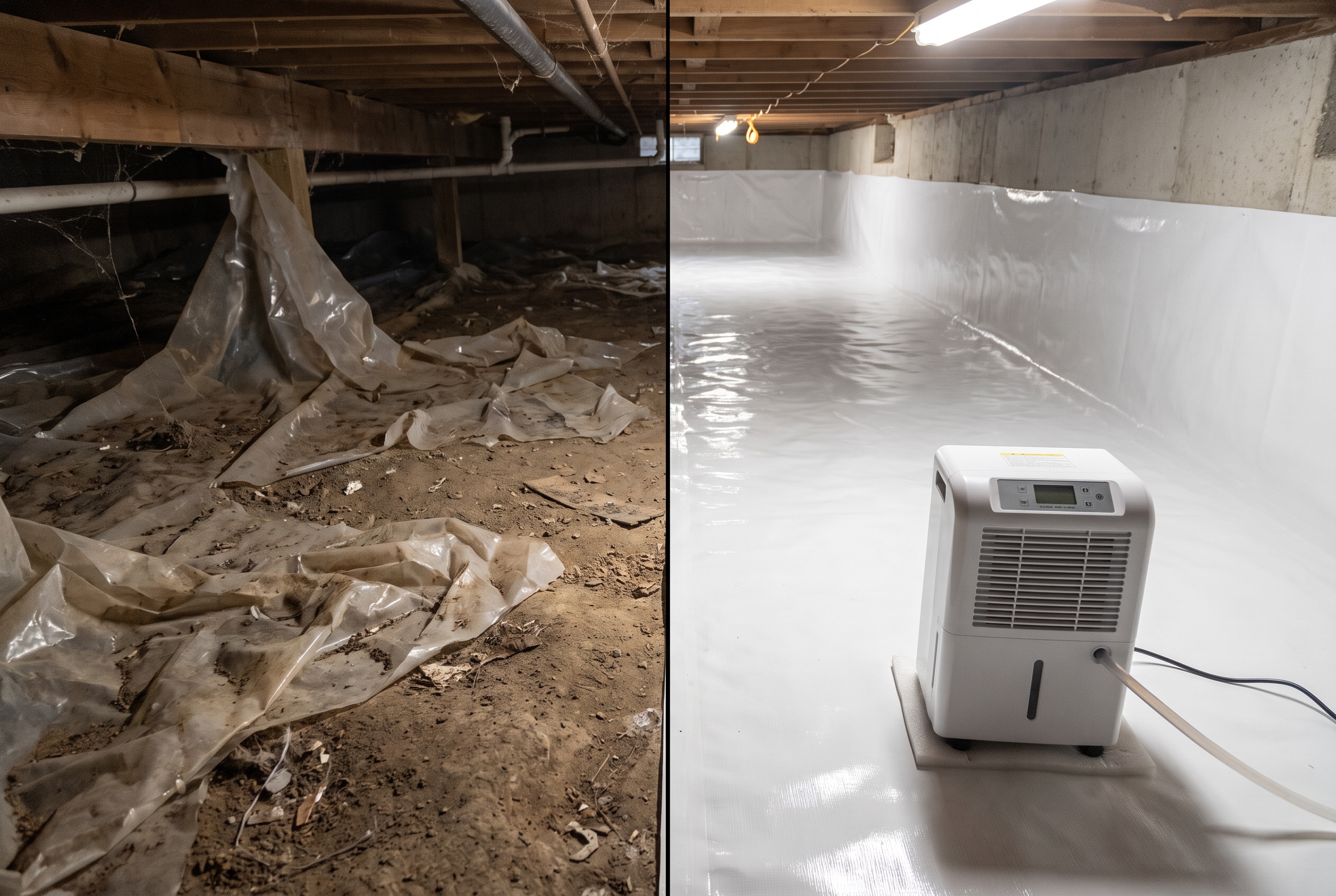
Foundation jacks and post-pier repair. For homes with crawl space foundations, sagging floors are often caused by failing support posts or rotted sill plates rather than a problem with the foundation walls themselves. In these cases, heavy-duty adjustable steel jacks get installed at intervals beneath the main support beams. Unlike older methods involving concrete blocks or wood shims, steel jacks allow for incremental adjustment over time, which matters in a region where soil movement is ongoing rather than a one-time event. If the original wood framing has rot or termite damage, that damaged material needs to be replaced before new supports go in, otherwise you’re just adding support to compromised wood.
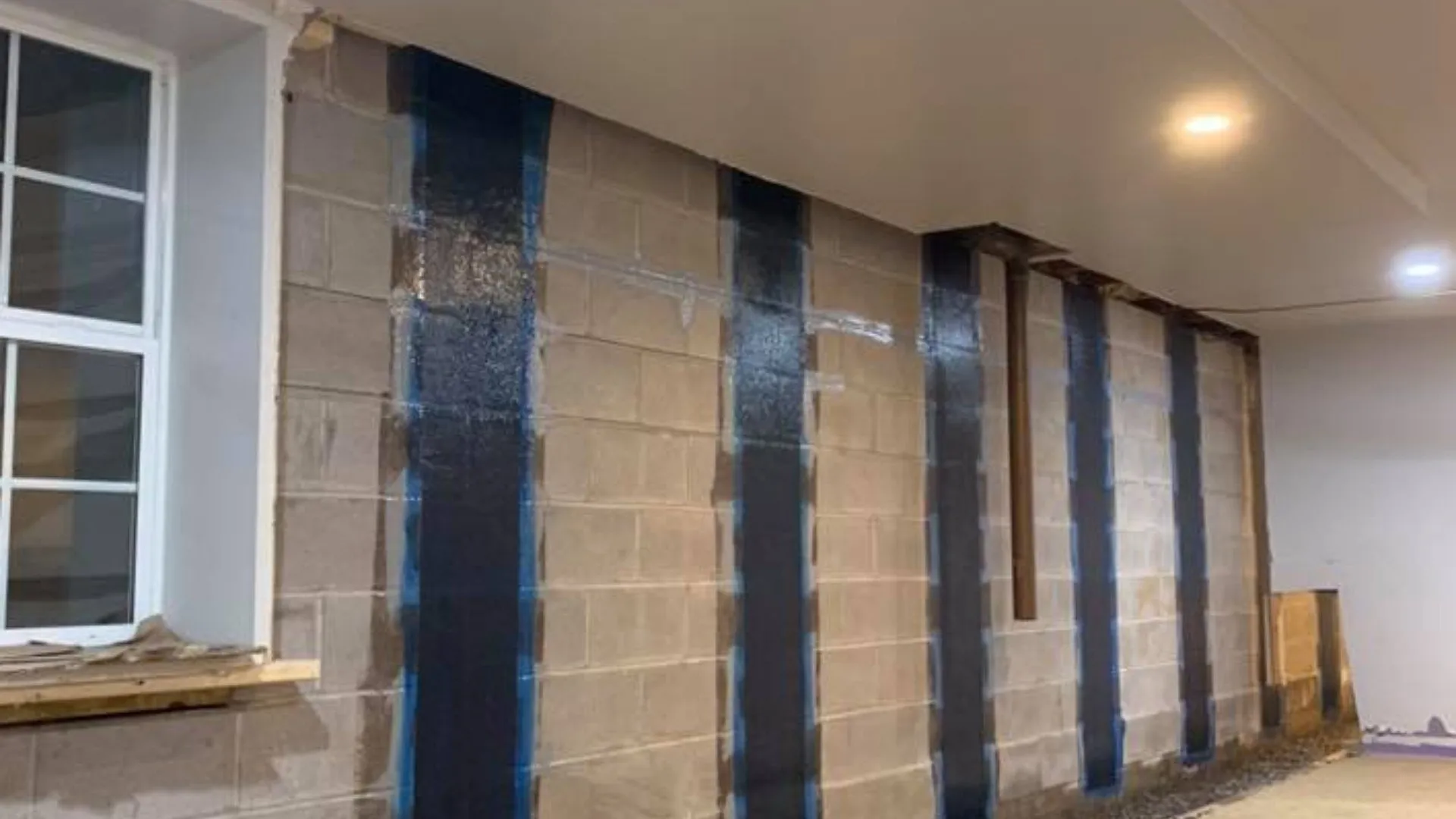
Wall stabilization for bowing or cracked foundation walls. If a basement or crawl space wall is bowing inward, that’s a sign of lateral pressure from saturated soil pushing against it. Stabilization typically involves installing supports, either steel braces or anchoring systems, that counteract that pressure and prevent further movement. In some cases this is paired with addressing the drainage issue causing the pressure in the first place, since stabilizing a wall without dealing with the water behind it just means the same pressure keeps building.
Drainage and waterproofing as part of the repair. A lot of foundation problems in this region trace back to water, whether it’s hydrostatic pressure against walls or moisture causing soil to expand unevenly beneath footings. Because of that, foundation repair often includes a drainage component: French drains, sump pumps, or grading improvements that redirect water away from the foundation. Skipping this step on a repair is a bit like fixing a leak in your roof but leaving the hole in the ceiling that’s letting water in. The structural fix and the water management need to work together. Basement waterproofing and foundation repair frequently go hand in hand for exactly this reason.
What to Expect During the Repair Process
The process generally starts with an inspection, and a thorough one matters more than people often realize. A good inspection isn’t just looking at the visible cracks, it’s looking at the soil around the foundation, the drainage situation, the crawl space if there is one, and trying to understand why the movement is happening, not just where it shows up. Two homes with similar-looking cracks can have completely different underlying causes, and the repair plan should reflect that.
From there, the contractor should walk you through what they found and what they’re recommending, including why. This is a good point to ask questions. If something doesn’t make sense, or if the recommendation seems to jump straight to the most expensive option without much explanation, that’s worth pushing back on. The EPA’s guidance on moisture control in buildings notes that addressing moisture sources is foundational to long-term structural performance, which is a good reminder that a repair plan focused only on the symptom (the crack, the sag) without addressing the cause (water, soil movement) is incomplete.
Installation timelines vary a lot depending on scope. A handful of helical piers for a residential foundation might be completed in a day or two. A larger project involving multiple repair methods, drainage work, and structural reinforcement could take longer. Most of this work is done from outside the home or in the crawl space, so disruption to daily life inside the house is usually minimal, though there will be some noise and equipment in the yard during the process.
How Much Does It Cost, and Is It Worth It?
This is the question everyone wants a number for, and the honest answer is that it depends entirely on what’s being repaired. A few helical piers for localized settlement is a very different scope than a full perimeter stabilization with integrated drainage. The factors that drive cost include how many piers or jacks are needed, how deep they need to go (which depends on soil conditions specific to your property), whether drainage or waterproofing work is part of the scope, and how much existing damage, like rotted framing, needs to be addressed before structural repairs can even begin.
What’s worth keeping in mind is that foundation problems driven by soil movement and water don’t resolve themselves. They tend to progress, and the cost of repair generally goes up the longer the underlying issue continues. A free inspection is the best way to get an actual number for your situation rather than guessing based on a range you found online.
Getting Started
If you’re at the point of looking into foundation repair, the most useful next step is a professional inspection that tells you specifically what’s going on with your home and what it would take to fix it. At Hawk, our inspections are free and there’s no obligation, and you don’t need to be home for us to take a look. Get in touch here to schedule one, and we’ll walk you through exactly what we find and what your options look like.
Frequently Asked Questions
How long do foundation repairs last?
It depends heavily on the method. Helical piers are engineered for very long lifespans, often cited at well over a century, since the steel shafts are typically galvanized for corrosion resistance and anchored into stable soil layers below the zone affected by seasonal movement. Other repairs, like foundation jacks or wall stabilization, are also designed as long-term or permanent solutions, but their durability depends on whether the underlying moisture or drainage issues were addressed at the same time. A repair that ignores the water problem causing the movement is more likely to need follow-up work down the road.
Will foundation repair disrupt my landscaping or yard?
Some methods cause more disruption than others. Helical pier installation involves minimal excavation, generally just small access points where each pier goes in, so the impact on landscaping is usually limited. Drainage work, like installing a French drain around the perimeter, involves more digging along the affected area. Any reputable contractor should be able to tell you upfront what kind of yard disruption to expect for your specific repair plan, and most will work with you on restoring the area afterward.
Can I sell my house if it’s had foundation repair?
Yes, and in many cases documented foundation repair from a licensed contractor can actually be a positive in a real estate transaction. Buyers and inspectors are often more concerned about unresolved or undisclosed foundation issues than about a problem that was professionally addressed with proper documentation. Many foundation repair systems come with transferable warranties, which can provide additional reassurance to a buyer. The bigger red flag for resale is foundation movement that was patched cosmetically without addressing the structural cause.
Do I need foundation repair if I’m only seeing minor cracks?
Not necessarily, but it’s worth having it looked at. Minor, stable cracks that haven’t changed in years are often just normal settling and may not need structural repair. The concern is when cracks are new, growing, or appearing alongside other symptoms like sticking doors or sloping floors, which can indicate active movement. A free inspection can tell you whether what you’re seeing is cosmetic or an early sign of something that’s worth addressing now while the scope of repair is smaller.
Share with others

Contact Forever Guard Today!
Forever Guard will do everything we can to ensure your experience with us is excellent.