
2530 Centerville Turnpike S, Chesapeake, VA 23322

Do You Need a Crawl Space Dehumidifier? Here’s How to Know

Do You Need a Crawl Space Dehumidifier? Here’s How to Know

If you’ve been researching crawl space moisture problems, a dehumidifier has probably come up as part of the solution. But there’s a fair amount of confusion around what a crawl space dehumidifier actually does, whether you need one, and what separates a unit that works from one that just runs up your electric bill without solving anything. This post answers those questions directly.

What a Crawl Space Dehumidifier Does and Why It Matters

A crawl space dehumidifier pulls moisture out of the air in the space beneath your home and maintains relative humidity at a level where mold, wood rot, and structural damage can’t take hold. The target in a crawl space is generally below 55 to 60 percent relative humidity. Above that range, the conditions favor mold growth on wood framing, and the wood itself begins absorbing moisture in ways that reduce its structural integrity over time.

In Hampton Roads, hitting that target without mechanical help is difficult. The region’s coastal climate means baseline outdoor humidity is high for most of the year, and that humidity finds its way into crawl spaces through the ground, through foundation vents, and through gaps and cracks in the foundation walls. A crawl space that’s doing well in October can be sitting at 80 percent relative humidity in July without any obvious source of water intrusion. That’s just the environment here.

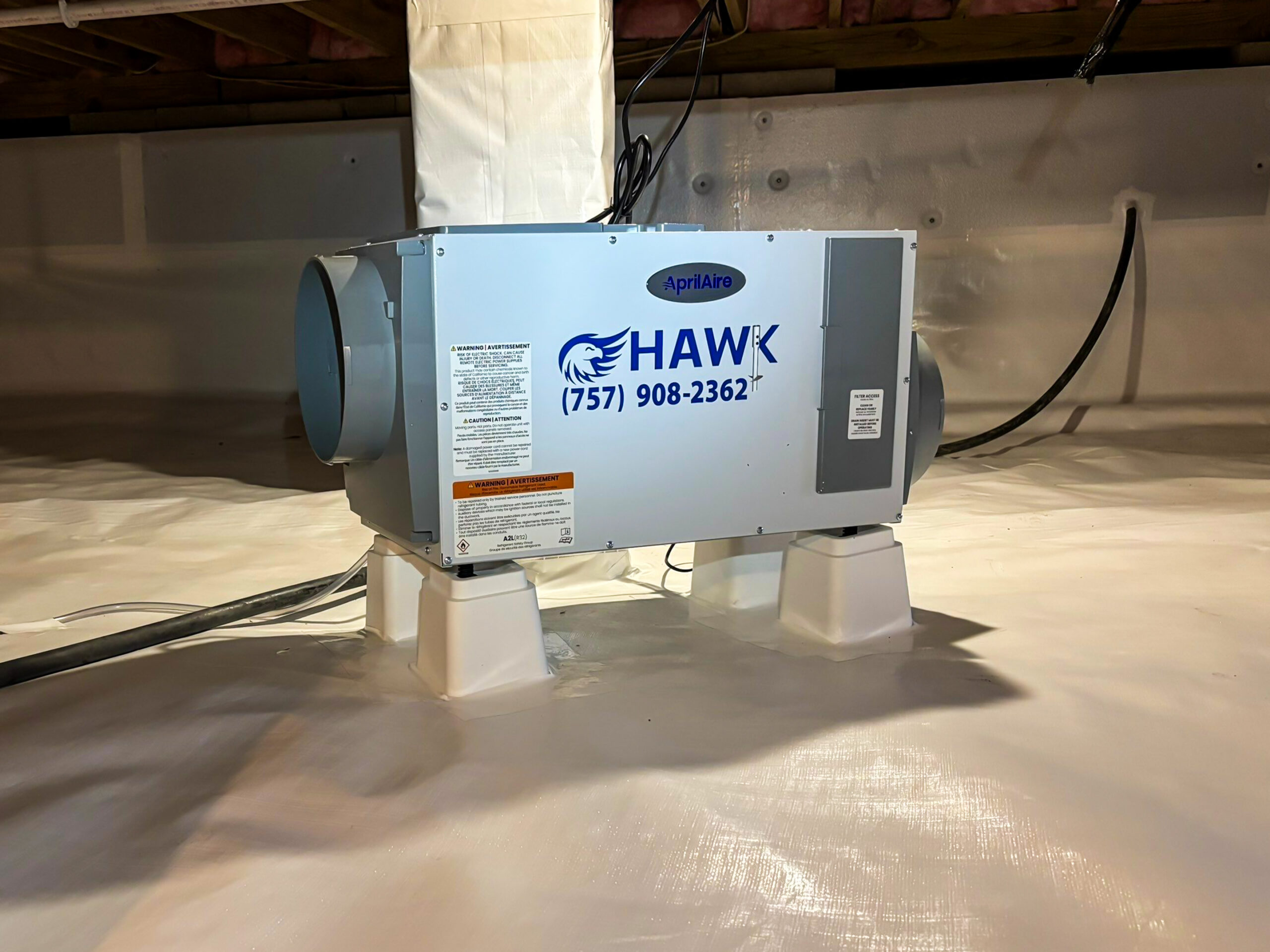
The dehumidifier is the active control component in a crawl space moisture management system. A vapor barrier handles ground moisture vapor. Sealed vents cut off humid outdoor air. The dehumidifier manages whatever moisture remains and keeps the space consistently dry regardless of what’s happening with the weather outside. The EPA recommends keeping indoor relative humidity below 60 percent to prevent mold growth, and in a crawl space that standard applies directly to the wood framing the rest of your house is sitting on.

Signs You Probably Need a Crawl Space Dehumidifier

Some of these are things you’ll notice inside the house, while others require a look at the crawl space itself.

A persistent musty smell on the first floor, especially during summer months when the house is closed up, is one of the more reliable indicators that crawl space humidity is elevated. That smell is mold and mildew, and because of the stack effect pulling air upward from below, crawl space air circulates into the living space continuously. If the crawl space smells, the house eventually smells.

Floors that feel cold in winter despite running the heat, or a first floor that never quite reaches the comfort level the thermostat suggests, can indicate that moisture has compromised the insulation between the floor joists. Wet insulation loses a significant portion of its rated thermal performance, and a crawl space with chronically high humidity is a crawl space where that insulation is underperforming year-round.

Inside the crawl space itself, condensation on the vapor barrier or on any metal surfaces, visible mold or dark staining on the joists or sill plates, insulation that’s sagging or pulling away from the joist faces, and any soft spots in the wood framing are all indicators that moisture has been elevated long enough to cause real effects. Any of these warrants both remediation and active humidity control going forward.

If you’ve had a moisture reading taken in your crawl space and it came back above 60 percent relative humidity during warmer months, that’s the clearest indicator of all. A properly sized dehumidifier is part of what brings that number down and keeps it there.

Can You Just Use a Regular Household Dehumidifier?

This is a question that comes up a lot, and the honest answer is that a standard portable dehumidifier from a big box store is not the right tool for a crawl space, even if it technically runs in one.

The main issue is capacity and design. Household dehumidifiers are built for conditioned living spaces with moderate humidity levels. A crawl space in Hampton Roads during summer is a different environment entirely: higher humidity loads, lower temperatures than a finished room, and often more square footage than a single portable unit is rated to handle. Running a residential unit in those conditions means it’s working at the edge of its design parameters constantly, which shortens its lifespan significantly and often means it still can’t keep up with the moisture load.

There’s also the drainage issue. Household dehumidifiers collect water in a reservoir that has to be manually emptied. In a crawl space that nobody checks regularly, that reservoir fills up, the unit shuts off on its safety switch, and the humidity climbs right back up. A crawl space dehumidifier is designed to drain continuously through a hose to a sump pit or drain, so it runs without interruption and without requiring anyone to go under the house to empty a bucket.

Professional-grade crawl space dehumidifiers are also rated for lower operating temperatures, built with corrosion-resistant components suited for the crawl space environment, and designed for the higher moisture loads this region generates. The upfront cost is higher than a portable unit, but a unit that actually keeps the space dry and runs reliably for ten or more years is a different value proposition than a cheaper unit that struggles, fails in a couple of years, and leaves the humidity problem unsolved in the meantime.

Dehumidifier Alone vs. Dehumidifier as Part of an Encapsulation System

This is where a lot of homeowners get the sequence wrong. A dehumidifier installed in an unencapsulated crawl space with open foundation vents is fighting a losing battle in a Hampton Roads summer. The unit will run almost continuously trying to keep up with the moisture load coming in through the vents and the ground, wear out faster than it should, and still may not hit the target humidity level during peak summer months. It’s the same principle as running an air conditioner with the windows open.

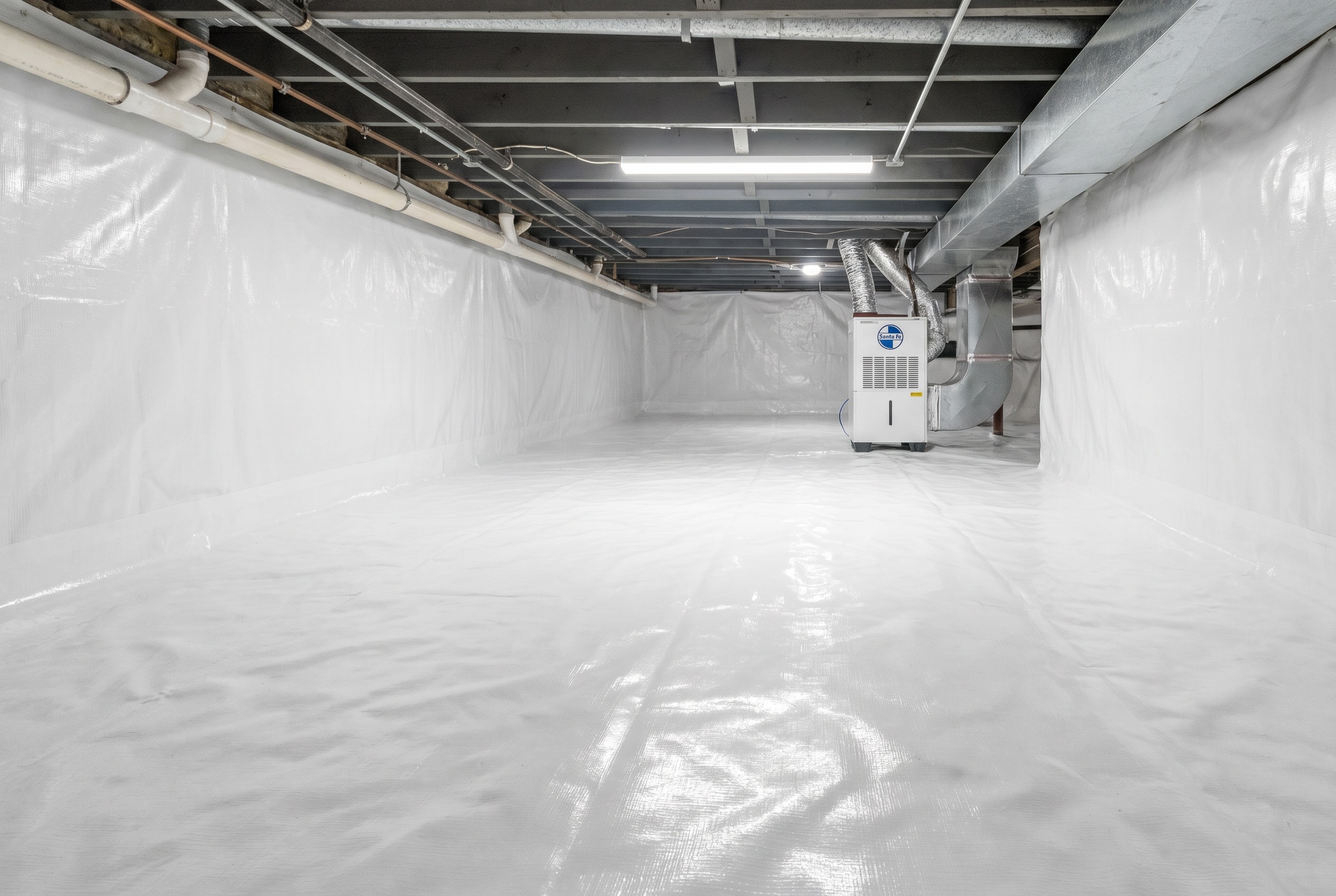
The right sequence is encapsulation first, dehumidifier second. A properly encapsulated crawl space with sealed vents and a quality vapor barrier creates a controlled environment where the dehumidifier is maintaining conditions rather than fighting an open-ended battle against outdoor humidity. In that context, a correctly sized unit runs efficiently, lasts longer, and keeps the space reliably below the humidity threshold where problems develop.

That said, there are situations where adding a dehumidifier makes sense as a standalone improvement, particularly if the crawl space already has a reasonably intact vapor barrier and the vents are sealed or the space is otherwise reasonably tight. A professional assessment of the specific conditions under your house is what determines the right approach. The Department of Energy’s guidance on crawl space conditioning supports the sealed crawl space model specifically because passive ventilation doesn’t work in humid climates, and active dehumidification as part of a sealed system is the approach that actually performs.

Sizing and Installation

Getting the sizing right matters more than most homeowners realize. A unit that’s too small runs constantly without reaching target humidity. A unit that’s oversized cycles on and off too frequently and doesn’t run long enough to effectively dehumidify the air. Proper sizing accounts for the square footage of the crawl space, the ceiling height, the current moisture load, and the specific conditions of the space.

Installation involves positioning the unit for adequate airflow, setting up the continuous drain line, and in some cases installing a condensate pump if there’s no gravity drain available. Most professional installations also include a humidistat that allows the unit to be set to a target humidity level and cycle automatically to maintain it rather than running continuously regardless of conditions.

If you’re not sure whether your crawl space needs a dehumidifier, what size it needs, or whether encapsulation should come first, that’s exactly what a professional inspection is for. At Hawk we’ll assess the moisture conditions, look at what’s already in place, and give you a clear recommendation on what the space actually needs. Our inspections are free and there’s no obligation. Schedule yours here.

Frequently Asked Questions

How much does a crawl space dehumidifier cost to run?

Operating cost depends on the unit’s wattage, how often it runs, and your local electricity rates. A properly sized unit in a well-encapsulated crawl space runs less frequently than an undersized unit fighting high humidity, which keeps operating costs lower. Units sized and installed correctly in a sealed crawl space typically run intermittently to maintain target humidity rather than continuously, which is both more effective and more efficient than a struggling undersized unit running flat out.

How long does a crawl space dehumidifier last?

A quality professional-grade unit, properly maintained, should last ten to fifteen years or more. The key factors are whether it was correctly sized for the space, whether the crawl space is properly sealed so the unit isn’t overworked, and whether it receives basic annual maintenance: cleaning the coils, checking the drain line, and making sure the unit is functioning correctly. A unit that’s been running at capacity in a high-humidity environment without maintenance will have a shorter lifespan than one that’s well matched to a controlled space.

Do I need to do anything to maintain a crawl space dehumidifier?

Yes, though the maintenance is fairly minimal. The filter needs to be cleaned periodically, the coils should be inspected and cleaned annually, and the drain line should be checked to make sure it’s clear and draining properly. If the unit has a humidistat, it’s worth verifying it’s reading accurately. Annual professional servicing is a reasonable practice for units doing significant work in demanding conditions like a Hampton Roads crawl space.

Will a crawl space dehumidifier fix my mold problem?

A dehumidifier prevents mold from growing by keeping humidity below the level where it can establish. It does not remediate existing mold. If there’s already mold growth on the framing in your crawl space, that needs to be addressed through professional remediation before moisture control measures are put in place. Installing a dehumidifier in a crawl space with active mold manages the humidity going forward but doesn’t undo the existing growth. You can read more about what crawl space mold removal involves and how remediation and moisture control work together as part of the same solution.
What Does Crawl Space Encapsulation Cost? Here’s What Actually Moves the Price

What Affects Crawl Space Encapsulation Cost

If you’ve been searching around for crawl space encapsulation prices, you’ve probably found a range so wide it’s almost useless. Some sources quote $1,500, others say $30,000. Both numbers are technically possible, and neither one tells you much about what you’re actually going to pay. The cost depends on what’s actually happening under your house, and no two crawl spaces in Hampton Roads are quite the same.

What this article will do is walk you through the variables that genuinely move the price around, so that when you sit down with a contractor, you know what questions to ask and why one quote might be higher or lower than another.

The Main Factors That Drive Crawl Space Encapsulation Cost

Square footage is the most obvious variable, but it’s far from the only one. A 1,000-square-foot crawl space in good condition with just a moisture problem is a fundamentally different project from a 1,000-square-foot crawl space with standing water, mold on the joists, a failed vapor barrier from 1997, and an HVAC unit sitting on the dirt. The labor, materials, and scope of work can be completely different even at the same size.

Here’s what actually pushes a number up or down:

Existing moisture and water damage. If there’s active water intrusion, you can’t just lay down a liner and call it done. Standing water has to be removed. If the ground stays consistently wet, you may need a French drain system or a sump pump before encapsulation makes sense. Those are separate line items that add to the total.

The condition of the existing vapor barrier (if there is one). Some homes in coastal Virginia have old 6-mil poly sheeting that’s been sitting under the house for decades. It might be shredded, covered in mold, or incompletely installed. Removal and disposal of old material is labor-intensive and adds cost.

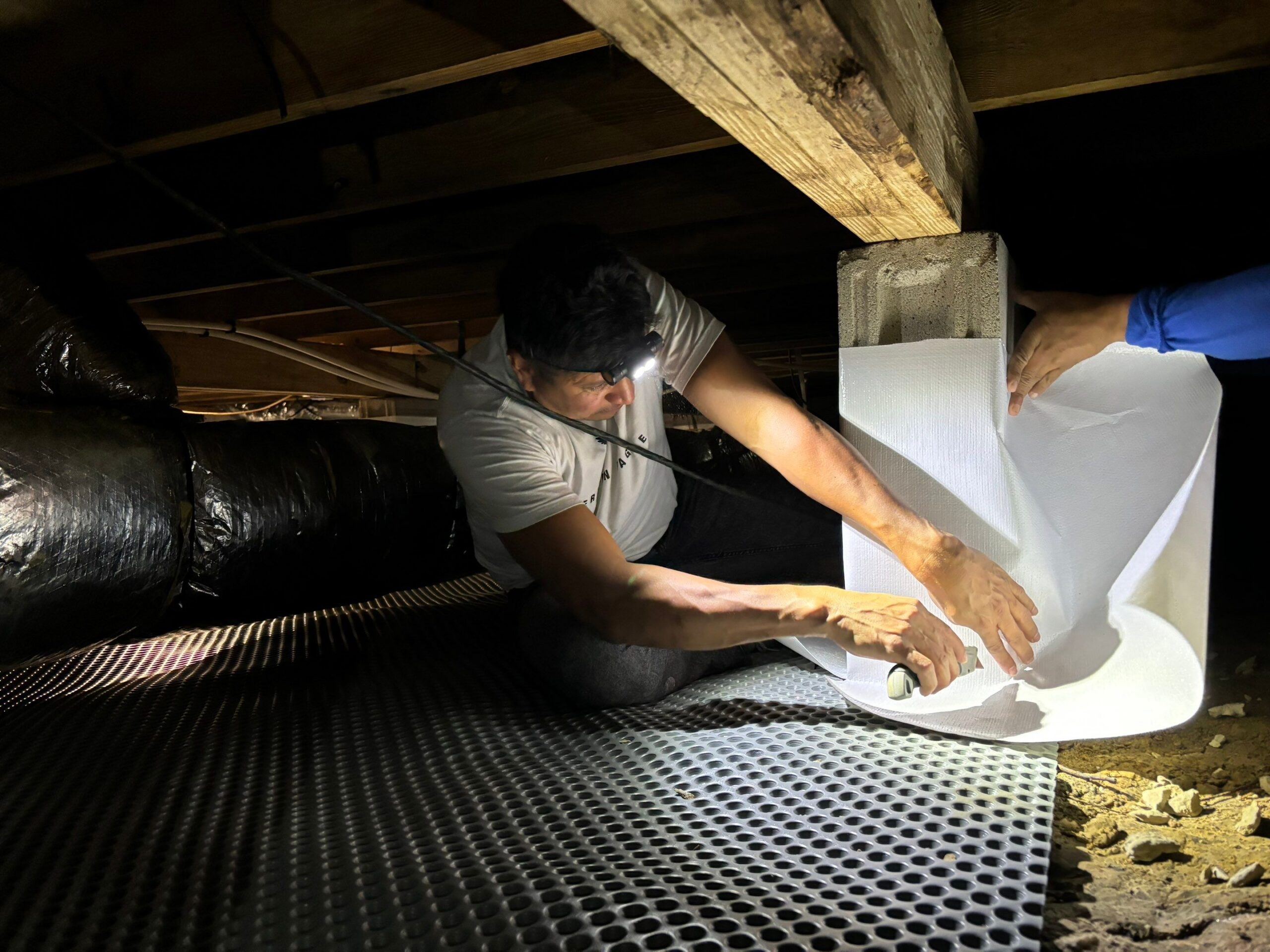
Liner quality and thickness. The grade of vapor barrier used in your crawl space matters quite a bit for long-term performance. A 6-mil plastic sheet meets minimum code in some areas, but it tears easily and doesn’t hold up well to foot traffic or punctures. Most professional encapsulations use a reinforced liner in the 12-mil range or higher. Heavier-duty materials cost more, but they’re what makes an encapsulation last instead of requiring repairs or replacement in a few years.

Mold remediation. If there’s mold on the wood framing, that has to be addressed before you seal the space. Encapsulating a crawl space with active mold just traps the problem inside. The EPA notes that mold will continue to grow as long as moisture is present, which is why remediation and moisture control have to happen together, not separately. Remediation is priced separately and depends on how much surface area is affected. In older homes in Norfolk or Portsmouth especially, where pier-and-beam construction is common and moisture has had decades to do its work, this is often a real part of the job.

Whether a dehumidifier is included. An encapsulated crawl space still needs active moisture control. Even with all the vents sealed and the liner fully installed, moisture can still enter through the ground or small gaps. A professional-grade dehumidifier sized to the space is usually part of a complete system. The unit itself can range from a few hundred dollars for a builder-grade machine to upward of $1,500 or more for a commercial-rated unit. This is one area where cheaper is often a false economy.

Drainage systems. If your crawl space sits in an area with a high water table (which describes a large portion of Chesapeake, Virginia Beach, and surrounding areas), you may need a drainage solution as part of the overall system. That means a perimeter drain, a sump pit, and a pump. Homes near Deep Creek or Great Bridge, for instance, sit in areas where groundwater levels can be very close to the surface, and that groundwater pressure doesn’t stop just because you put a liner down.

Crawl space height and accessibility. A 36-inch crawl space is much easier to work in than a 14-inch one. Tight spaces mean slower labor, which means higher labor cost per square foot. It’s not the biggest variable, but it’s real.

Why Coastal Virginia Conditions Matter for Your Project

Hampton Roads is one of the more challenging environments in the country for crawl spaces. The region sits on coastal plain soils with a high water table, and the humidity levels here are consistently among the highest in Virginia. That combination creates a moisture environment that can overwhelm a basic vapor barrier that would work fine in a drier climate.

The clay-heavy soils common in Chesapeake also expand and contract significantly with moisture changes. That movement creates gaps and cracks over time, and water finds its way in. A proper encapsulation system for a Chesapeake home typically needs to account for this, which is why drainage and active dehumidification are usually part of the recommendation and not optional add-ons.

The stack effect amplifies this further. Warm air rising through the home pulls air upward from the crawl space, which means whatever is in that air ends up inside your living space. The U.S. Department of Energy recognizes crawl space moisture control as a key factor in home energy efficiency and indoor air quality, and estimates that a significant share of the air on a home’s first floor can originate from below. That’s why addressing the crawl space environment is as much a health and air quality issue as it is a structural one.

What to Watch Out For When Getting Quotes

Not every quote for crawl space encapsulation is quoting the same thing. Some contractors price just the liner installation. Others include dehumidification. Some will bundle drainage. Others won’t mention it until you ask.

When you’re comparing estimates, make sure you understand what’s included in each one. A quote for $4,000 that includes the liner, vent sealing, and a dehumidifier may actually be a better value than a $2,500 quote that only covers the liner, especially if the cheaper option means you’re back dealing with moisture problems in two years.

Also ask about liner thickness and brand. Contractors who are cutting costs somewhere often do it on materials. There’s a significant difference between a 6-mil vapor barrier and a 20-mil reinforced liner in terms of durability, and the price difference between the two materials is smaller than most homeowners expect.

If a company is pushing the highest-end solution before they’ve assessed your specific situation, that’s worth a second look. A good contractor will walk through what’s actually happening under your house and recommend what’s needed for your conditions, not the same package for every job. Crawl space services should be matched to the actual condition of your crawl space, not a one-size-fits-all upsell.

Getting an Accurate Number for Your Home

The honest answer is that the only way to know what your project will cost is to have someone get under your house and look. Square footage alone doesn’t tell the whole story. The condition of your existing moisture control, the water table situation in your specific neighborhood, the height of the crawl space, whether there’s any mold or structural damage: all of that shapes the scope of work.

At Hawk Crawlspace and Foundation Repair, we offer free inspections with no obligation. You don’t even need to be home for the inspection. We’ll take a look, document what’s there, and give you a clear picture of what’s going on and what we’d recommend. Contact us to schedule your inspection and get a number that’s actually based on your home, not a ballpark from the internet.

Frequently Asked Questions

Does crawl space encapsulation increase home value?

Generally yes, though the impact varies. A properly encapsulated crawl space removes a common red flag during home inspections, can improve energy efficiency, and eliminates moisture-related issues that can cause structural damage over time. Buyers and their inspectors notice crawl space condition, and a clean, dry encapsulated space is a selling point compared to a damp, unprotected one.

How long does crawl space encapsulation last?

A well-installed system using quality materials should last 15 to 25 years or longer. The liner itself, if it’s a heavy-duty reinforced product and isn’t disturbed by heavy foot traffic or mechanical work under the house, can last considerably longer. The dehumidifier will need periodic maintenance and eventual replacement, typically every 10 to 15 years depending on the unit and conditions.

Can I just install a vapor barrier myself to save money?

You can, and for very minor moisture situations it may help. But a DIY vapor barrier and a professional encapsulation system are not the same thing. Proper encapsulation involves sealing foundation vents, mechanically fastening and taping the liner to the walls and around all penetrations, and adding active moisture control. A loose sheet of plastic on the ground is better than nothing, but it won’t address the stack effect or stop moisture from coming in through the walls and vents. In coastal Virginia’s climate, a half-measure often just delays the problem.

Do I need encapsulation or just a vapor barrier?

It depends on what’s actually going on under your house. A vapor barrier is a component of an encapsulation system, not an alternative to one. If you have minor moisture on the ground and no active water intrusion, a quality liner may be sufficient. If you have higher humidity, any signs of mold on the wood, active water entry, or a high water table situation, a full encapsulation with vent sealing and a dehumidifier is usually the right approach. A free inspection will tell you which camp you’re in. You can learn more about the full encapsulation process here.

The Real Benefits of Crawl Space Encapsulation for Chesapeake VA Homes

Why Crawl Space Encapsulation Matters for Chesapeake VA Homes

Many homeowners don’t think about their crawl space until something goes wrong. Maybe there’s a musty smell that won’t go away, or the floors feel a little uneven. In coastal areas like Chesapeake, these problems are often tied to moisture under the home. That’s where crawl space encapsulation in Chesapeake VA becomes more than just a home improvement; it becomes a form of protection.

Encapsulation is designed to control the environment beneath your home. Instead of allowing outside air and moisture to move freely through the crawl space, the area is sealed and managed. This reduces long-term damage and helps keep the rest of the house stable and healthy.

What Causes Crawl Space Problems in Coastal Virginia?

Homes in Chesapeake and the surrounding Hampton Roads region deal with a unique mix of conditions. High humidity, frequent rain, and a naturally high water table all contribute to moisture buildup beneath homes.

When that moisture enters an open or vented crawl space, it doesn’t just sit there quietly. It seeps into wood framing, insulation, and subflooring. Over time, that leads to mold growth, wood rot, and even structural weakening.

According to the EPA, mold thrives in damp environments, especially when humidity remains elevated over long periods. That makes crawl spaces in coastal Virginia particularly vulnerable.

Encapsulation works by cutting off that moisture source and controlling humidity levels before damage can take hold.

Warning Signs Your Crawl Space Needs Attention

Most crawl space issues don’t start with standing water. They begin with subtle changes that are easy to overlook.

Some of the most common warning signs include:

  • Musty or earthy smells inside the home
  • Floors that feel soft, sagging, or uneven
  • Higher indoor humidity or condensation on windows
  • Visible mold or damp insulation under the home
  • Increased pest activity

These signs often point to ongoing moisture problems. Left unaddressed, they can affect air quality, energy efficiency, and structural integrity.

The Real Benefits of Crawl Space Encapsulation in Chesapeake VA

Encapsulation isn’t just about fixing a problem. It’s about preventing a chain reaction of issues that can spread throughout the home.

When done properly, crawl space encapsulation provides several long-term benefits:

Moisture Control: Sealing the crawl space keeps groundwater and humid air from entering, reducing the risk of mold and rot.

Improved Air Quality: A significant portion of the air inside your home comes from below. A dry, sealed crawl space means cleaner air throughout the house.

Energy Efficiency: Controlling humidity makes it easier to regulate indoor temperatures, which can reduce strain on HVAC systems.

Structural Protection: By preventing moisture damage, encapsulation helps preserve floor joists, beams, and supports.

Pest Prevention: A sealed environment is less inviting to insects and rodents that thrive in damp spaces.

If you want to learn more about how the process works, you can explore Hawk’s crawl space encapsulation Chesapeake VA service page for a detailed breakdown.

How Encapsulation Solves the Problem at the Source

Temporary fixes like fans or basic vapor barriers often don’t go far enough. They may reduce symptoms, but they don’t stop moisture from entering the space.

A full encapsulation system typically includes sealing the ground with a durable vapor barrier, closing vents, and controlling humidity with a dehumidifier. In some cases, drainage improvements are also needed to manage groundwater.

This approach addresses the root cause instead of just the visible effects. That’s why it tends to last longer and require less ongoing maintenance.

Homeowners who are already seeing signs of structural issues may also want to explore related services like foundation repair or a full crawl space inspection to catch any underlying damage early.

FAQ About Crawl Space Encapsulation

How long does crawl space encapsulation last?

A properly installed encapsulation system can last for many years. The longevity depends on materials used and whether moisture sources are fully addressed.

Does encapsulation increase home value?

It can. A dry, well-maintained crawl space is often viewed as a positive during inspections and can make a home more appealing to buyers.

Is crawl space encapsulation worth it in Chesapeake VA?

Given the region’s humidity and water table conditions, encapsulation is often one of the most effective ways to protect a home from long-term moisture damage.

Do I need a dehumidifier with encapsulation?

In most cases, yes. A dehumidifier helps maintain stable humidity levels inside the sealed crawl space.

If you’re noticing signs of moisture or structural issues, the best next step is a professional evaluation. Contact Hawk Crawlspace & Foundation Repair to schedule a free inspection and get a clear understanding of what your home needs.