What Affects Crawl Space Encapsulation Cost
If you’ve been searching around for crawl space encapsulation prices, you’ve probably found a range so wide it’s almost useless. Some sources quote $1,500, others say $30,000. Both numbers are technically possible, and neither one tells you much about what you’re actually going to pay. The cost depends on what’s actually happening under your house, and no two crawl spaces in Hampton Roads are quite the same.
What this article will do is walk you through the variables that genuinely move the price around, so that when you sit down with a contractor, you know what questions to ask and why one quote might be higher or lower than another.
The Main Factors That Drive Crawl Space Encapsulation Cost
Square footage is the most obvious variable, but it’s far from the only one. A 1,000-square-foot crawl space in good condition with just a moisture problem is a fundamentally different project from a 1,000-square-foot crawl space with standing water, mold on the joists, a failed vapor barrier from 1997, and an HVAC unit sitting on the dirt. The labor, materials, and scope of work can be completely different even at the same size.
Here’s what actually pushes a number up or down:
Existing moisture and water damage. If there’s active water intrusion, you can’t just lay down a liner and call it done. Standing water has to be removed. If the ground stays consistently wet, you may need a French drain system or a sump pump before encapsulation makes sense. Those are separate line items that add to the total.
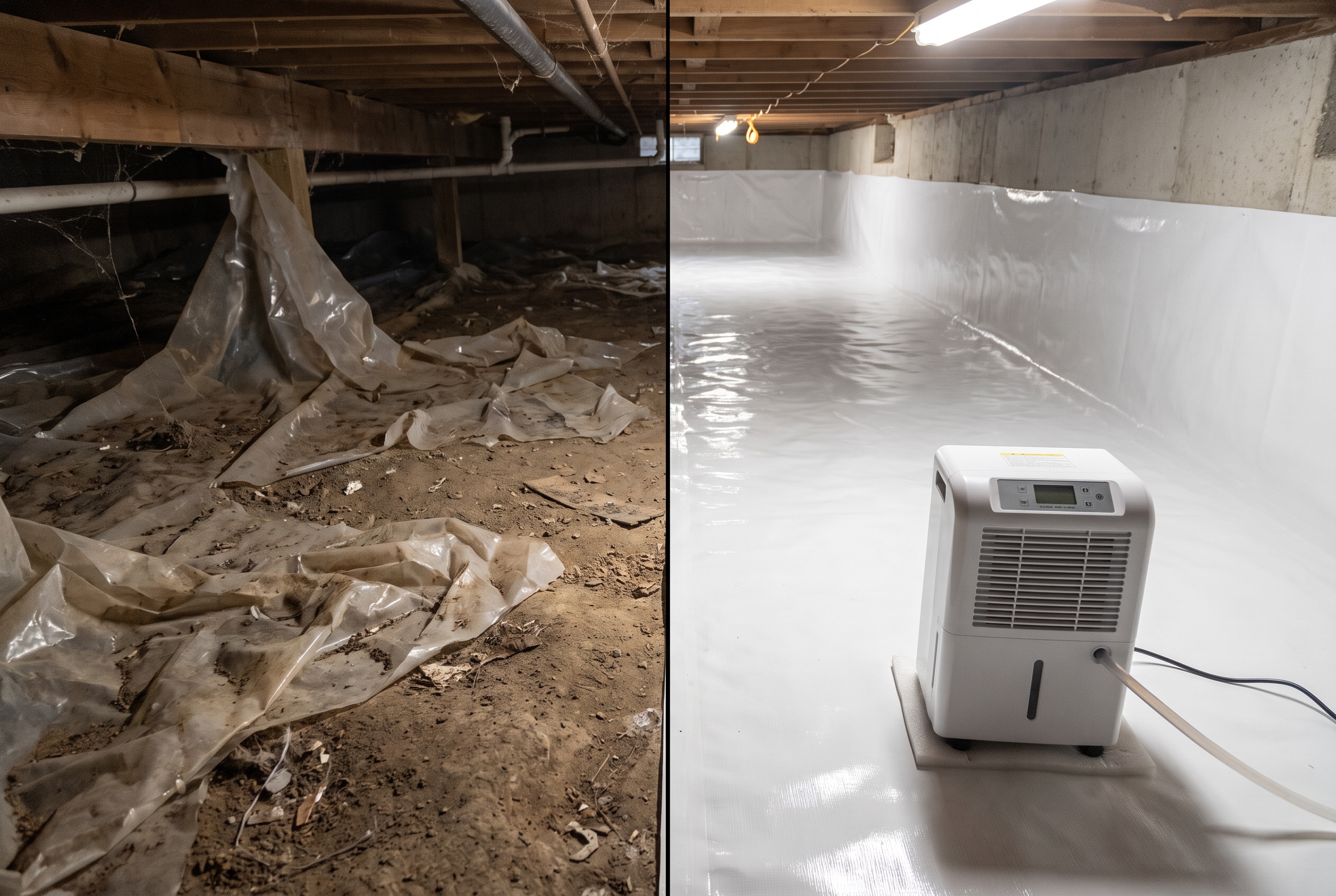
The condition of the existing vapor barrier (if there is one). Some homes in coastal Virginia have old 6-mil poly sheeting that’s been sitting under the house for decades. It might be shredded, covered in mold, or incompletely installed. Removal and disposal of old material is labor-intensive and adds cost.
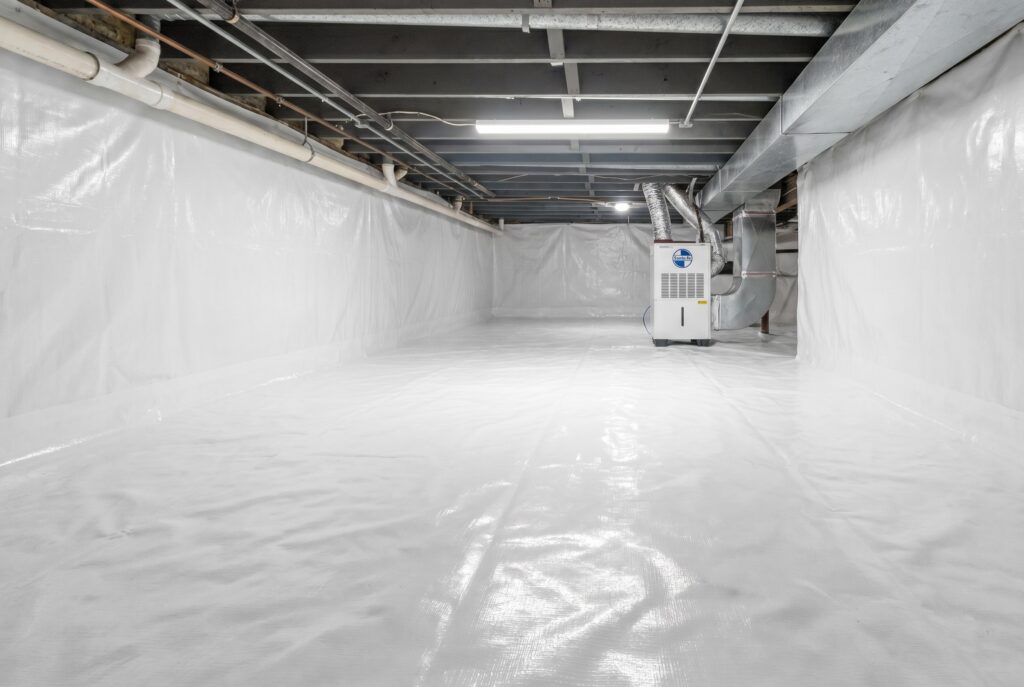
Liner quality and thickness. The grade of vapor barrier used in your crawl space matters quite a bit for long-term performance. A 6-mil plastic sheet meets minimum code in some areas, but it tears easily and doesn’t hold up well to foot traffic or punctures. Most professional encapsulations use a reinforced liner in the 12-mil range or higher. Heavier-duty materials cost more, but they’re what makes an encapsulation last instead of requiring repairs or replacement in a few years.
Mold remediation. If there’s mold on the wood framing, that has to be addressed before you seal the space. Encapsulating a crawl space with active mold just traps the problem inside. The EPA notes that mold will continue to grow as long as moisture is present, which is why remediation and moisture control have to happen together, not separately. Remediation is priced separately and depends on how much surface area is affected. In older homes in Norfolk or Portsmouth especially, where pier-and-beam construction is common and moisture has had decades to do its work, this is often a real part of the job.
Whether a dehumidifier is included. An encapsulated crawl space still needs active moisture control. Even with all the vents sealed and the liner fully installed, moisture can still enter through the ground or small gaps. A professional-grade dehumidifier sized to the space is usually part of a complete system. The unit itself can range from a few hundred dollars for a builder-grade machine to upward of $1,500 or more for a commercial-rated unit. This is one area where cheaper is often a false economy.
Drainage systems. If your crawl space sits in an area with a high water table (which describes a large portion of Chesapeake, Virginia Beach, and surrounding areas), you may need a drainage solution as part of the overall system. That means a perimeter drain, a sump pit, and a pump. Homes near Deep Creek or Great Bridge, for instance, sit in areas where groundwater levels can be very close to the surface, and that groundwater pressure doesn’t stop just because you put a liner down.
Crawl space height and accessibility. A 36-inch crawl space is much easier to work in than a 14-inch one. Tight spaces mean slower labor, which means higher labor cost per square foot. It’s not the biggest variable, but it’s real.
Why Coastal Virginia Conditions Matter for Your Project
Hampton Roads is one of the more challenging environments in the country for crawl spaces. The region sits on coastal plain soils with a high water table, and the humidity levels here are consistently among the highest in Virginia. That combination creates a moisture environment that can overwhelm a basic vapor barrier that would work fine in a drier climate.
The clay-heavy soils common in Chesapeake also expand and contract significantly with moisture changes. That movement creates gaps and cracks over time, and water finds its way in. A proper encapsulation system for a Chesapeake home typically needs to account for this, which is why drainage and active dehumidification are usually part of the recommendation and not optional add-ons.
The stack effect amplifies this further. Warm air rising through the home pulls air upward from the crawl space, which means whatever is in that air ends up inside your living space. The U.S. Department of Energy recognizes crawl space moisture control as a key factor in home energy efficiency and indoor air quality, and estimates that a significant share of the air on a home’s first floor can originate from below. That’s why addressing the crawl space environment is as much a health and air quality issue as it is a structural one.
What to Watch Out For When Getting Quotes
Not every quote for crawl space encapsulation is quoting the same thing. Some contractors price just the liner installation. Others include dehumidification. Some will bundle drainage. Others won’t mention it until you ask.
When you’re comparing estimates, make sure you understand what’s included in each one. A quote for $4,000 that includes the liner, vent sealing, and a dehumidifier may actually be a better value than a $2,500 quote that only covers the liner, especially if the cheaper option means you’re back dealing with moisture problems in two years.
Also ask about liner thickness and brand. Contractors who are cutting costs somewhere often do it on materials. There’s a significant difference between a 6-mil vapor barrier and a 20-mil reinforced liner in terms of durability, and the price difference between the two materials is smaller than most homeowners expect.
If a company is pushing the highest-end solution before they’ve assessed your specific situation, that’s worth a second look. A good contractor will walk through what’s actually happening under your house and recommend what’s needed for your conditions, not the same package for every job. Crawl space services should be matched to the actual condition of your crawl space, not a one-size-fits-all upsell.
Getting an Accurate Number for Your Home
The honest answer is that the only way to know what your project will cost is to have someone get under your house and look. Square footage alone doesn’t tell the whole story. The condition of your existing moisture control, the water table situation in your specific neighborhood, the height of the crawl space, whether there’s any mold or structural damage: all of that shapes the scope of work.
At Hawk Crawlspace and Foundation Repair, we offer free inspections with no obligation. You don’t even need to be home for the inspection. We’ll take a look, document what’s there, and give you a clear picture of what’s going on and what we’d recommend. Contact us to schedule your inspection and get a number that’s actually based on your home, not a ballpark from the internet.
Frequently Asked Questions
Does crawl space encapsulation increase home value?
Generally yes, though the impact varies. A properly encapsulated crawl space removes a common red flag during home inspections, can improve energy efficiency, and eliminates moisture-related issues that can cause structural damage over time. Buyers and their inspectors notice crawl space condition, and a clean, dry encapsulated space is a selling point compared to a damp, unprotected one.
How long does crawl space encapsulation last?
A well-installed system using quality materials should last 15 to 25 years or longer. The liner itself, if it’s a heavy-duty reinforced product and isn’t disturbed by heavy foot traffic or mechanical work under the house, can last considerably longer. The dehumidifier will need periodic maintenance and eventual replacement, typically every 10 to 15 years depending on the unit and conditions.
Can I just install a vapor barrier myself to save money?
You can, and for very minor moisture situations it may help. But a DIY vapor barrier and a professional encapsulation system are not the same thing. Proper encapsulation involves sealing foundation vents, mechanically fastening and taping the liner to the walls and around all penetrations, and adding active moisture control. A loose sheet of plastic on the ground is better than nothing, but it won’t address the stack effect or stop moisture from coming in through the walls and vents. In coastal Virginia’s climate, a half-measure often just delays the problem.
Do I need encapsulation or just a vapor barrier?
It depends on what’s actually going on under your house. A vapor barrier is a component of an encapsulation system, not an alternative to one. If you have minor moisture on the ground and no active water intrusion, a quality liner may be sufficient. If you have higher humidity, any signs of mold on the wood, active water entry, or a high water table situation, a full encapsulation with vent sealing and a dehumidifier is usually the right approach. A free inspection will tell you which camp you’re in. You can learn more about the full encapsulation process here.
Share with others

Contact Forever Guard Today!
Forever Guard will do everything we can to ensure your experience with us is excellent.