2530 Centerville Turnpike S, Chesapeake, VA 23322

Signs Your Crawl Space Vapor Barrier Needs Replacement

Signs Your Crawl Space Vapor Barrier Needs Replacement

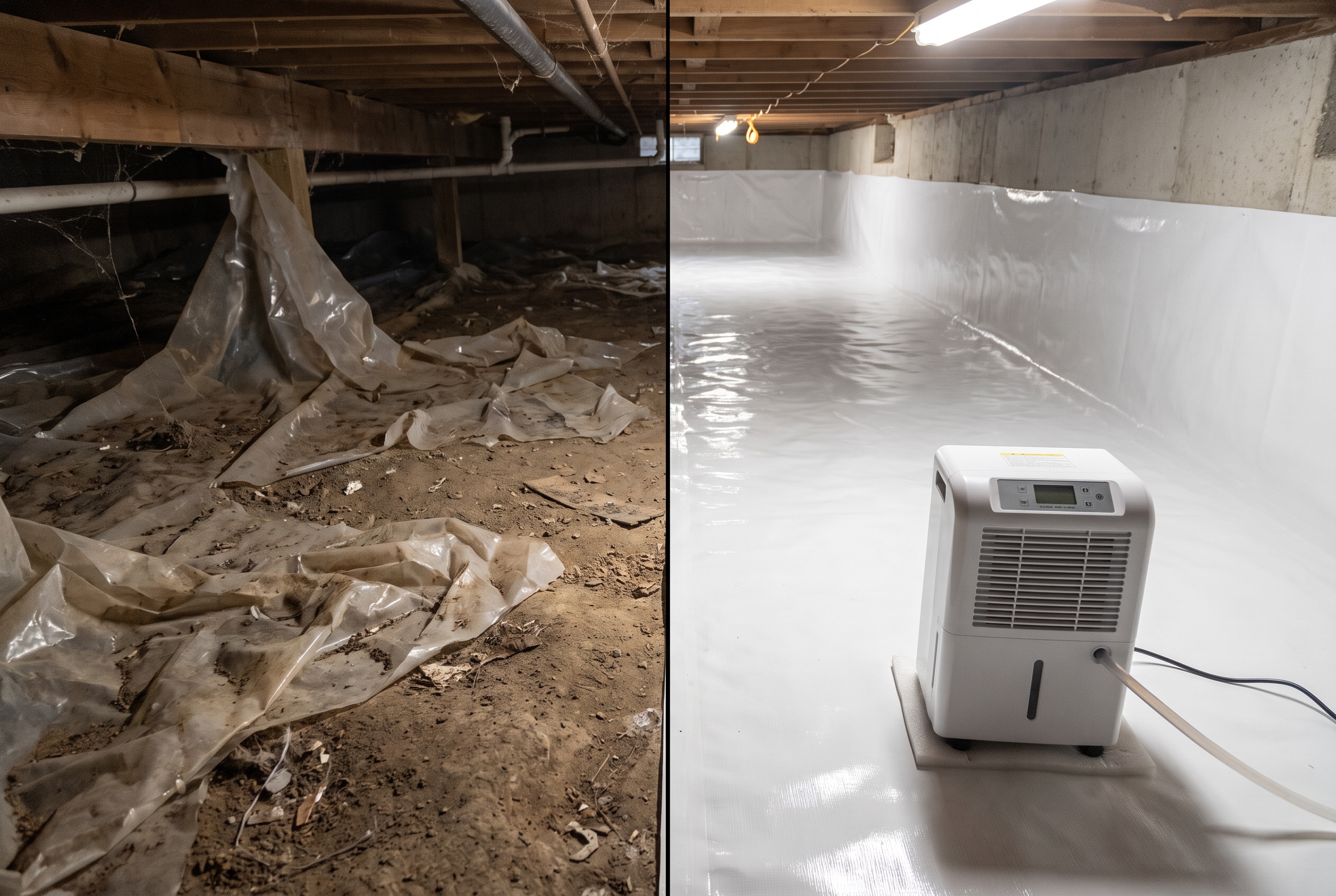
If you’ve gotten into your crawl space recently, or had someone else do it, and found a mess of torn plastic sheeting, you’re not alone. Vapor barriers don’t last forever, and in a climate like Hampton Roads, they tend to fail faster than homeowners expect. The problem is that most people don’t know what a failing barrier looks like, or how to tell whether what they’re seeing is minor or worth fixing soon. This post walks through the specific signs that a crawl space vapor barrier needs replacement, why barriers fail in coastal Virginia conditions, and what the decision looks like between a simple barrier swap and a full encapsulation.

What a Vapor Barrier Is Actually Supposed to Do

Before getting into failure signs, it helps to be clear on what the barrier is doing in the first place. A crawl space vapor barrier is a layer of plastic sheeting installed on the ground beneath your home. Its job is to block moisture vapor from rising out of the soil and into the crawl space environment above it. Soil holds water, and even when there’s no standing water present, that moisture evaporates upward constantly. Without a barrier, that vapor saturates the air in the crawl space, condenses on the wood framing, and creates the conditions for mold growth and wood decay.

In Hampton Roads, where the soil holds moisture aggressively and the water table in many neighborhoods sits close to the surface, that upward vapor pressure is significant. A barrier that’s intact and properly installed manages it. A barrier that’s torn, degraded, or incomplete leaves the framing above it exposed to ongoing moisture. The EPA notes that controlling moisture at the source is the most effective way to prevent mold growth, and in a crawl space, the vapor barrier is that first line of control.

Signs Your Crawl Space Vapor Barrier Needs Replacement

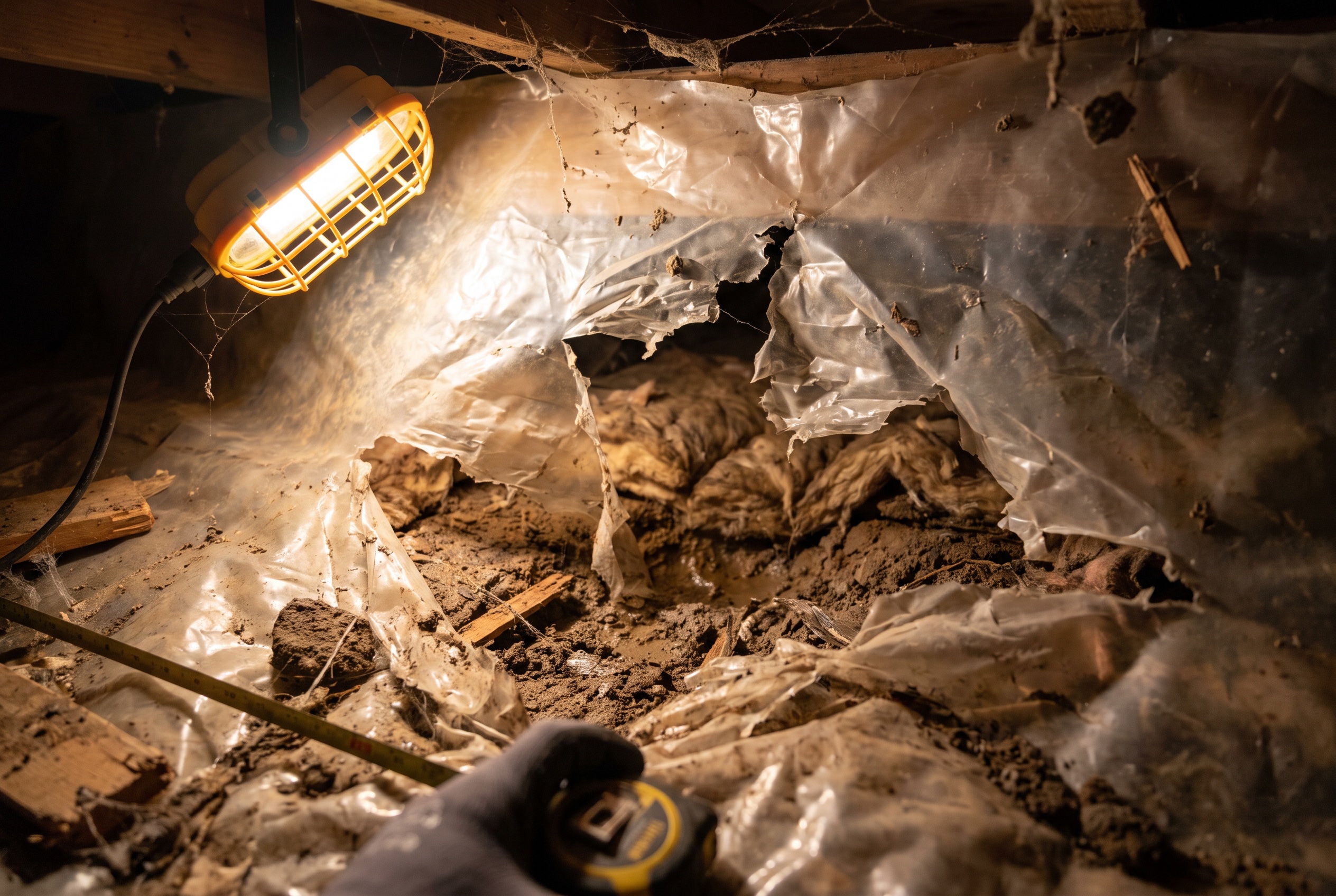
Tears, holes, and gaps in the material. This is the most obvious sign and the one homeowners most commonly find when they actually look. Plastic sheeting in a crawl space takes a beating over time. HVAC technicians, plumbers, and pest control crews walk on it. Pests chew through it. Settling of the ground beneath it causes it to bunch, pull away from the walls, and crack along fold lines. Any gap in the barrier, no matter how small it looks, is an opening for moisture vapor to pass through unobstructed. If the barrier looks like it’s been patched together from several pieces with open seams between them, or if sections have been pushed aside and never replaced, it’s not doing its job.

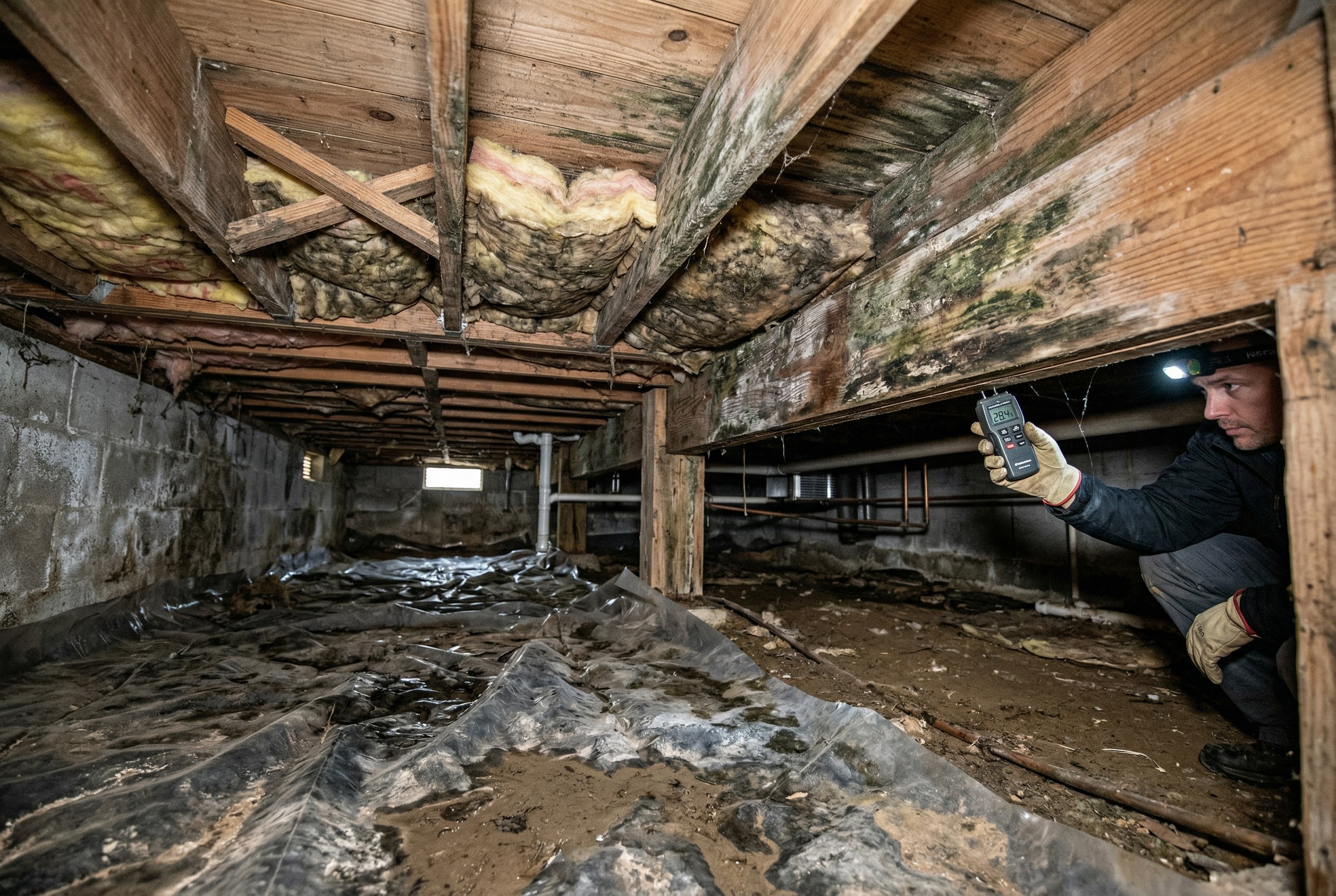
Visible mold on the barrier surface or on the framing above it. Mold on the top surface of the vapor barrier means moisture is condensing there, which usually indicates the barrier has failed in enough places that the overall humidity in the crawl space has climbed. Mold on the joists or sill plates above is more serious and means the moisture has been elevated long enough to establish growth on the wood. Either situation calls for remediation and a fresh barrier at minimum, and often a full encapsulation to actually bring the humidity under control.

The barrier is thin, brittle, or degraded. Older homes sometimes have the original vapor barrier that was installed during construction, which may be decades old. Standard builder-grade barriers are typically 6-mil polyethylene, which is the minimum required by most building codes. At 6-mil thickness, the material breaks down faster under UV exposure, foot traffic, and the acidic soil conditions common in coastal Virginia. A barrier that crumbles or tears easily when touched has lost most of its effectiveness regardless of whether it looks intact from a distance.

Standing water on or under the barrier. Water pooling on top of the barrier after rain is actually the barrier working as intended in one sense, it’s catching water rather than letting it go straight into the soil. But if that water has nowhere to go and sits there, it creates a humidity problem above the barrier and can push the sheeting up off the ground, creating air gaps that defeat the purpose. Water consistently getting under the barrier, pooling between the plastic and the soil, usually means the barrier isn’t sealed at the edges and water is finding its way in from the sides. That’s a drainage and sealing problem, not just a material problem.

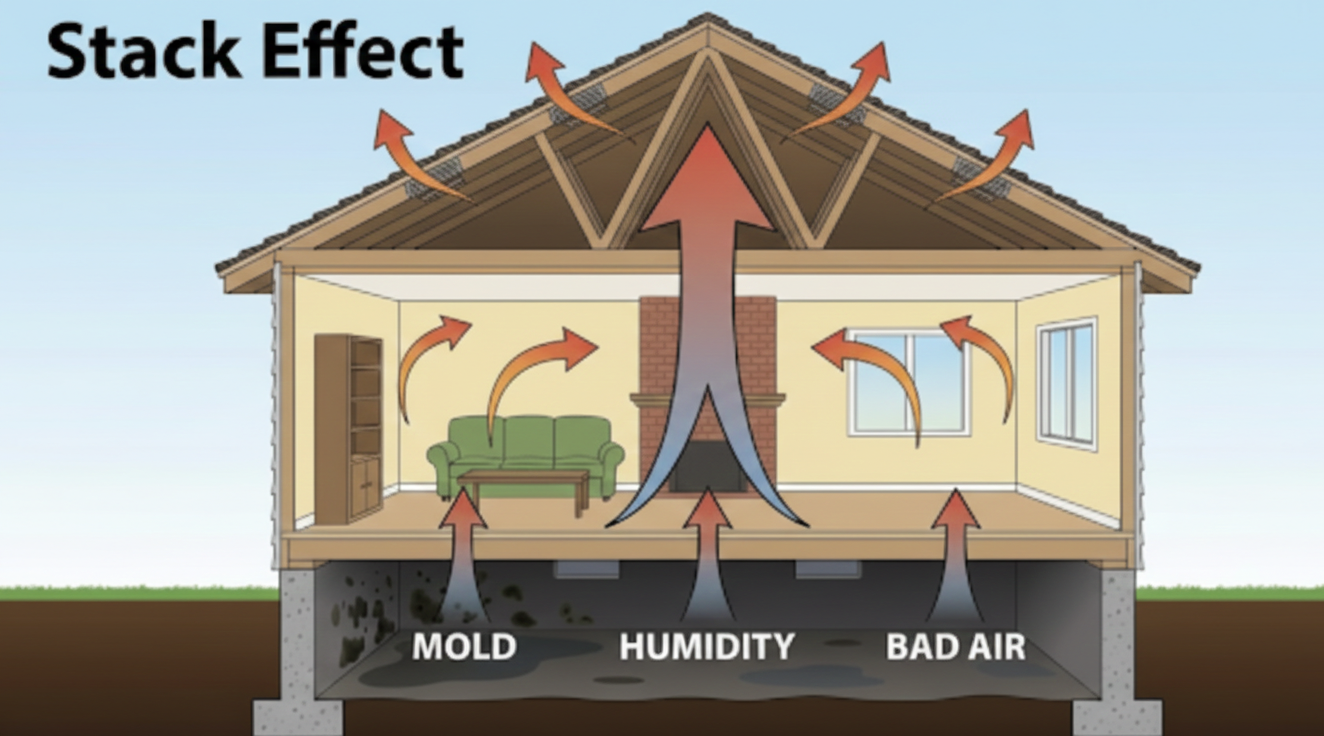
Persistent musty smell in the house. You may not need to go into the crawl space to notice this one. If the first floor of your home has a musty or earthy smell that doesn’t go away, especially in summer when the house is closed up and the stack effect is pulling air upward from below, that’s often crawl space air finding its way into the living space. A failing vapor barrier that’s allowing moisture to accumulate below is a primary driver of that smell. If you’ve tried everything else and can’t find the source, the crawl space is usually worth checking.

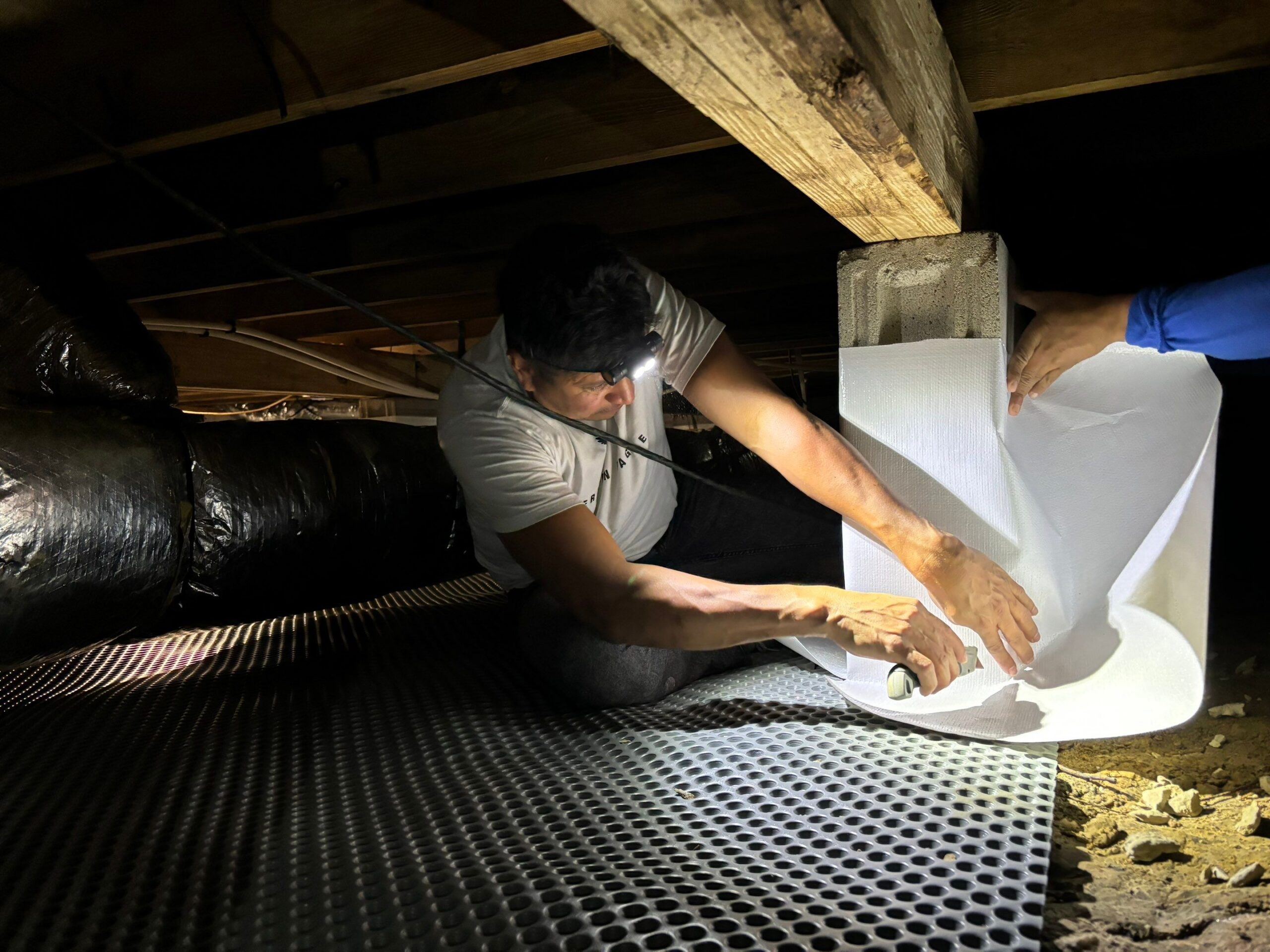
The barrier isn’t covering the full ground surface or the walls. A vapor barrier that only covers part of the crawl space floor is only solving part of the problem. Moisture doesn’t check whether the other half of the ground is covered before it evaporates. If the existing barrier stops short of the foundation walls, or if it was installed only under certain sections of the house, it’s incomplete by definition. Proper installation means full ground coverage with the barrier running up and secured to the foundation walls, so there’s no exposed soil anywhere in the space.

Why Vapor Barriers Fail Faster in Hampton Roads

The coastal Virginia environment is harder on crawl space materials than most homeowners realize. The combination of high ambient humidity, acidic coastal plain soils, and temperature swings between seasons breaks down standard polyethylene sheeting faster than it would in a drier inland climate. Homes near waterways or in low-lying neighborhoods with high water tables are dealing with additional moisture pressure that thin barriers simply weren’t designed to handle long-term.

Pest activity is another factor that’s more pronounced here. Subterranean termites, rodents, and other pests that access crawl spaces regularly damage vapor barriers in the process. A pest control treatment that doesn’t include repairing the barrier afterward leaves openings that persist indefinitely.

The physical access that comes with routine maintenance also takes a toll. Every time someone crawls through the space to service HVAC equipment, check ductwork, or address a plumbing issue, the barrier takes some damage. Over ten or fifteen years of normal home maintenance, a 6-mil barrier in a Hampton Roads crawl space is likely in significantly worse shape than it was when it was installed. The Department of Energy recommends heavier-duty vapor retarder materials for crawl spaces that experience regular access or challenging moisture conditions, both of which apply to most homes in this region.

Vapor Barrier Replacement vs. Full Encapsulation

This is the question that comes up most often once a homeowner realizes their barrier is failing: do I just replace the plastic, or do I need a full encapsulation?

The honest answer is that it depends on what’s causing the moisture problem and how well the rest of the crawl space is set up. A straight barrier replacement makes sense when the existing system was working reasonably well, the foundation vents are appropriate for the conditions, there’s no active water intrusion, and the main issue is just that the old material has degraded. Swapping in a heavier-duty liner, something in the 12-mil range or above, and making sure it’s properly lapped and taped at seams addresses the immediate problem.

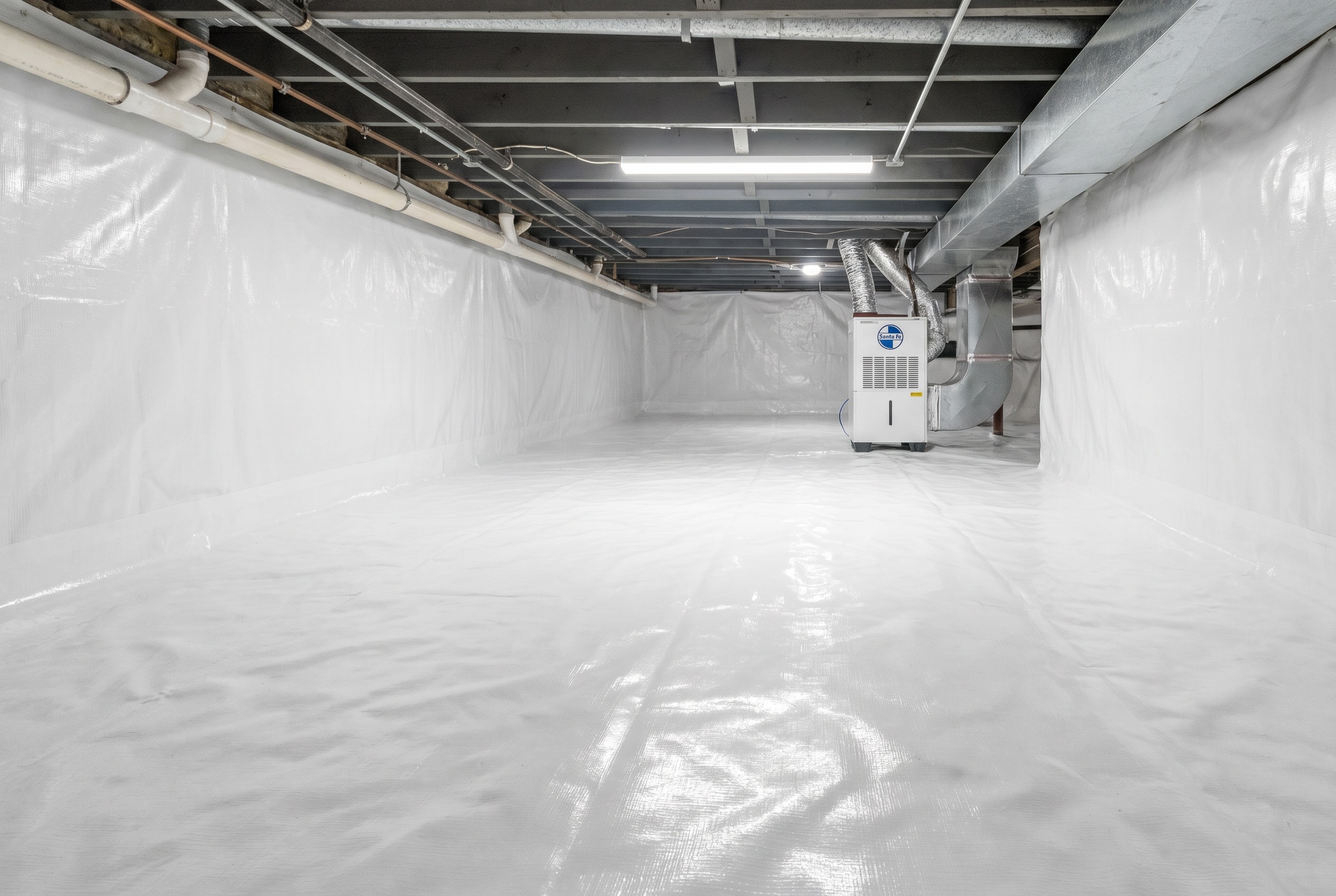
Full encapsulation is the better answer when the crawl space has chronic moisture issues, when the foundation vents are letting in humid summer air that’s causing condensation, when there’s any history of standing water, or when the wood framing shows signs of past or ongoing moisture damage. Encapsulation goes further than barrier replacement: it seals the vents, runs the liner up and mechanically fastens it to the walls, and pairs the system with active dehumidification to maintain humidity below the threshold where mold and decay can establish. In Hampton Roads conditions, a lot of homes that thought they just needed a new vapor barrier actually needed the fuller system to get the crawl space genuinely under control.

If you’re not sure which situation you’re in, that’s exactly what an inspection is for. Our crawl space encapsulation page explains what a complete system looks like and how it compares to a basic vapor barrier. And if you’ve got damaged framing alongside a failing barrier, the structural repair side of crawl space work often needs to happen at the same time.

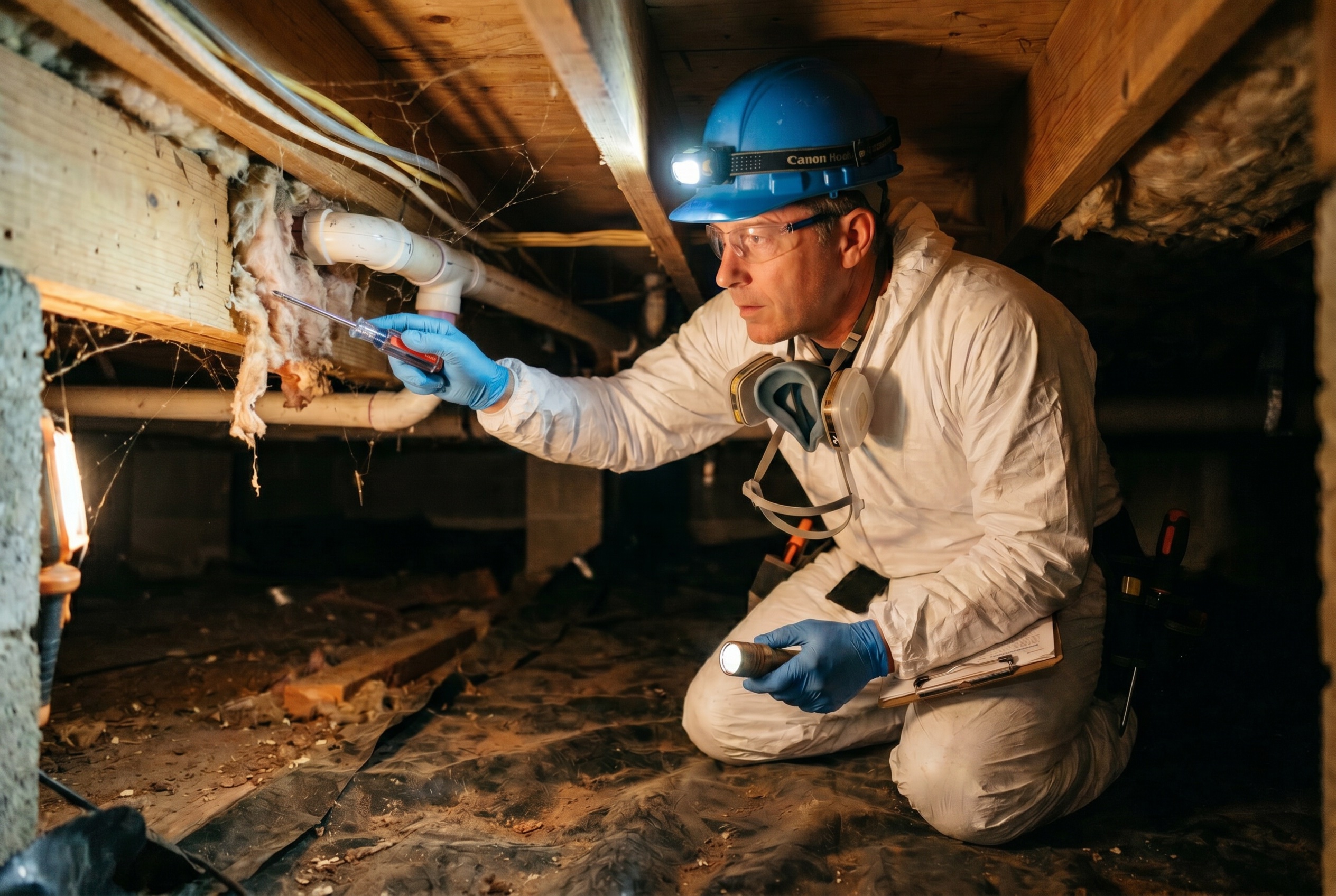
At Hawk, we offer free crawl space inspections with no obligation. We’ll take a look at the existing barrier, the condition of the framing, and the overall moisture situation, and give you a straight answer on what we’d recommend and why. Schedule your free inspection here.

Frequently Asked Questions

How long should a crawl space vapor barrier last?

A standard 6-mil polyethylene barrier in a typical crawl space might last 10 to 15 years under good conditions. In Hampton Roads, with the moisture levels, soil acidity, and pest activity common to the region, expect the lower end of that range, especially if the crawl space sees regular foot traffic from maintenance work. Heavier-duty reinforced liners in the 12-mil to 20-mil range last considerably longer and hold up better to the conditions that degrade thinner material faster.

Can I replace a vapor barrier myself?

The physical task of laying new plastic sheeting is something a handy homeowner can do. The challenge is getting it right: cutting and lapping the material properly at seams, running it up the walls and securing it correctly, making sure there’s no exposed soil anywhere in the space, and making sure any drainage or moisture issues that caused the old barrier to fail are addressed at the same time. A new barrier installed on top of the same conditions that destroyed the old one is going to have the same lifespan. If there’s any water intrusion, mold, or framing damage involved, professional assessment before doing anything is the right move.

Does a vapor barrier eliminate the need for a dehumidifier?

Not entirely. A vapor barrier controls moisture coming up through the soil, which is a major source, but it doesn’t address moisture that enters through foundation vents, gaps around penetrations, or through the walls themselves. In an unencapsulated crawl space with open vents, humid summer air is still getting in regardless of what’s on the ground. A dehumidifier in that situation is working against an active source rather than maintaining a controlled environment. In a fully encapsulated crawl space where the vents are sealed and the liner runs up the walls, a dehumidifier manages residual moisture and keeps humidity consistently below the level where problems develop. The two work together as a system.

What thickness vapor barrier do I need for my crawl space?

Building codes in Virginia require a minimum of 6-mil polyethylene for crawl space vapor barriers, but that’s a floor, not a recommendation. For Hampton Roads conditions, most professional installations use a reinforced liner in the 12-mil range or heavier. The thicker material resists tearing under foot traffic, holds up better against pests and acidic soil, and maintains its integrity longer between inspections. If a contractor is quoting a 6-mil barrier for a Hampton Roads crawl space, it’s worth asking why they’re not going heavier given the regional conditions.

Chesapeake Crawl Space Solutions: Which Repair Option Does Your Home Need?

Crawl Space Encapsulation in Chesapeake, VA: What Every Homeowner Should Know Before Water Damage Wins

If you’ve ever opened a crawl space door in Chesapeake and been hit by that unmistakable wave of damp, musty air, you already know something isn’t right down there. What you might not know is how much that moisture is affecting the rest of your home, from the floors you walk on to the air your family breathes every day.

We see it constantly in our work at Hawk Crawlspace & Foundation Repair. Homeowners call us about soft floors or a strange smell, and when we get under the house, we find standing water, mold growth on floor joists, and insulation hanging down like wet laundry. The good news is that these problems are fixable, and the fix is more straightforward than most people expect.

Why Chesapeake Crawl Spaces Are Especially Vulnerable

Chesapeake sits in a region defined by water. Between the high water table, the flat coastal terrain, and the humidity that settles in from late spring through early fall, crawl spaces here face conditions that homes in drier climates simply don’t deal with. Add in the clay-heavy soils common throughout Hampton Roads, and you’ve got a recipe for moisture intrusion that never really lets up.

That persistent moisture does more than create an unpleasant smell. Over time, it breaks down wooden structural components, invites termites and other pests, and contributes to mold that can trigger respiratory issues. According to the U.S. Environmental Protection Agency, mold can begin growing on damp surfaces within 24 to 48 hours. In a crawl space that stays wet for months at a time, that’s a problem that compounds quickly.

What Crawl Space Encapsulation Actually Involves

When people hear “crawl space encapsulation” for the first time, they might picture a simple plastic sheet thrown over the ground. The reality is more involved than that, and the results are significantly better.

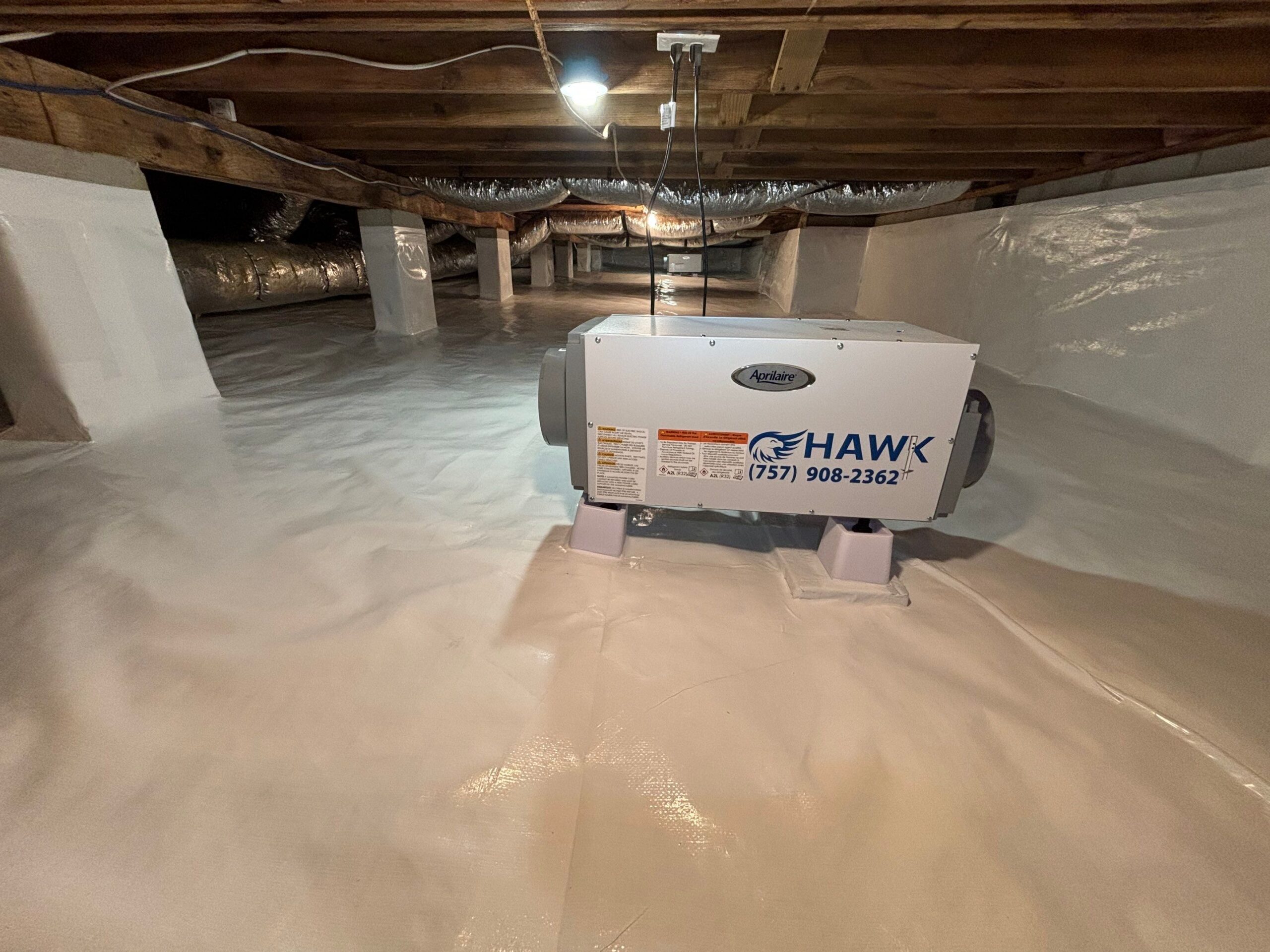
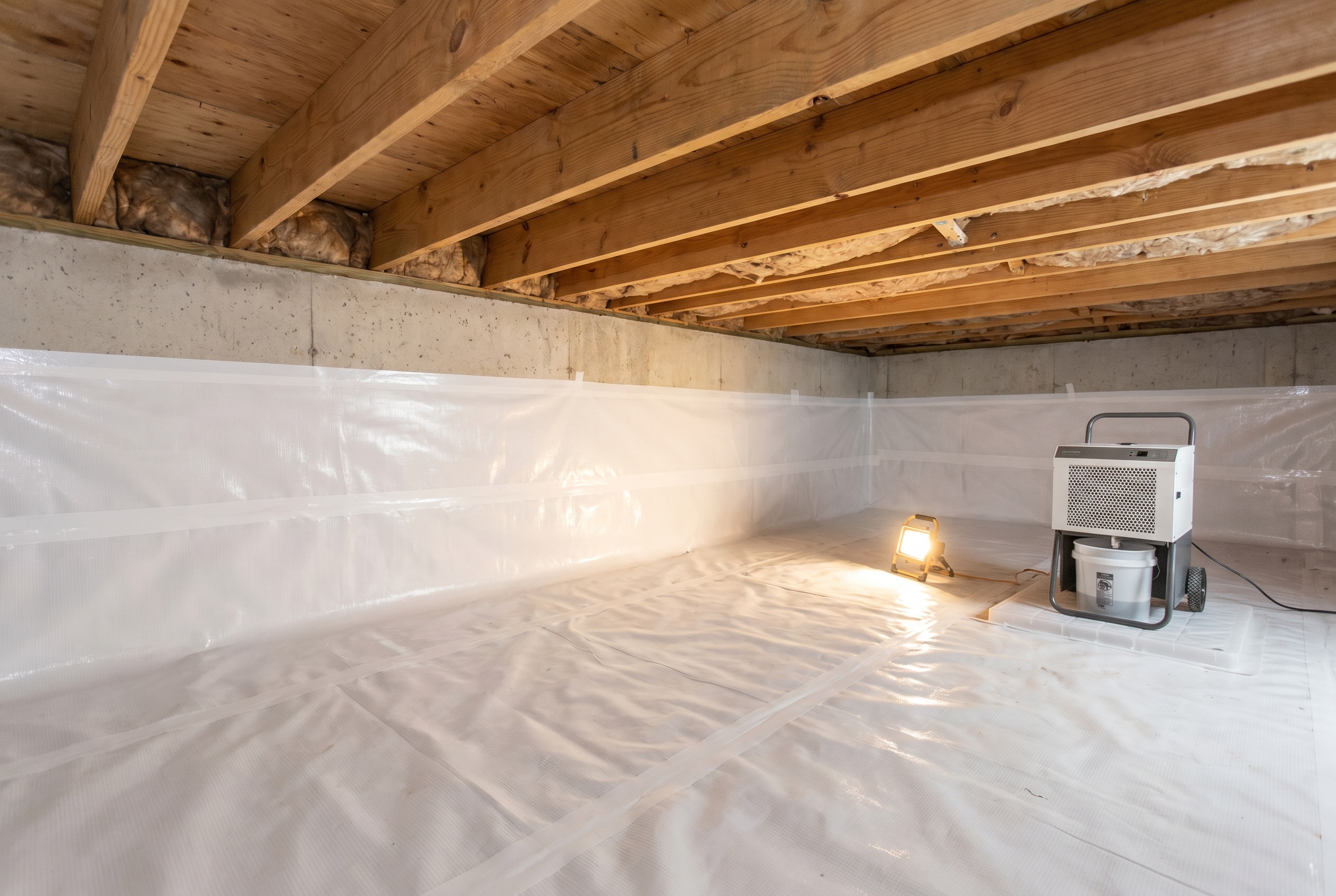
True encapsulation means sealing the crawl space from the ground up. We start by addressing any standing water, then install a heavy-duty vapor barrier across the entire floor and up the walls. All seams are sealed, and the barrier is secured to the foundation walls. Vents that once allowed outside air in are closed off, because in a humid climate like ours, open vents actually introduce more moisture rather than removing it.

From there, we typically install a commercial-grade dehumidifier sized for the space. This keeps relative humidity levels in check year-round, even during the worst of August. The end result is a dry, clean, conditioned space that protects your home’s structure and improves your indoor air quality.

If you want to learn more about our full process, our crawl space encapsulation service page walks through each step in detail.

Signs Your Crawl Space Needs Attention Now

Some homeowners catch crawl space problems early. Others don’t realize anything is wrong until a home inspector flags it during a sale or a floor starts sagging noticeably. Here are the warning signs we tell our customers to watch for:

  • Floors that feel soft, bouncy, or uneven when you walk across them
  • A musty or earthy smell that you notice most on the first floor
  • Higher-than-normal humidity inside the home, even with the AC running
  • Visible mold or mildew in closets, on baseboards, or around windows
  • Increased allergy or asthma symptoms among family members
  • Pest activity, especially termites, that seems to keep coming back

If any of those sound familiar, it’s worth getting a professional inspection. We offer free assessments throughout the Chesapeake area, and there’s no obligation attached.

When the Problem Goes Deeper: Foundation Repair in Chesapeake

Sometimes moisture damage goes beyond the crawl space itself and starts affecting the foundation. Cracks in block walls, bowing or leaning walls, and settling on one side of the house are all signs that the foundation is under stress. In Chesapeake’s soil conditions, this is more common than you might think.

Foundation repair in Chesapeake often involves stabilizing the structure with helical piers or push piers, which transfer the weight of the home down to more stable soil layers. We also handle wall bracing for bowed block walls and can address sinking or settling slabs. The key is catching foundation issues before they progress to the point where repairs become significantly more expensive.

Crawl space moisture and foundation problems frequently go hand in hand. Water weakens footings, erodes soil support, and accelerates the deterioration of block and mortar joints. That’s why we approach every job holistically. Fixing the moisture problem without addressing structural damage, or vice versa, leaves half the issue unresolved. You can read more about our approach on our foundation repair services page.

The Long-Term Value of Getting This Right

Chesapeake crawl space solutions aren’t just about solving today’s problem. They’re about protecting your home’s value and your family’s health for years to come. A properly encapsulated crawl space reduces energy costs because your HVAC system isn’t fighting against a constant source of humid air from below. It extends the life of your floor system by eliminating the moisture that rots wood. And it creates an environment where mold and pests simply can’t thrive.

We’ve worked with homeowners across Chesapeake, from Great Bridge to Deep Creek to Greenbrier, who tell us they noticed the difference in their home’s comfort within days of encapsulation. Lower humidity, fewer odors, and floors that feel solid again. Some have told us their energy bills dropped noticeably in the first few months.

These aren’t luxury upgrades. For homes built over crawl spaces in this part of Virginia, encapsulation and proper drainage are essential maintenance, no different from replacing a roof or servicing your HVAC system.

Choosing the Right Contractor Matters

Not every company offering crawl space or foundation work in Chesapeake delivers the same quality. When you’re evaluating contractors, ask about the thickness and quality of the vapor barrier they use. Ask whether they include a dehumidifier and what capacity it is. Find out if they address drainage issues before sealing everything up. And make sure they carry proper licensing and insurance for structural work.

At Hawk Crawlspace & Foundation Repair, we’ve built our reputation on doing the job right the first time. We don’t cut corners with thin barriers or skip the dehumidification step. Every project gets a thorough inspection, a clear explanation of what we find, and a written proposal before any work begins. You can see what our customers have to say on our testimonials page.

Ready to Take the Next Step?

If your Chesapeake home has crawl space moisture, structural concerns, or both, we’d love to take a look. Hawk Crawlspace & Foundation Repair offers free, no-pressure inspections throughout Chesapeake and the surrounding Hampton Roads communities. We’ll tell you exactly what’s going on under your home and walk you through your options so you can make an informed decision. Give us a call or fill out our online form to schedule your inspection today.

Frequently Asked Questions

How long does crawl space encapsulation take?
Most encapsulation projects in Chesapeake take one to two days, depending on the size of the crawl space and whether drainage work or structural repairs are needed beforehand. We’ll give you a clear timeline during your inspection.

How much does crawl space encapsulation cost in Chesapeake, VA?
Cost varies based on the size of the crawl space, the extent of existing damage, and what systems are needed (vapor barrier, dehumidifier, drainage, etc.). We provide detailed written estimates after every inspection so there are no surprises.

Will encapsulation help with musty smells in my home?
Yes. The musty odor most homeowners notice comes from mold and mildew growth in the crawl space. Because air naturally rises from the crawl space into the living areas (a process called the stack effect), sealing and dehumidifying the crawl space typically eliminates those odors.

Do I really need to close my crawl space vents?
In Chesapeake’s humid climate, yes. Open vents allow warm, moisture-laden air into a cooler crawl space, where it condenses on surfaces and creates the very moisture problems vents were once thought to prevent. Modern building science strongly supports sealed, conditioned crawl spaces in our region.

Can foundation problems be fixed without replacing the foundation?
In most cases, absolutely. Techniques like pier installation, wall bracing, and crack repair can stabilize and even lift a settling foundation without the need for a full replacement. Early intervention is the key to keeping repair costs manageable.

What Does Crawl Space Encapsulation Cost? Here’s What Actually Moves the Price

What Affects Crawl Space Encapsulation Cost

If you’ve been searching around for crawl space encapsulation prices, you’ve probably found a range so wide it’s almost useless. Some sources quote $1,500, others say $30,000. Both numbers are technically possible, and neither one tells you much about what you’re actually going to pay. The cost depends on what’s actually happening under your house, and no two crawl spaces in Hampton Roads are quite the same.

What this article will do is walk you through the variables that genuinely move the price around, so that when you sit down with a contractor, you know what questions to ask and why one quote might be higher or lower than another.

The Main Factors That Drive Crawl Space Encapsulation Cost

Square footage is the most obvious variable, but it’s far from the only one. A 1,000-square-foot crawl space in good condition with just a moisture problem is a fundamentally different project from a 1,000-square-foot crawl space with standing water, mold on the joists, a failed vapor barrier from 1997, and an HVAC unit sitting on the dirt. The labor, materials, and scope of work can be completely different even at the same size.

Here’s what actually pushes a number up or down:

Existing moisture and water damage. If there’s active water intrusion, you can’t just lay down a liner and call it done. Standing water has to be removed. If the ground stays consistently wet, you may need a French drain system or a sump pump before encapsulation makes sense. Those are separate line items that add to the total.

The condition of the existing vapor barrier (if there is one). Some homes in coastal Virginia have old 6-mil poly sheeting that’s been sitting under the house for decades. It might be shredded, covered in mold, or incompletely installed. Removal and disposal of old material is labor-intensive and adds cost.

Liner quality and thickness. The grade of vapor barrier used in your crawl space matters quite a bit for long-term performance. A 6-mil plastic sheet meets minimum code in some areas, but it tears easily and doesn’t hold up well to foot traffic or punctures. Most professional encapsulations use a reinforced liner in the 12-mil range or higher. Heavier-duty materials cost more, but they’re what makes an encapsulation last instead of requiring repairs or replacement in a few years.

Mold remediation. If there’s mold on the wood framing, that has to be addressed before you seal the space. Encapsulating a crawl space with active mold just traps the problem inside. The EPA notes that mold will continue to grow as long as moisture is present, which is why remediation and moisture control have to happen together, not separately. Remediation is priced separately and depends on how much surface area is affected. In older homes in Norfolk or Portsmouth especially, where pier-and-beam construction is common and moisture has had decades to do its work, this is often a real part of the job.

Whether a dehumidifier is included. An encapsulated crawl space still needs active moisture control. Even with all the vents sealed and the liner fully installed, moisture can still enter through the ground or small gaps. A professional-grade dehumidifier sized to the space is usually part of a complete system. The unit itself can range from a few hundred dollars for a builder-grade machine to upward of $1,500 or more for a commercial-rated unit. This is one area where cheaper is often a false economy.

Drainage systems. If your crawl space sits in an area with a high water table (which describes a large portion of Chesapeake, Virginia Beach, and surrounding areas), you may need a drainage solution as part of the overall system. That means a perimeter drain, a sump pit, and a pump. Homes near Deep Creek or Great Bridge, for instance, sit in areas where groundwater levels can be very close to the surface, and that groundwater pressure doesn’t stop just because you put a liner down.

Crawl space height and accessibility. A 36-inch crawl space is much easier to work in than a 14-inch one. Tight spaces mean slower labor, which means higher labor cost per square foot. It’s not the biggest variable, but it’s real.

Why Coastal Virginia Conditions Matter for Your Project

Hampton Roads is one of the more challenging environments in the country for crawl spaces. The region sits on coastal plain soils with a high water table, and the humidity levels here are consistently among the highest in Virginia. That combination creates a moisture environment that can overwhelm a basic vapor barrier that would work fine in a drier climate.

The clay-heavy soils common in Chesapeake also expand and contract significantly with moisture changes. That movement creates gaps and cracks over time, and water finds its way in. A proper encapsulation system for a Chesapeake home typically needs to account for this, which is why drainage and active dehumidification are usually part of the recommendation and not optional add-ons.

The stack effect amplifies this further. Warm air rising through the home pulls air upward from the crawl space, which means whatever is in that air ends up inside your living space. The U.S. Department of Energy recognizes crawl space moisture control as a key factor in home energy efficiency and indoor air quality, and estimates that a significant share of the air on a home’s first floor can originate from below. That’s why addressing the crawl space environment is as much a health and air quality issue as it is a structural one.

What to Watch Out For When Getting Quotes

Not every quote for crawl space encapsulation is quoting the same thing. Some contractors price just the liner installation. Others include dehumidification. Some will bundle drainage. Others won’t mention it until you ask.

When you’re comparing estimates, make sure you understand what’s included in each one. A quote for $4,000 that includes the liner, vent sealing, and a dehumidifier may actually be a better value than a $2,500 quote that only covers the liner, especially if the cheaper option means you’re back dealing with moisture problems in two years.

Also ask about liner thickness and brand. Contractors who are cutting costs somewhere often do it on materials. There’s a significant difference between a 6-mil vapor barrier and a 20-mil reinforced liner in terms of durability, and the price difference between the two materials is smaller than most homeowners expect.

If a company is pushing the highest-end solution before they’ve assessed your specific situation, that’s worth a second look. A good contractor will walk through what’s actually happening under your house and recommend what’s needed for your conditions, not the same package for every job. Crawl space services should be matched to the actual condition of your crawl space, not a one-size-fits-all upsell.

Getting an Accurate Number for Your Home

The honest answer is that the only way to know what your project will cost is to have someone get under your house and look. Square footage alone doesn’t tell the whole story. The condition of your existing moisture control, the water table situation in your specific neighborhood, the height of the crawl space, whether there’s any mold or structural damage: all of that shapes the scope of work.

At Hawk Crawlspace and Foundation Repair, we offer free inspections with no obligation. You don’t even need to be home for the inspection. We’ll take a look, document what’s there, and give you a clear picture of what’s going on and what we’d recommend. Contact us to schedule your inspection and get a number that’s actually based on your home, not a ballpark from the internet.

Frequently Asked Questions

Does crawl space encapsulation increase home value?

Generally yes, though the impact varies. A properly encapsulated crawl space removes a common red flag during home inspections, can improve energy efficiency, and eliminates moisture-related issues that can cause structural damage over time. Buyers and their inspectors notice crawl space condition, and a clean, dry encapsulated space is a selling point compared to a damp, unprotected one.

How long does crawl space encapsulation last?

A well-installed system using quality materials should last 15 to 25 years or longer. The liner itself, if it’s a heavy-duty reinforced product and isn’t disturbed by heavy foot traffic or mechanical work under the house, can last considerably longer. The dehumidifier will need periodic maintenance and eventual replacement, typically every 10 to 15 years depending on the unit and conditions.

Can I just install a vapor barrier myself to save money?

You can, and for very minor moisture situations it may help. But a DIY vapor barrier and a professional encapsulation system are not the same thing. Proper encapsulation involves sealing foundation vents, mechanically fastening and taping the liner to the walls and around all penetrations, and adding active moisture control. A loose sheet of plastic on the ground is better than nothing, but it won’t address the stack effect or stop moisture from coming in through the walls and vents. In coastal Virginia’s climate, a half-measure often just delays the problem.

Do I need encapsulation or just a vapor barrier?

It depends on what’s actually going on under your house. A vapor barrier is a component of an encapsulation system, not an alternative to one. If you have minor moisture on the ground and no active water intrusion, a quality liner may be sufficient. If you have higher humidity, any signs of mold on the wood, active water entry, or a high water table situation, a full encapsulation with vent sealing and a dehumidifier is usually the right approach. A free inspection will tell you which camp you’re in. You can learn more about the full encapsulation process here.

Best Crawl Space Encapsulation Benefits for Virginia Homeowners

Crawl Space Encapsulation Benefits for Virginia Homeowners

Crawl space encapsulation benefits homeowners by helping control moisture, reduce mold risk, protect wooden framing, and improve the overall health of the home. In coastal Virginia, where humidity, heavy rain, and wet soil are common, the crawlspace often becomes one of the most important areas to protect.

Many homeowners in Chesapeake, Norfolk, and Virginia Beach do not think about their crawlspace until something feels wrong inside the home. A musty smell, soft floors, high indoor humidity, or visible mold can all point back to moisture beneath the house. Encapsulation is designed to address those conditions at the source by creating a cleaner, drier, more controlled crawlspace environment.

Why Crawlspaces in Virginia Are So Vulnerable to Moisture

Hampton Roads has the kind of climate that can be tough on vented crawlspaces. Warm, humid air enters through crawlspace vents and meets cooler surfaces under the home. When that happens, condensation can form on ductwork, pipes, insulation, and wooden framing.

The soil beneath the home also contributes to the problem. Exposed dirt releases moisture into the crawlspace air, especially after periods of heavy rain. Over time, that moisture can create conditions for mold growth, wood rot, pest activity, and poor indoor air quality.

The U.S. Environmental Protection Agency notes that controlling moisture is one of the most important steps in preventing mold growth inside homes. That is especially relevant for homes with crawlspaces, since moisture problems beneath the home can affect the living space above.

How Crawl Space Encapsulation Benefits Your Home

Crawl space encapsulation involves sealing the crawlspace from the ground and outside air. A typical system may include a durable vapor barrier over the ground and walls, sealed vents, improved drainage where needed, and a crawlspace dehumidifier to help manage humidity.

The U.S. Department of Energy also recommends using a vapor diffusion barrier over crawlspace floors to help prevent soil moisture from migrating into the crawlspace.

Homeowners who want to learn more about the process can visit Hawk’s crawl space encapsulation in Chesapeake, VA page for more details.

Moisture Control and Mold Prevention

One of the biggest crawl space encapsulation benefits is moisture control. When ground moisture and humid outside air are allowed into the crawlspace, the space can stay damp for long periods. Encapsulation helps limit that moisture and makes the environment less favorable for mold growth.

Mold does not need standing water to become a problem. High humidity alone can be enough to support growth on wood, insulation, and other surfaces. Once mold develops under the home, odors and airborne particles can move into the living space above.

Encapsulation helps reduce that risk by addressing moisture before it spreads through the crawlspace. For homes already dealing with dampness, mold, or standing water, Hawk’s broader crawlspace services can help identify the right combination of moisture control, drainage, and repair solutions.

Better Indoor Air Quality

A crawlspace is not completely separate from the rest of the home. Air from beneath the house can move upward through small gaps in flooring, plumbing penetrations, and framing. If the crawlspace is damp or moldy, that air can carry odors and contaminants into the rooms above.

By helping keep the crawlspace dry, crawl space encapsulation benefits your indoor air quality. Homeowners often notice fewer musty smells and a more comfortable indoor environment after moisture issues are brought under control.

Structural Protection Over Time

The floor system above a crawlspace depends on wooden joists, beams, and supports. When those materials are exposed to moisture year after year, they can weaken. Wood rot, mold growth, and pest activity can all affect the strength of the structure.

Encapsulation helps protect those components by keeping the crawlspace environment drier and more stable. In some homes, moisture damage may already be affecting the structure. When that happens, additional evaluation may be needed through foundation and structural repair services.

Addressing moisture early is almost always simpler than waiting until floors begin to sag or structural damage becomes visible inside the home.

Energy Efficiency and Home Comfort

A damp crawlspace can make the home feel harder to heat and cool. High humidity affects comfort, and wet or sagging insulation does not perform the way it should. HVAC equipment and ductwork located in the crawlspace can also be affected by damp conditions.

Encapsulation can help create a more stable environment beneath the home. That may reduce the strain on heating and cooling systems and help improve comfort indoors, especially during humid Virginia summers.

When to Consider Crawl Space Encapsulation

Encapsulation may be worth considering if your home has recurring crawlspace moisture problems, musty odors, visible mold, damp insulation, standing water, or high indoor humidity. It can also be a smart preventative step for homeowners preparing to sell, since crawlspace moisture is something inspectors often flag.

The right solution depends on the condition of the crawlspace. Some homes need drainage improvements before encapsulation. Others may need mold remediation, insulation replacement, or structural repairs. That is why a professional inspection matters.

Hawk Crawlspace & Foundation Repair provides practical crawlspace, basement, and foundation solutions for homeowners across Chesapeake and the Hampton Roads area. If you are concerned about moisture beneath your home, you can schedule a professional inspection and get clear recommendations based on your home’s actual condition.

Frequently Asked Questions About Crawl Space Encapsulation Benefits

What are the main crawl space encapsulation benefits?

The main benefits include moisture control, mold prevention, better indoor air quality, improved comfort, and protection for wooden framing beneath the home.

Does crawl space encapsulation prevent mold?

Encapsulation helps reduce the moisture conditions that allow mold to grow. If mold is already present, the crawlspace may need to be cleaned or remediated before the encapsulation system is completed.

Is crawl space encapsulation worth it in Virginia?

For many homes in coastal Virginia, crawl space encapsulation is worth considering because of the region’s humidity, rainfall, and moisture-prone soil conditions.

Do I still need a dehumidifier after encapsulation?

Many encapsulated crawlspaces benefit from a dedicated dehumidifier. It helps maintain controlled humidity levels and supports the long-term performance of the encapsulation system.

Mold Remediation in Chesapeake VA: Why Mold Keeps Coming Back in Crawl Spaces

Mold Remediation Chesapeake VA: Why Crawl Space Mold Keeps Coming Back

If you are searching for mold remediation in Chesapeake VA or the surrounding Hampton Roads area, there is a good chance you have already noticed the warning signs. Maybe your home has a musty smell that will not go away. Maybe you have seen mold under the house, or maybe a home inspection raised concerns about moisture in the crawl space. Whatever brought you here, the important thing to understand is that mold is usually not the original problem. In many Chesapeake homes, mold is a symptom of deeper moisture conditions under the house.

That matters because mold removal by itself is not always enough. If the crawl space stays damp, humid, or poorly sealed, mold often returns. For homeowners in coastal Virginia, the real fix usually involves solving the moisture issue that allowed mold to grow in the first place.

Why Mold Is So Common in Chesapeake Crawl Spaces

Chesapeake homes deal with a combination of high humidity, frequent rain, and a naturally damp environment that can make crawl spaces especially vulnerable. Warm air carries moisture, and when that moisture gets trapped beneath a home, wood framing, insulation, and other materials can stay damp for long stretches of time. That creates ideal conditions for mold growth.

This is one reason crawlspace humidity problems are so common in Virginia homes. A crawl space does not have to be flooded to have a mold problem. Consistent humidity, poor ventilation, standing condensation, and wet materials can be enough.

In practical terms, that means a homeowner may treat mold once, only to see it return because the environment below the house never really changed.

Warning Signs You May Need Mold Remediation

Mold in a crawl space does not always stay hidden. In many cases, the first signs show up inside the living area.

You might notice a persistent musty odor, especially during humid weather. Floors may begin to feel soft or slightly uneven. Allergies or respiratory irritation can seem worse indoors. In some cases, you may see staining or visible mold on floor joists, insulation, or other materials beneath the home.

If you are already noticing those kinds of symptoms, it is worth taking a close look at the crawl space. Mold issues often overlap with the same conditions discussed in Signs Your Crawlspace Has Moisture Problems in Virginia Homes, especially when moisture has been building up over time.

What Causes Mold to Keep Coming Back?

The short version is simple. Mold comes back when moisture stays in place.

That moisture can come from several directions. Groundwater can seep in during wet periods. Humid outdoor air can enter through vents and condense on cooler surfaces. Damp insulation and organic debris can hold moisture beneath the home. In some properties, drainage around the home also contributes to the problem.

This is why a broader moisture-control strategy matters. Homeowners who only focus on cleanup may miss the reason the mold developed. In many cases, long-term protection involves improving drainage, managing water intrusion, and addressing the crawl space itself through services such as crawlspace waterproofing.

Mold remediation can remove contaminated materials and treat affected areas, but if the crawl space remains damp, the same cycle can start again.

How Mold Remediation and Crawl Space Encapsulation Work Together

For many Chesapeake homeowners, the best outcome comes from treating both the mold and the environment that caused it. That means removing existing mold safely, then reducing the moisture that allows it to return.

Hawk offers crawl space mold removal services for homes that already have visible contamination or damage. Once the mold issue is addressed, the next question is how to keep the crawl space from slipping back into the same condition a few months later.

That is where encapsulation often becomes part of the solution. A sealed crawl space can help limit outside humidity, reduce dampness, and create a more controlled environment under the home. If you want a fuller breakdown of how that works, this article on crawl space encapsulation Chesapeake VA benefits explains why many homeowners in this area use encapsulation as a long-term defense against recurring moisture and mold problems.

Not every home needs the exact same fix, which is why inspection matters. Some homes need mold removal plus drainage improvements. Others need encapsulation, dehumidification, or waterproofing. The right answer depends on how the moisture is getting in and how much damage has already been done.

Why This Matters for Long-Term Home Protection

When mold develops in a crawl space, it is rarely just a cosmetic issue. Over time, persistent moisture can affect insulation, wood framing, indoor air quality, and even the feel of the floors above. What begins as a smell or a small patch of growth can turn into a larger structural and air-quality problem if it is ignored.

That is one reason experienced contractors look beyond the mold itself. The goal is not just to make the crawl space look better for a week. The goal is to help the space stay dry, stable, and healthy over time.

For homeowners in Chesapeake and across Hampton Roads, that usually means looking at the full picture: humidity, water intrusion, drainage, cleanup, and protection moving forward.

FAQ

What is mold remediation?

Mold remediation is the process of removing mold-contaminated materials, cleaning affected areas, and helping restore a healthier environment. In crawl spaces, it is often paired with moisture-control work to reduce the chance of the mold returning.

Why does mold keep coming back in my crawl space?

Mold usually comes back when the crawl space stays damp or humid. If the underlying moisture issue is not corrected, cleanup alone may only be temporary.

Is mold in a crawl space dangerous?

Mold in a crawl space can affect air quality and may contribute to odors or respiratory irritation, especially when moisture problems are ongoing. It can also signal conditions that may damage wood and insulation over time.

When should I call for a crawl space inspection?

If you notice musty odors, visible mold, damp insulation, soft floors, or repeated moisture issues, it is a good time to schedule an inspection. Catching the problem early usually makes the solution more manageable.

If you think your home may need mold remediation in Chesapeake VA, the best next step is a professional inspection. Hawk Crawlspace & Foundation Repair can evaluate the condition of your crawl space, identify the moisture source, and recommend a practical solution that protects your home for the long run. Contact Hawk today to schedule a free inspection.

The Real Benefits of Crawl Space Encapsulation for Chesapeake VA Homes

Why Crawl Space Encapsulation Matters for Chesapeake VA Homes

Many homeowners don’t think about their crawl space until something goes wrong. Maybe there’s a musty smell that won’t go away, or the floors feel a little uneven. In coastal areas like Chesapeake, these problems are often tied to moisture under the home. That’s where crawl space encapsulation in Chesapeake VA becomes more than just a home improvement; it becomes a form of protection.

Encapsulation is designed to control the environment beneath your home. Instead of allowing outside air and moisture to move freely through the crawl space, the area is sealed and managed. This reduces long-term damage and helps keep the rest of the house stable and healthy.

What Causes Crawl Space Problems in Coastal Virginia?

Homes in Chesapeake and the surrounding Hampton Roads region deal with a unique mix of conditions. High humidity, frequent rain, and a naturally high water table all contribute to moisture buildup beneath homes.

When that moisture enters an open or vented crawl space, it doesn’t just sit there quietly. It seeps into wood framing, insulation, and subflooring. Over time, that leads to mold growth, wood rot, and even structural weakening.

According to the EPA, mold thrives in damp environments, especially when humidity remains elevated over long periods. That makes crawl spaces in coastal Virginia particularly vulnerable.

Encapsulation works by cutting off that moisture source and controlling humidity levels before damage can take hold.

Warning Signs Your Crawl Space Needs Attention

Most crawl space issues don’t start with standing water. They begin with subtle changes that are easy to overlook.

Some of the most common warning signs include:

  • Musty or earthy smells inside the home
  • Floors that feel soft, sagging, or uneven
  • Higher indoor humidity or condensation on windows
  • Visible mold or damp insulation under the home
  • Increased pest activity

These signs often point to ongoing moisture problems. Left unaddressed, they can affect air quality, energy efficiency, and structural integrity.

The Real Benefits of Crawl Space Encapsulation in Chesapeake VA

Encapsulation isn’t just about fixing a problem. It’s about preventing a chain reaction of issues that can spread throughout the home.

When done properly, crawl space encapsulation provides several long-term benefits:

Moisture Control: Sealing the crawl space keeps groundwater and humid air from entering, reducing the risk of mold and rot.

Improved Air Quality: A significant portion of the air inside your home comes from below. A dry, sealed crawl space means cleaner air throughout the house.

Energy Efficiency: Controlling humidity makes it easier to regulate indoor temperatures, which can reduce strain on HVAC systems.

Structural Protection: By preventing moisture damage, encapsulation helps preserve floor joists, beams, and supports.

Pest Prevention: A sealed environment is less inviting to insects and rodents that thrive in damp spaces.

If you want to learn more about how the process works, you can explore Hawk’s crawl space encapsulation Chesapeake VA service page for a detailed breakdown.

How Encapsulation Solves the Problem at the Source

Temporary fixes like fans or basic vapor barriers often don’t go far enough. They may reduce symptoms, but they don’t stop moisture from entering the space.

A full encapsulation system typically includes sealing the ground with a durable vapor barrier, closing vents, and controlling humidity with a dehumidifier. In some cases, drainage improvements are also needed to manage groundwater.

This approach addresses the root cause instead of just the visible effects. That’s why it tends to last longer and require less ongoing maintenance.

Homeowners who are already seeing signs of structural issues may also want to explore related services like foundation repair or a full crawl space inspection to catch any underlying damage early.

FAQ About Crawl Space Encapsulation

How long does crawl space encapsulation last?

A properly installed encapsulation system can last for many years. The longevity depends on materials used and whether moisture sources are fully addressed.

Does encapsulation increase home value?

It can. A dry, well-maintained crawl space is often viewed as a positive during inspections and can make a home more appealing to buyers.

Is crawl space encapsulation worth it in Chesapeake VA?

Given the region’s humidity and water table conditions, encapsulation is often one of the most effective ways to protect a home from long-term moisture damage.

Do I need a dehumidifier with encapsulation?

In most cases, yes. A dehumidifier helps maintain stable humidity levels inside the sealed crawl space.

If you’re noticing signs of moisture or structural issues, the best next step is a professional evaluation. Contact Hawk Crawlspace & Foundation Repair to schedule a free inspection and get a clear understanding of what your home needs.

The Stack Effect: Why 50% of Your Indoor Air Comes from the Crawlspace


Most homeowners think of their crawlspace as a dark, isolated void that has nothing to do with their living room. In reality, your home functions like a giant chimney. This thermodynamic phenomenon is known as the Stack Effect, and it plays a massive role in your family’s health and your monthly energy bills.


How the Stack Effect Works

As the air inside your home warms up, it becomes less dense and rises, eventually escaping through the attic and upper-floor windows. To replace that lost air, your home creates a vacuum, pulling “replacement air” inward from the lowest point: the crawlspace.

In Chesapeake’s humid climate, that air is often laden with:

  • Mold Spores: Thriving in the damp, dark environment beneath your floorboards.
  • High Humidity: Making your AC work twice as hard to keep the upstairs comfortable.
  • Allergens and Soil Gases: Including odors that linger in your carpets and upholstery.


Healthy Home, Ground Up

Our mission at Hawk is Indoor Air Quality Improvement. By encapsulating your crawlspace, we effectively “seal the bottom of the chimney.” This ensures that the air being pulled into your living space is clean, dry, and filtered, rather than a byproduct of a damp ecosystem. A healthy home doesn’t start in the kitchen or the bedroom; it starts from the ground up.


Protect Your Home from Moisture Damage with Expert Crawl Space Encapsulation

When it comes to protecting your home’s foundation and air quality, one of the smartest investments you can make is Crawl Space Encapsulation. Homeowners often overlook their crawl space, assuming it doesn’t impact the rest of the house—but that’s far from true. This hidden area plays a major role in your home’s overall comfort, air quality, and structural integrity. That’s why Hawk Crawlspace & Foundation Repair specializes in providing professional encapsulation solutions that transform damp, musty crawl spaces into clean, dry, and energy-efficient environments.

What Is Crawl Space Encapsulation?

Crawl Space Encapsulation is the process of sealing the crawl space beneath your home to prevent moisture, mold, and pests from entering. This involves covering the floors and walls with a heavy-duty vapor barrier, sealing off all vents, and installing a dehumidifier if necessary. The goal is to create a clean, dry, and controlled environment that protects your foundation from long-term water damage.

Unlike traditional vented crawl spaces that allow outdoor air and moisture to flow freely, encapsulated crawl spaces stay sealed and conditioned. This simple yet powerful process not only improves the structural health of your home but also enhances your comfort and air quality.

Why Moisture Control Matters

High humidity levels encourage mold growth, wood rot, and pest infestations. Over time, this can weaken floor joists, cause insulation to sag, and even compromise the stability of your home’s foundation. Worse yet, up to 50% of the air you breathe on the first floor comes from the crawl space, meaning any musty odors or contaminants below can make their way into your living area.

With Crawl Space Encapsulation, you create a barrier that locks out moisture and humidity. This helps prevent structural decay, reduces allergens, and lowers your energy costs by improving overall HVAC efficiency.

The Benefits of Crawl Space Encapsulation

  1. Improved Air Quality: By sealing off your crawl space, you prevent mold spores, allergens, and other pollutants from entering your home.
  2. Energy Efficiency: A sealed crawl space helps maintain a consistent indoor temperature, reducing strain on your heating and cooling systems.
  3. Pest Prevention: Encapsulation blocks entry points for pests like termites, rodents, and insects that thrive in damp environments.
  4. Structural Protection: Encapsulation prevents water damage, wood rot, and corrosion, helping your home’s foundation last longer.
  5. Increased Home Value: A clean, dry crawl space is a valuable selling point that reflects proactive home maintenance.

Why Choose Hawk Crawlspace & Foundation Repair

At Hawk Crawlspace & Foundation Repair, we understand that no two crawl spaces are the same. That’s why we take a customized approach to every Crawl Space Encapsulation project. Our experienced team begins with a thorough inspection to identify existing issues like standing water, mold, or structural damage. We then design a tailored encapsulation plan that ensures long-lasting protection for your home.

Our encapsulation process includes:

  • Installation of a high-quality vapor barrier
  • Sealing of vents and gaps
  • Optional dehumidifier installation for optimal humidity control
  • Insulation upgrades were needed
  • Final inspection to guarantee a perfect seal

We pride ourselves on using top-grade materials and proven techniques to ensure your crawl space stays dry and healthy year-round. Plus, our services are backed by warranties and exceptional customer support, so you can have peace of mind knowing your home is in trusted hands.

Invest in a Healthier Home Today

Don’t let a damp or neglected crawl space compromise your home’s safety and comfort. With professional Crawl Space Encapsulation from Hawk Crawlspace & Foundation Repair, you can protect your foundation, improve indoor air quality, and even save money on energy bills.

Whether you’re dealing with moisture problems or simply want to prevent future damage, our team is ready to help. Contact Hawk Crawlspace & Foundation Repair today for a free inspection and discover how encapsulation can make your home cleaner, safer, and more efficient for years to come.

Breathe Easier at Home with Professional Crawl Space Encapsulation by Hawk Crawlspace & Foundation Repair

Most homeowners don’t give much thought to their crawl space. After all, it’s out of sight and easy to forget. But what happens beneath your home has a huge impact on your comfort, safety, and even your monthly energy bills. That’s where Crawl Space Encapsulation comes in—a simple yet powerful solution offered by the experts at Hawk Crawlspace & Foundation Repair.

What Is Crawl Space Encapsulation?

Think of encapsulation as a protective shield for your home. It involves sealing your crawl space with a high-quality vapor barrier, adding insulation, and sometimes installing a dehumidifier. This keeps out moisture, pests, and outside air, creating a clean, dry, and stable environment under your home.

Instead of a damp, musty crawl space that can damage your foundation, you’ll have a protected area that helps your whole home perform better.

Why Homeowners Choose Crawl Space Encapsulation

Encapsulation isn’t just about aesthetics—it directly improves your quality of life. Here’s why more homeowners are making the switch:

  • Say Goodbye to Moisture Problems – No more standing water, damp soil, or wood rot threatening your home.

  • Breathe Healthier Air – Up to 40% of the air you breathe comes from your crawl space. Encapsulation reduces mold and allergens.

  • Save on Energy Bills – A sealed crawl space prevents energy loss, helping your HVAC system run more efficiently.

  • Protect Your Foundation— Excess moisture can weaken structural supports—encapsulation safeguards against costly repairs.

  • Keep Pests Out – Termites, rodents, and insects thrive in damp crawl spaces. With encapsulation, they won’t find a welcome home.

Why Work with Hawk Crawlspace & Foundation Repair?

Choosing the right contractor makes all the difference. At Hawk Crawlspace & Foundation Repair, we combine skill, experience, and dedication to provide crawl space solutions that last.

Here’s what you can expect when you work with us:

  • Customized Plans – Every crawl space is unique. We design solutions based on your home’s specific needs.

  • Top-Quality Materials – Our vapor barriers, insulation, and sealing systems are built for long-term performance.

  • Expert Team – With years of hands-on experience, our technicians know how to tackle even the toughest crawl space conditions.

  • Comprehensive Protection – Beyond encapsulation, we handle sump pump installations, waterproofing, and foundation repair for complete peace of mind.

Is It Worth the Investment?

Many homeowners wonder if Crawl Space Encapsulation is worth the cost. The answer is simple: absolutely. The benefits—reduced energy bills, healthier indoor air, and fewer structural repairs—quickly outweigh the initial investment. Most importantly, encapsulation protects your biggest asset: your home.

With Hawk Crawlspace & Foundation Repair, you’re not just fixing a problem—you’re preventing future issues and adding long-term value to your property..

Take Control of Your Home’s Health

Your crawl space might not be the first thing on your mind, but it plays a vital role in your home’s overall health. By investing in Crawl Space Encapsulation with Hawk Crawlspace & Foundation Repair, you’ll create a cleaner, drier, and safer environment for your family.

Don’t wait until small issues turn into major repairs. Contact Hawk Crawlspace & Foundation Repair today for a free inspection and discover how encapsulation can transform your home from the ground up.

Create a Healthier Living Space with Crawl Space Encapsulation – Hawk Crawlspace & Foundation Repair

Most homeowners rarely step into their crawl space, which makes it easy to forget about. But the truth is, your crawl space plays a much bigger role in your home than you might realize. If it’s damp, unsealed, or neglected, it can cause serious issues ranging from poor indoor air quality to structural damage. Thankfully, there’s a long-term solution: Crawl Space Encapsulation. At Hawk Crawlspace & Foundation Repair, we specialize in this process to help homeowners protect their homes from the ground up.

What is Crawl Space Encapsulation?

Instead of being a source of mold, musty odors, and high energy bills, your crawl space becomes an extension of your home’s healthy and efficient system.

Why Encapsulation Matters

A poorly maintained crawl space can create a ripple effect that impacts your entire home. Here’s why encapsulation is so important:

  • Stops Moisture Damage: Moisture is the leading cause of crawl space problems. Encapsulation eliminates it by sealing off damp ground and outside humidity. 
  • Keeps Pests Away: Rodents, termites, and insects love crawl spaces. Sealing it properly removes their entry points and makes your home less inviting. 
  • Protects Structural Integrity: Excess moisture can cause wood to rot and weaken floor joists. Encapsulation helps preserve your foundation’s strength. 
  • Simply put, encapsulation isn’t just about your crawl space — it’s about creating a healthier, safer, and more efficient home.

Why Choose Hawk Crawlspace & Foundation Repair?

At Hawk Crawlspace & Foundation Repair, we’ve seen firsthand how damaging an untreated crawl space can be. That’s why we’ve made it our mission to provide high-quality encapsulation services that solve problems for the long term.

Here’s what makes us different:

  • Customized Solutions: Every crawl space is unique, so we tailor our encapsulation plans to fit your specific needs. 
  • High-Quality Materials: We use heavy-duty vapor barriers, durable insulation, and professional-grade equipment. 
  • Experienced Team: Our skilled technicians know how to handle moisture, pests, and structural concerns the right way. 
  • Transparent Process: We believe in honest communication, so you’ll always know what’s happening and why.

We don’t just cover up crawl space issues — we fix them and prevent them from coming back.

The Benefits You’ll Notice

Once your crawl space is encapsulated, the difference is clear:

  • Fresher indoor air and fewer musty odors. 
  • Reduced allergy triggers from mold or dust. 
  • Lower monthly energy costs. 
  • Protection against costly structural repairs. 
  • Increased home value, since encapsulation is seen as a major upgrade by potential buyers.

Many homeowners tell us they wish they had encapsulated their crawl space years earlier because of how noticeable the improvements are.

Your crawl space might be hidden, but it has a major impact on your home’s health, comfort, and value. With professional Crawl Space Encapsulation from Hawk Crawlspace & Foundation Repair, you can eliminate moisture problems, protect your foundation, and breathe easier knowing your home is in good hands.

Contact Hawk Crawlspace & Foundation Repair today to schedule your inspection and take the first step toward a cleaner, healthier, and more efficient home.