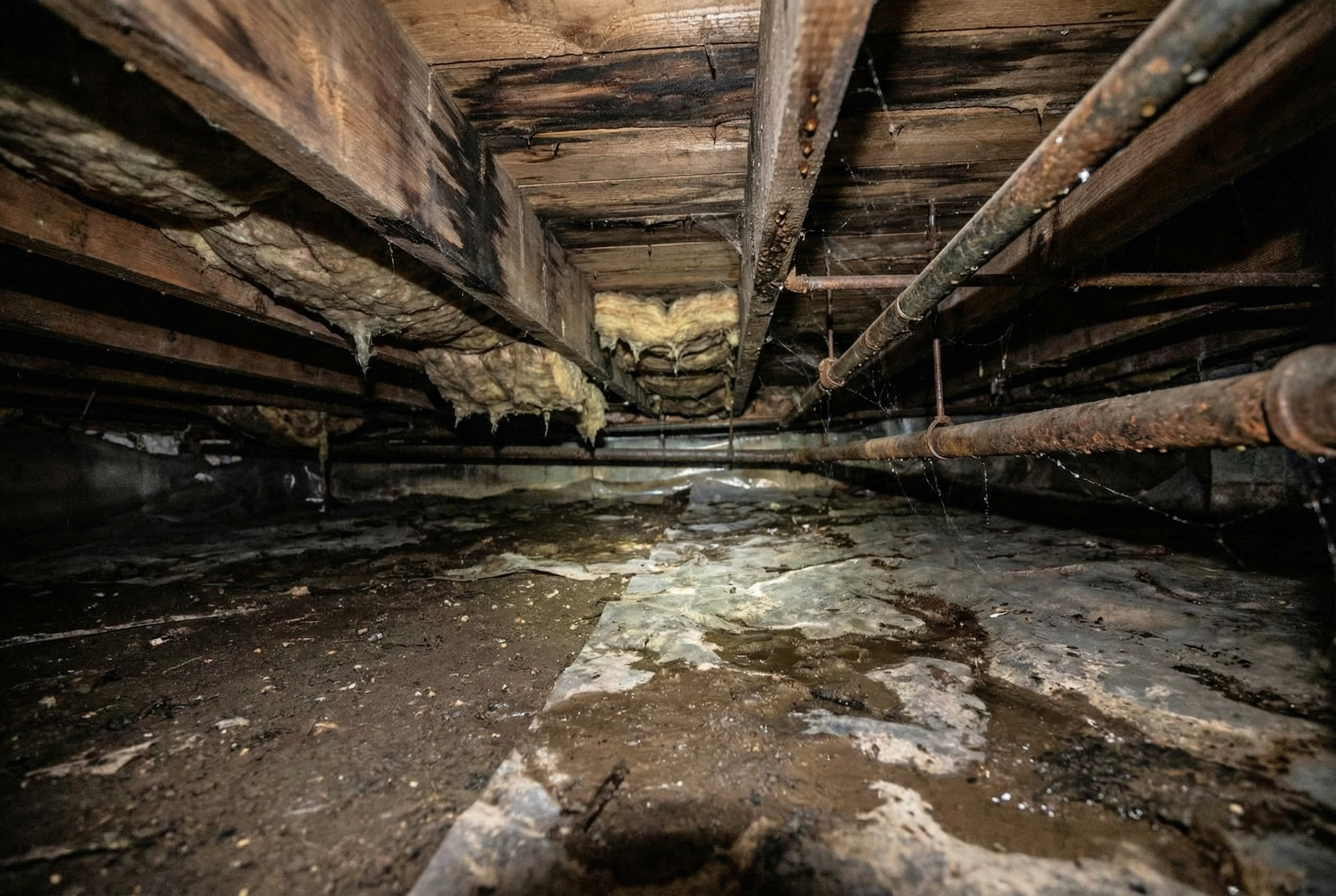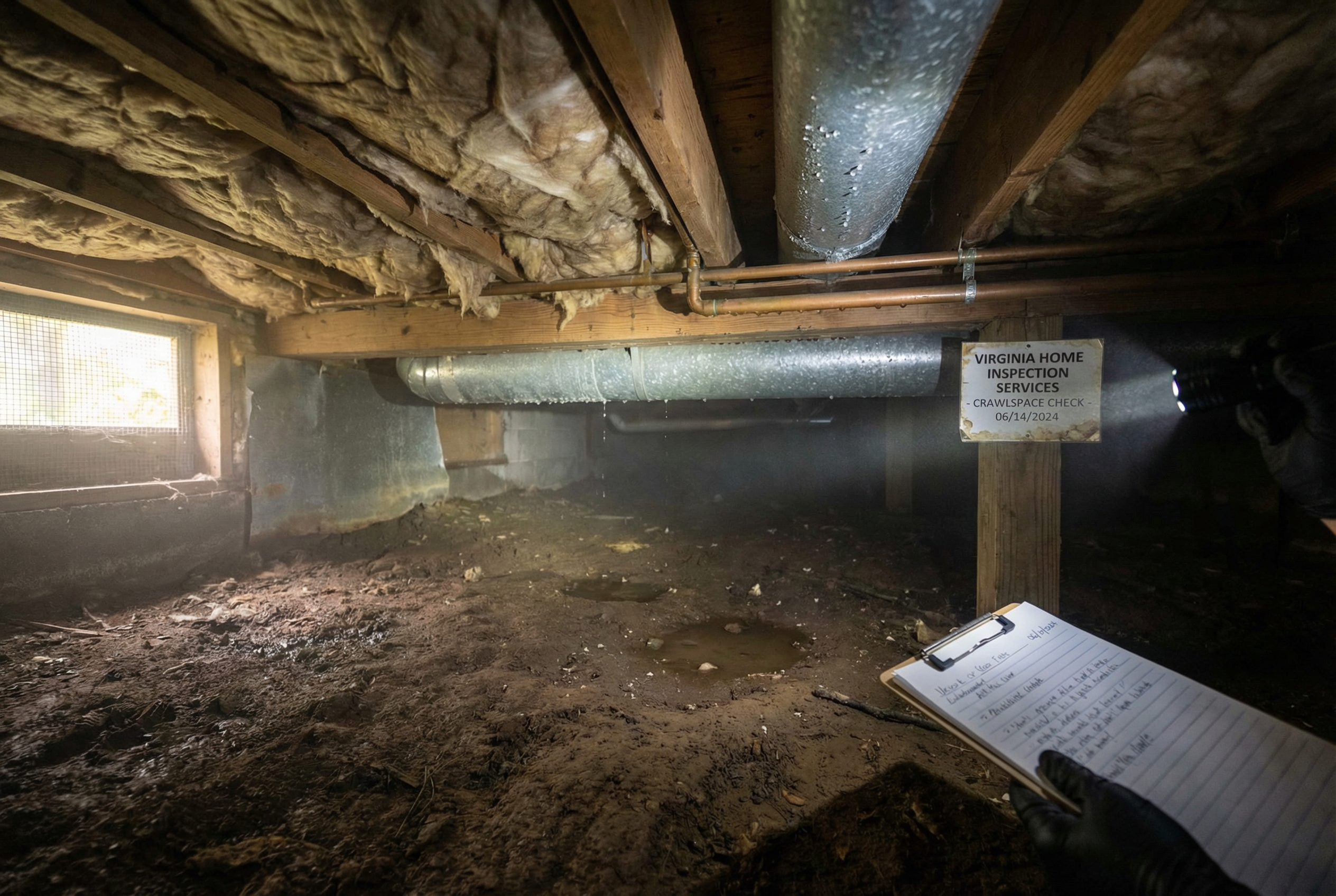
Crawlspace humidity problems are one of the most common issues homeowners in coastal Virginia experience. Many homes in Chesapeake, Norfolk, and Virginia Beach were built with vented crawlspaces that allow outside air to move underneath the home. While that design was once considered standard practice, the climate in Hampton Roads often turns those crawlspaces into humid environments that trap moisture rather than release it.
Over time, that excess humidity can affect insulation, wooden framing, and even the air inside the home. Homeowners may notice musty odors, mold growth, or damp conditions under the house long before they see standing water. Understanding why crawlspace humidity develops and how to control it can help prevent more serious structural or moisture issues down the road.
Why Crawlspace Humidity Problems Are So Common in Coastal Virginia
The Hampton Roads region sits in a humid coastal climate with long summers and frequent rainfall. When warm outdoor air enters a crawlspace through vents, it carries moisture with it. That air cools slightly once it moves under the home, which causes the humidity to condense on cooler surfaces such as floor joists, ductwork, and plumbing lines.
This process can repeat daily during the warmer months. Over time, the crawlspace air stays consistently humid, especially when the ground beneath the home is exposed soil. Moisture from the soil evaporates upward while humid outdoor air continues entering through vents.
Virginia’s clay-heavy soil can also contribute to crawlspace moisture. When the ground stays wet after rain, moisture slowly migrates into the crawlspace environment. According to the U.S. Department of Energy’s moisture control guidance, controlling ground moisture and humidity is one of the most important factors in maintaining a healthy crawlspace.
Without proper moisture control, humidity can remain trapped beneath the home for long periods of time.
Warning Signs of Crawlspace Humidity Problems
Many homeowners never enter their crawlspace, which means humidity problems often develop unnoticed. However, there are several signs that excess moisture may be building underneath the home.
A musty smell inside the house is one of the most common indicators. Air from the crawlspace can move upward through small gaps in flooring and framing. When that air carries moisture or mold spores, the smell often becomes noticeable indoors.
Another warning sign is insulation that appears damp or begins to sag between floor joists. High humidity can cause insulation to absorb moisture, reducing its effectiveness and allowing it to fall out of place.
Homeowners may also notice condensation on ductwork or plumbing pipes under the home. When humid air comes into contact with cooler metal surfaces, moisture forms quickly.
Over time, crawlspace humidity problems can also lead to visible mold growth on wooden framing. This does not always mean structural damage has occurred, but it does indicate the moisture level is consistently too high.
How Crawlspace Humidity Affects Your Home
Excess humidity under a house can influence more than just the crawlspace itself. The wooden framing that supports the home is particularly vulnerable to long-term moisture exposure. When wood remains damp, it becomes more susceptible to mold growth and gradual deterioration.
Humidity can also affect indoor air quality. Because crawlspaces share airflow pathways with the rest of the home, humid air can migrate upward into living spaces. This can make air conditioning systems work harder during summer months and may contribute to persistent indoor odors.
In some cases, long-term moisture issues can even contribute to minor structural movement. As wood absorbs moisture, it expands slightly. When conditions dry out, it contracts again. Over many seasonal cycles, that movement can affect floors and framing.
Solutions for Crawlspace Humidity Problems
The best solution for crawlspace humidity problems depends on the underlying cause and the overall condition of the crawlspace. In many Virginia homes, improving moisture control begins with addressing ground vapor and limiting the amount of humid air entering the space.
A vapor barrier installed over exposed soil is often the first step in controlling moisture. This barrier prevents ground moisture from evaporating into the crawlspace air.
For homes experiencing persistent humidity issues, a full crawlspace encapsulation system may provide a more effective long-term solution. Encapsulation seals the crawlspace from outside air while controlling moisture levels with specialized materials and ventilation strategies.
Additional drainage improvements or moisture management systems may also be recommended depending on the property. These services are typically evaluated during a professional inspection of the crawlspace.
Homeowners who suspect humidity problems beneath their home can learn more about available solutions through Hawk’s crawlspace services, which address moisture control and structural protection.
If humidity issues are already affecting the structure of the home, related services such as foundation repair may also be evaluated during the inspection process.
When to Schedule a Crawlspace Inspection
Humidity problems often develop slowly and can go unnoticed for years. Because crawlspaces are rarely inspected by homeowners, moisture issues may only be discovered during a home inspection or after indoor air quality concerns appear.
If you notice musty odors, damp insulation, or signs of mold under your home, it may be time to schedule a professional crawlspace inspection. Identifying the source of humidity early can help prevent more extensive moisture damage later.
Homeowners in Chesapeake and the surrounding Hampton Roads area can request a professional inspection through Hawk Crawlspace & Foundation Repair. An experienced contractor can evaluate the crawlspace, identify the cause of humidity, and recommend practical solutions to protect the home long term.
Frequently Asked Questions About Crawlspace Humidity Problems
What causes crawlspace humidity problems?
Crawlspace humidity problems are usually caused by humid outdoor air entering through vents, moisture evaporating from exposed soil, or poor drainage around the home. These factors are especially common in coastal Virginia.
Is humidity in a crawlspace dangerous?
High humidity can lead to mold growth, wood deterioration, and poor indoor air quality if left untreated for long periods. Addressing the issue early helps prevent more serious damage.
How can I reduce humidity in my crawlspace?
Solutions often include installing a vapor barrier, improving drainage, sealing vents, or installing a crawlspace encapsulation system depending on the situation.
Do all crawlspaces in Virginia have humidity issues?
Not every crawlspace has humidity problems, but homes in humid climates like Hampton Roads are more likely to experience them without proper moisture control systems.