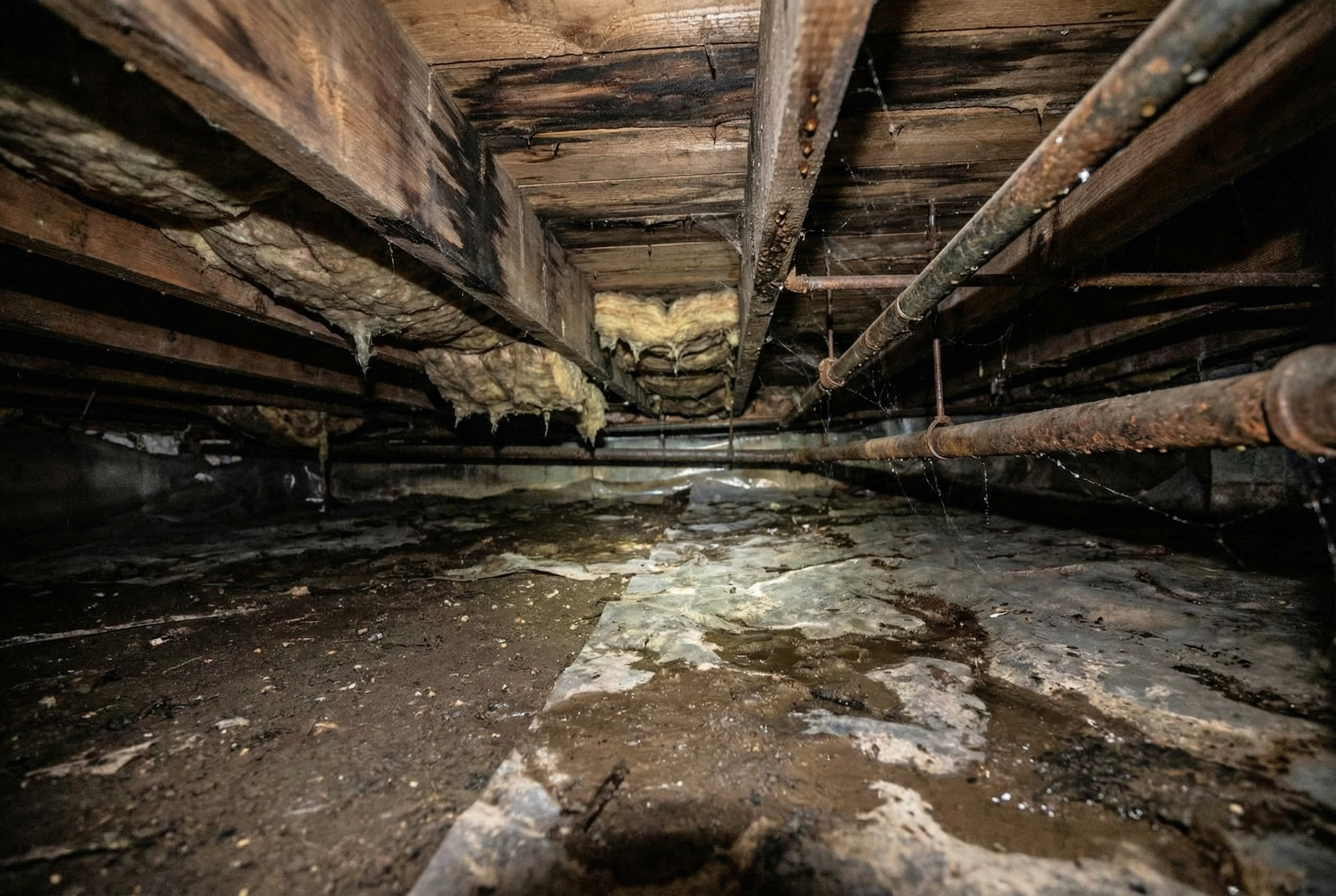
Crawlspace moisture problems are one of the most common issues homeowners face in coastal Virginia. In places like Chesapeake, Norfolk, and Virginia Beach, the combination of humid air, heavy rainfall, and clay-heavy soil creates the perfect conditions for moisture to collect beneath a home.
Many homeowners rarely enter their crawlspace, so problems can develop slowly without being noticed. By the time musty odors, sagging floors, or mold appear inside the home, moisture has often been present for months or even years.
Understanding the warning signs early can help you address the issue before it leads to structural damage or expensive repairs.
Why Crawlspace Moisture Happens in Hampton Roads
Homes in the Hampton Roads region are especially vulnerable to crawlspace moisture. Our climate brings high humidity for much of the year, and seasonal storms can quickly saturate the ground around a home.
When soil becomes saturated, water vapor rises into the crawlspace. At the same time, outdoor humidity can enter through foundation vents or gaps around the structure. Over time, that moisture builds up under the home.
Once moisture is present, it can lead to mold growth, wood rot, pest activity, and increased humidity throughout the house.
According to the U.S. Environmental Protection Agency, moisture control is a critical part of preventing mold growth inside homes. You can read more about how moisture contributes to indoor mold issues on the EPA website.
Because crawlspaces are often out of sight, the first clues usually appear elsewhere in the home.
Common Signs of Crawlspace Moisture Problems
Several warning signs may indicate moisture is collecting beneath your home.
One of the most noticeable signs is a persistent musty smell. If certain areas of your home smell damp or earthy, that odor is often coming from the crawlspace below.
Another common sign is increased indoor humidity. When moisture accumulates under the house, it can rise into the living space through a process known as the stack effect.
Homeowners may also notice:
• condensation on ductwork or pipes in the crawlspace
• visible mold growth on wood framing
• standing water or muddy soil beneath the home
• sagging or uneven floors above the crawlspace
• deteriorating insulation under the floor system
These conditions indicate that moisture levels are higher than they should be and may continue worsening if the underlying cause is not addressed.
How Moisture Affects the Structure of Your Home
A crawlspace is part of the home’s structural system. Floor joists, beams, and support posts all depend on a stable environment to perform properly.
When moisture remains present for long periods, it can begin affecting the wood framing beneath the home. High humidity encourages mold growth and can eventually lead to wood rot.
Over time, this can weaken floor supports and contribute to issues such as sagging floors, shifting framing, or gaps around doors and windows.
Moisture also attracts pests like termites and carpenter ants, which are drawn to damp wood. In coastal Virginia, these conditions are particularly common in older homes that were built with vented crawlspaces.
Practical Ways to Address Crawlspace Moisture
If moisture is present beneath a home, the solution usually involves controlling both water intrusion and humidity levels.
Depending on the conditions, common solutions may include installing a vapor barrier, improving drainage around the foundation, sealing vents, or installing a crawlspace dehumidifier.
In many cases, homeowners choose crawlspace encapsulation, which seals the crawlspace environment and helps prevent outside moisture from entering. This approach creates a controlled, dry space beneath the home.
You can learn more about how this process works on Hawk’s crawlspace encapsulation service page.
For homes already experiencing structural symptoms, additional repairs may also be needed. Hawk provides foundation repair and structural solutions designed to stabilize the home and address underlying moisture issues.
When to Schedule a Crawlspace Inspection
If you notice any of the warning signs above, it may be time to have a professional evaluate the crawlspace.
A proper inspection can identify whether moisture is coming from groundwater, humidity, poor drainage, or other structural conditions. Catching the issue early often prevents more extensive repairs later.
Hawk Crawlspace & Foundation Repair serves homeowners across Chesapeake, Norfolk, and Virginia Beach with professional inspections and practical solutions designed for coastal Virginia conditions.
If you suspect crawlspace moisture problems, you can request a free professional inspection here:
https://hawkcrawlspaceandfoundationrepair.com/contact/
Addressing the problem early helps protect both your home’s structure and the air quality inside your living space.
FAQ
What causes crawlspace moisture problems?
Moisture often comes from groundwater, heavy rainfall, high humidity, or poor drainage around the foundation. In coastal Virginia, humid air entering through crawlspace vents is a common cause.
Is moisture in a crawlspace dangerous?
Moisture can lead to mold growth, wood rot, pest activity, and structural damage if it remains present for long periods. It can also increase humidity inside the home.
How do professionals fix crawlspace moisture issues?
Solutions often include vapor barriers, drainage improvements, dehumidifiers, and crawlspace encapsulation systems designed to control humidity and prevent water intrusion.
Should I inspect my crawlspace regularly?
Yes. Checking your crawlspace periodically can help identify crawlspace moisture problems, mold, or structural concerns before they develop into larger problems.