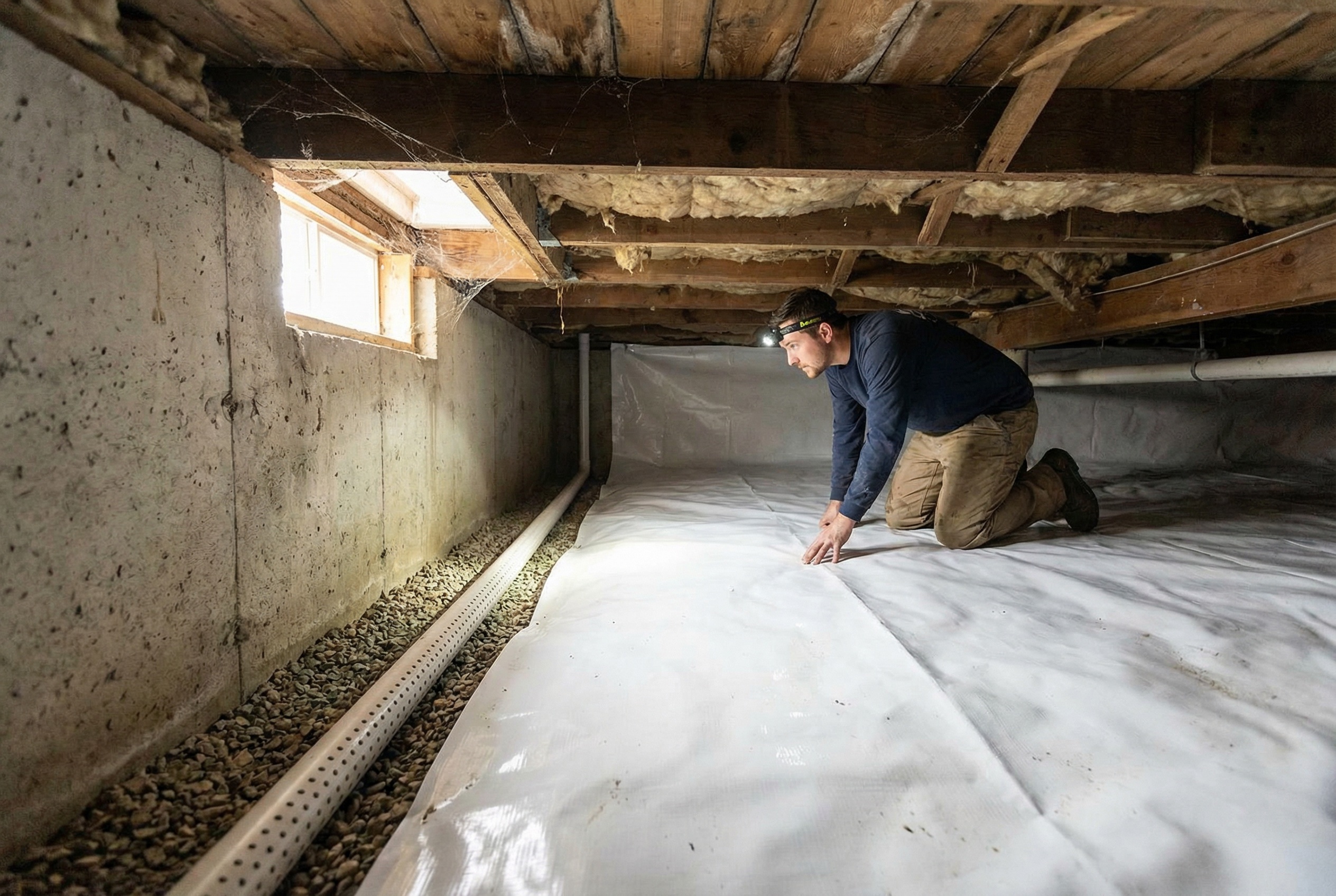
How Crawlspace Waterproofing Protects Virginia Homes
Crawlspace waterproofing is one of the most effective ways to protect homes in coastal Virginia from long-term moisture damage. In areas like Chesapeake, Norfolk, and Virginia Beach, heavy rain, high humidity, and water-retaining soil all contribute to moisture collecting beneath homes. Once that moisture gets into a crawlspace, it can lead to mold, wood damage, and air quality issues inside the home.
Many homeowners don’t realize how much of an impact the crawlspace has on the rest of the house. Even small amounts of moisture can build over time, especially in a humid environment like Hampton Roads. Understanding how crawlspace waterproofing works can help you prevent problems before they turn into expensive repairs.
Why Crawlspaces in Virginia Are Prone to Moisture
Homes in this region face a combination of conditions that make moisture difficult to avoid. Coastal Virginia has long periods of high humidity, and the soil around homes often holds water after rainfall. When the ground becomes saturated, moisture naturally moves toward the crawlspace.
In many older homes, crawlspaces are vented. The idea was that outside air would help dry the space, but in humid climates, that approach often has the opposite effect. Warm, moist air enters through vents and condenses when it hits cooler surfaces under the home.
This ongoing cycle allows humidity to build up beneath the structure. According to the U.S. Environmental Protection Agency, controlling moisture is essential for preventing mold growth and maintaining healthy indoor air.
Without proper moisture control, crawlspaces can remain damp year-round, even when there is no visible standing water.
Signs You May Need Crawlspace Waterproofing
Many crawlspace moisture problems start quietly. Homeowners often notice signs inside the home before they ever look underneath it.
A musty smell is one of the first indicators. This odor usually comes from damp materials or mold developing beneath the home. Over time, that air can move upward into living spaces.
You may also notice higher indoor humidity, especially during the summer months. If your home feels damp even when the air conditioning is running, moisture in the crawlspace could be contributing to the problem.
Other warning signs include sagging insulation, condensation on ductwork, or visible mold growth on wooden framing. In some cases, homeowners may find actual water in crawlspace areas after heavy rain.
These issues often point to underlying moisture problems that will continue unless they are properly addressed.
How Crawlspace Waterproofing Works
Crawlspace waterproofing focuses on controlling both water intrusion and humidity beneath the home. The goal is to create a dry, stable environment that protects the structure above it.
In many cases, waterproofing begins with managing groundwater. This may involve improving drainage around the foundation or installing systems that direct water away from the crawlspace.
Another key component is preventing moisture from evaporating into the air. Vapor barriers are often installed over exposed soil to reduce the amount of moisture entering the crawlspace environment.
For homes dealing with ongoing humidity issues, a more comprehensive approach such as crawlspace encapsulation may be recommended. Encapsulation seals the crawlspace and helps maintain consistent humidity levels.
These solutions are typically part of a broader set of crawlspace services designed to address moisture and structural concerns together.
How Waterproofing Protects Your Home Over Time
When moisture is controlled beneath the home, the benefits extend far beyond the crawlspace itself. Dry conditions help preserve the wooden framing that supports the house, reducing the risk of rot or long-term structural weakening.
Crawlspace waterproofing can also improve indoor air quality. Because air from beneath the home naturally moves upward, reducing moisture in the crawlspace often leads to a drier and more comfortable living space.
In addition, controlling crawlspace humidity can help heating and cooling systems operate more efficiently. Homes with excessive moisture often feel harder to cool during the summer, which can increase energy use.
Over time, addressing moisture issues early can help avoid more serious repairs. In some cases, ongoing water exposure can contribute to foundation movement or damage that may require additional work through services like foundation repair.
When to Schedule a Crawlspace Inspection
If you’ve noticed signs of moisture or water in crawlspace areas, it’s a good idea to have the space inspected before the problem worsens. Many moisture issues develop gradually, and early intervention can make a significant difference in both cost and scope of repairs.
A professional inspection can identify where the moisture is coming from and what type of solution is appropriate for your home. Every property is different, especially in coastal Virginia where soil conditions and drainage can vary from one neighborhood to another.
Hawk Crawlspace & Foundation Repair provides inspections and practical solutions tailored to homes in Chesapeake and the surrounding Hampton Roads area. If you’re dealing with crawlspace moisture or humidity, you can request a free inspection here: https://hawkcrawlspaceandfoundationrepair.com/contact/.
Frequently Asked Questions About Crawlspace Waterproofing
What does crawlspace waterproofing include?
Crawlspace waterproofing typically includes drainage improvements, vapor barriers, and moisture control systems designed to keep the space dry and reduce humidity.
Is crawlspace waterproofing necessary in Virginia?
In many cases, yes. The humid climate and soil conditions in coastal Virginia make crawlspaces especially prone to moisture problems.
How is waterproofing different from encapsulation?
Waterproofing focuses on preventing water intrusion and managing moisture, while encapsulation involves sealing the entire crawlspace to control humidity more completely.
Can waterproofing help with mold problems?
Yes. By reducing moisture levels, crawlspace waterproofing can help limit the conditions that allow mold to grow beneath the home.