
How Summer Storms Affect Your Foundation
Summer in Hampton Roads means heat, humidity, and storms that can drop two or three inches of rain in under an hour. Most homeowners watch the weather, wait for it to pass, and move on. But what’s happening under and around your house during those storms, and in the days after, is worth paying attention to. Foundations in this region take a beating from the seasonal weather cycle, and the damage tends to be cumulative rather than dramatic. You won’t usually see a storm crack your foundation in one shot. You’ll see the effects of five years of storms that nobody addressed.
What Summer Storms Actually Do to the Soil Around Your Foundation
The soil in Chesapeake and the surrounding area is the starting point for most storm-related foundation issues. A significant portion of it is clay-heavy, and clay behaves in ways that put real stress on foundations over time. When rain saturates clay soil, it expands. When it dries out, it contracts and pulls away. That cycle happens every season, and every cycle puts some amount of movement and pressure on whatever is sitting in or on that soil.
During a heavy summer storm, saturated soil becomes heavy and exerts lateral pressure against foundation walls. This is hydrostatic pressure, and it’s not trivial. Water weighs about 62 pounds per cubic foot, and when the soil around your foundation is holding that water against your walls, the force adds up quickly. Over time, that pressure is what causes foundation walls to crack, bow inward, and in serious cases, fail structurally.
The flip side happens when things dry out. After the storm passes and a dry stretch follows, that same clay soil shrinks back. If it shrinks unevenly, which it usually does, the foundation loses support in some spots and not others. That differential movement is what produces the diagonal cracks in brick and drywall that are so common in older Hampton Roads homes. The USGS has documented ongoing land subsidence in the Hampton Roads region, which compounds the natural movement already happening from soil expansion and contraction.
Drainage Problems That Make It Worse
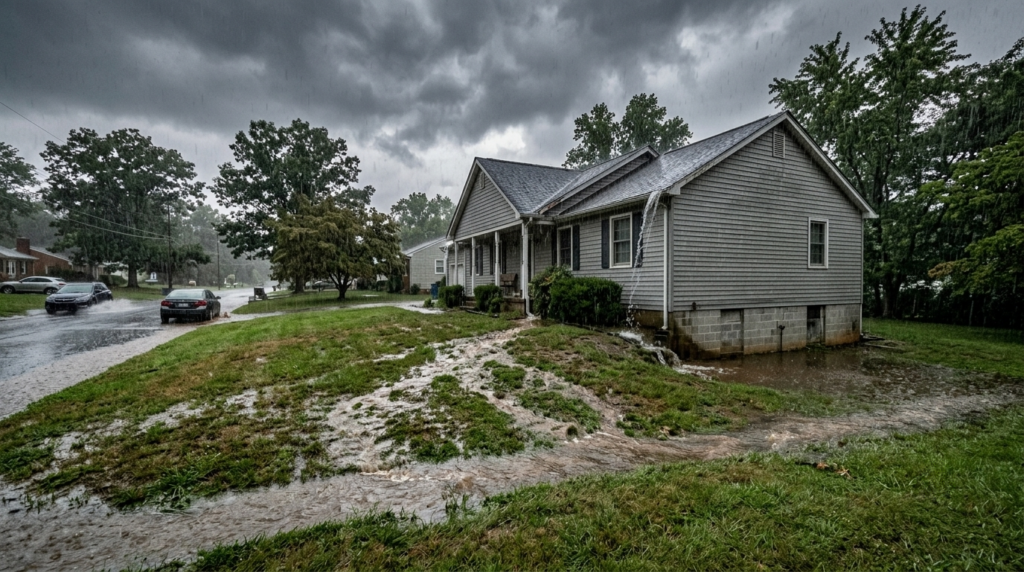
A well-drained yard handles storm water before it ever becomes a foundation problem. The issue is that a lot of homes in this area, especially older ones, have grading or drainage situations that work against them. If the ground slopes toward the house, water from a heavy storm funnels directly toward the foundation. If gutters are dumping runoff at the base of the wall rather than carrying it away, every storm is adding water to the soil right where you don’t want it.
Clogged or undersized gutters are a surprisingly common contributor to foundation issues. When gutters overflow, water pours down the exterior wall and saturates the soil at the foundation line repeatedly. It’s easy to overlook because the damage is invisible and slow, but the soil right next to the footing is getting soaked storm after storm while the rest of the yard drains normally. Over a few years that adds up.
French drains and proper perimeter grading are what address this at the source. A French drain intercepts water before it reaches the foundation and redirects it away from the house. It’s not the most exciting solution, but it’s one of the more effective ones for homes dealing with repeated storm-related water intrusion. Combined with downspout extensions that carry water at least six feet from the foundation, the drainage situation around a home can usually be improved significantly without major work. You can read more about foundation drainage and stabilization services and how they apply to storm-related issues.
What to Look For After a Major Storm
You don’t need to be a contractor to do a useful post-storm check. There are a few things worth looking at after any storm that brought significant rainfall.
Walk the perimeter of the house and look for pooling water, especially near the foundation. Note any areas where water seems to be sitting longer than the rest of the yard. Check your gutters and downspouts to make sure they’re clear and directing water away from the house. Look at the foundation walls themselves for any new cracking or for efflorescence, the white chalky mineral deposits that show up where water has been moving through concrete or block repeatedly.
Inside, pay attention to doors and windows that suddenly feel harder to operate than they did before the storm. A door that racked slightly, meaning the frame shifted just enough that the door no longer closes cleanly, can indicate foundation movement. Check the basement or crawl space for water intrusion, new cracks in the walls, or any change in how the space looks or smells. A musty odor that wasn’t there before a storm is often the first sign that water got in somewhere.
None of these signs on their own necessarily mean something catastrophic is happening. But patterns matter. If you’re noticing the same things after every major storm, or if something that was minor last summer is visibly worse this year, that’s worth having looked at. FEMA’s coastal construction guidance specifically identifies drainage management and soil behavior as central concerns for foundations in coastal plain environments like Hampton Roads, not secondary considerations.
When Storm Damage Becomes a Foundation Repair Problem
The line between “keep an eye on it” and “get this fixed” comes down to whether the symptoms are active and progressing. Stable cracks that have been the same for years are usually just evidence of past settling. Cracks that are widening, walls that are visibly bowing, or floors that have changed noticeably over a season are signs of ongoing movement that isn’t going to stop on its own.
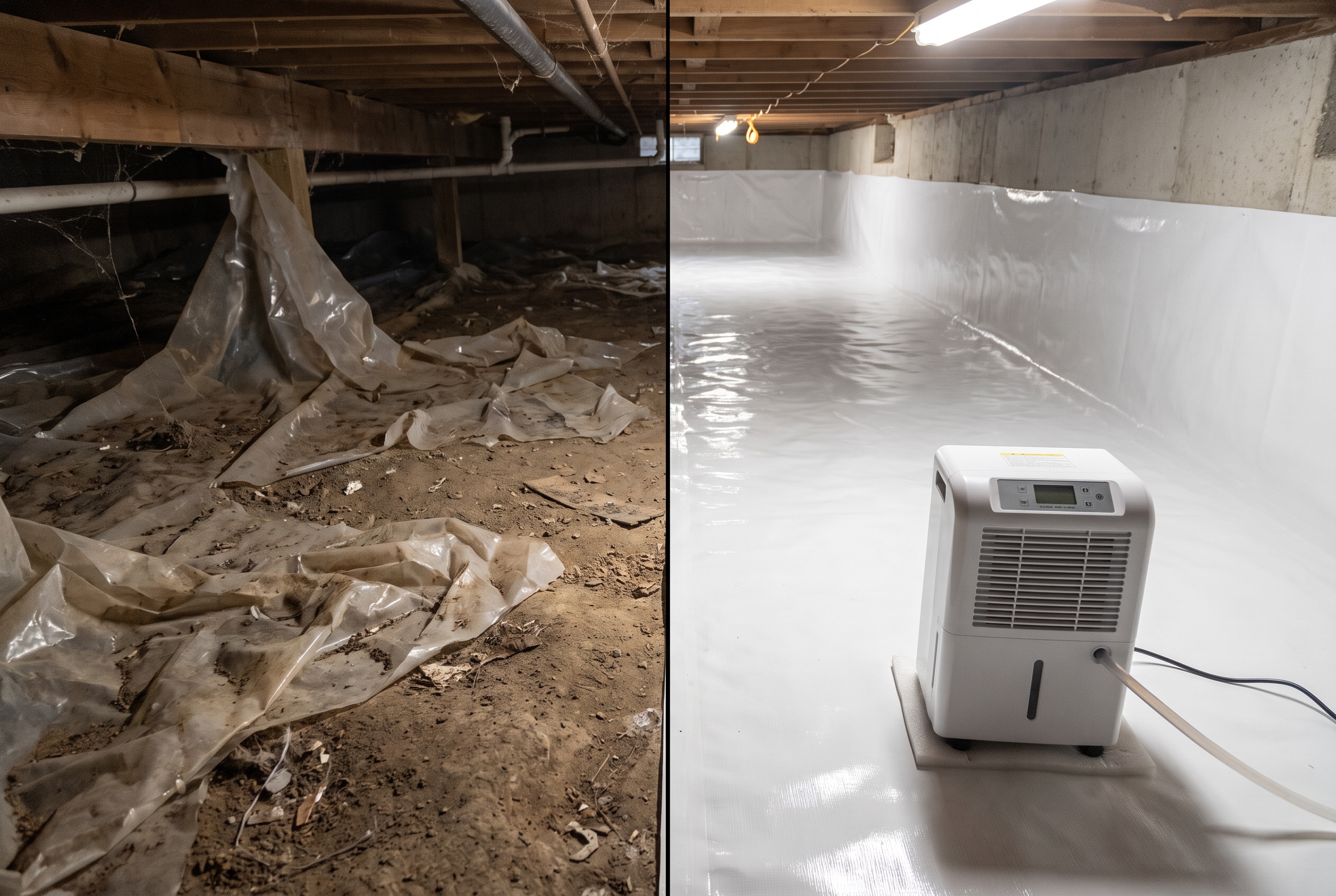
Repeated storm flooding in a crawl space is in the same category. One flood that dries up quickly is different from a crawl space that holds water for days after every major rain. The second situation means the framing is getting repeatedly wetted and dried, which is exactly the cycle that leads to rot, mold, and eventually structural damage to the floor system. A proper crawl space encapsulation with drainage addresses this at the source rather than just cleaning up after each event.
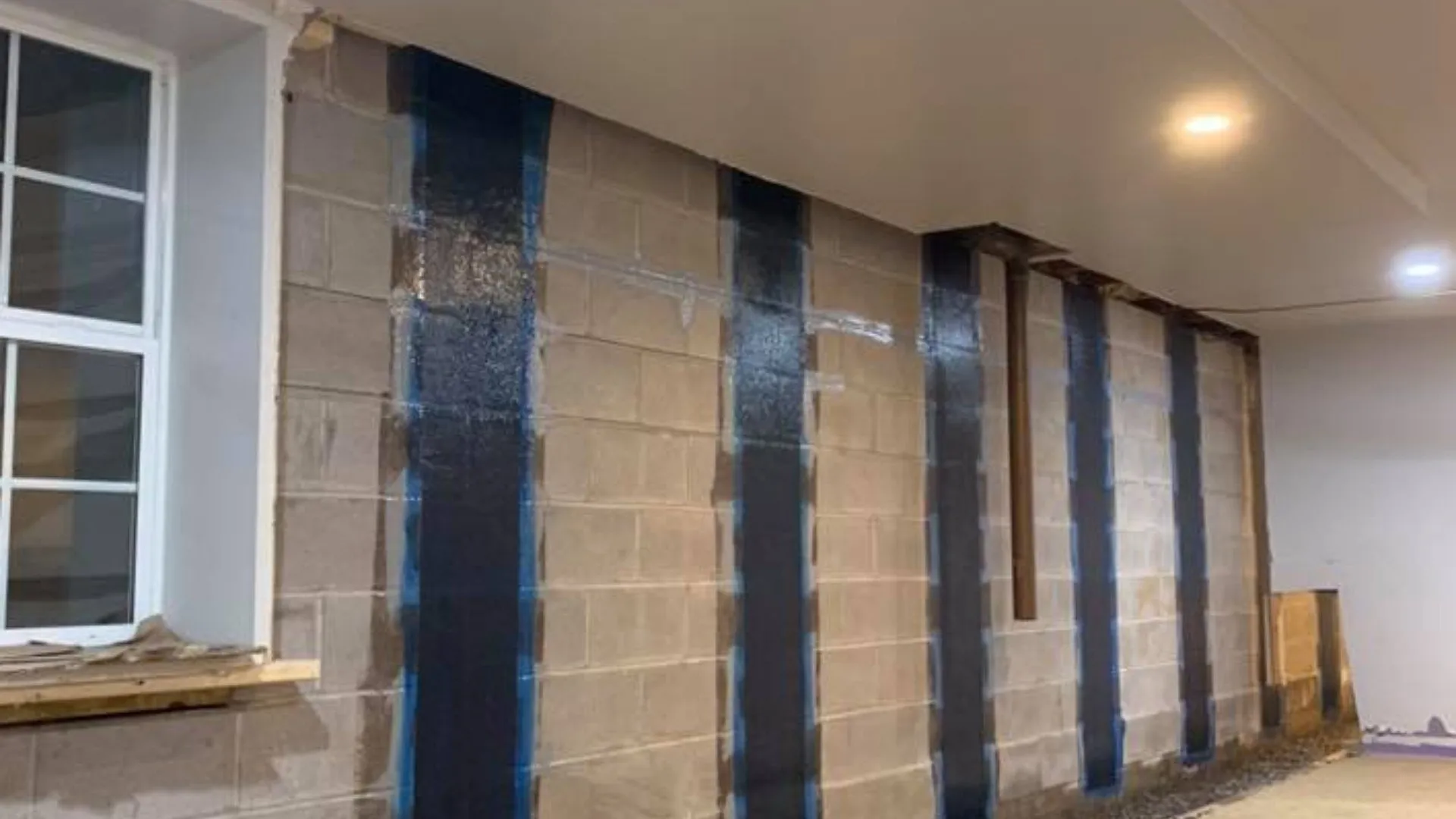
For foundation walls dealing with cracking or movement from hydrostatic pressure, the repair approach depends on severity. Minor cracking with no active movement can often be monitored. Bowing walls or cracks that are widening need stabilization before the next storm season adds more pressure to an already stressed wall. Waiting on those tends to make the eventual repair more involved and more expensive.
If you’ve had a rough storm season and want to know where your foundation and crawl space actually stand, a free inspection is the most straightforward way to find out. At Hawk we’ll get under the house, check the foundation, and give you a straight read on what we find. Schedule yours here.
Frequently Asked Questions
Can a single storm cause serious foundation damage?
It’s possible but not common. Most foundation damage from storms is cumulative, the result of repeated wetting and drying cycles over several seasons rather than one catastrophic event. A major storm can accelerate existing issues or make underlying problems visible for the first time, but it rarely creates a serious structural problem in a foundation that was otherwise in good shape. The exception would be extreme flooding or erosion that removes soil support from beneath the footing, which is less common in most residential situations.
How do I know if my foundation cracks are from storm damage or something else?
Context and pattern help a lot here. Cracks that appeared or visibly widened after a wet season, especially diagonal cracks near corners of windows and doors or stair-step cracks in brick, are consistent with differential settlement driven by soil movement. Horizontal cracks in a basement or crawl space wall are more associated with lateral pressure from saturated soil. A professional inspection can usually tell you whether a crack is active, what’s causing it, and whether it needs repair or just monitoring. You can read more about what to watch for in our post on signs of foundation problems.
Should I fill foundation cracks myself after a storm?
Filling a crack without understanding why it appeared doesn’t fix anything, and it can actually make it harder to track whether the crack is still growing. Hydraulic cement or epoxy injection has its place as part of a proper repair, but slapping something in a crack to make it look better doesn’t address the soil or drainage conditions causing it. If a crack is new or has changed recently, get it looked at before doing anything to it.
How does storm season in Hampton Roads compare to other regions for foundation risk?
Hampton Roads is genuinely one of the more challenging environments for foundations in the mid-Atlantic. The combination of expansive clay soils, a water table that’s close to the surface in many neighborhoods, regular tropical storm activity, and high baseline humidity creates conditions that put consistent stress on foundations throughout the year. The storm season just intensifies a moisture environment that’s already working on homes year-round, which is why proactive drainage and crawl space management matters here more than it would in a drier or more geologically stable region.
Share with others

Contact Forever Guard Today!
Forever Guard will do everything we can to ensure your experience with us is excellent.