If you live in Chesapeake or Suffolk, you aren’t just living on dirt; you’re living on a geological sponge. The Tidewater region is notorious for its high concentration of expansive clay. For homeowners, this soil creates a relentless “swell-and-shrink” cycle that acts as a slow-motion wrecking ball for traditional shallow foundations.
The Science of “Soil Heave”
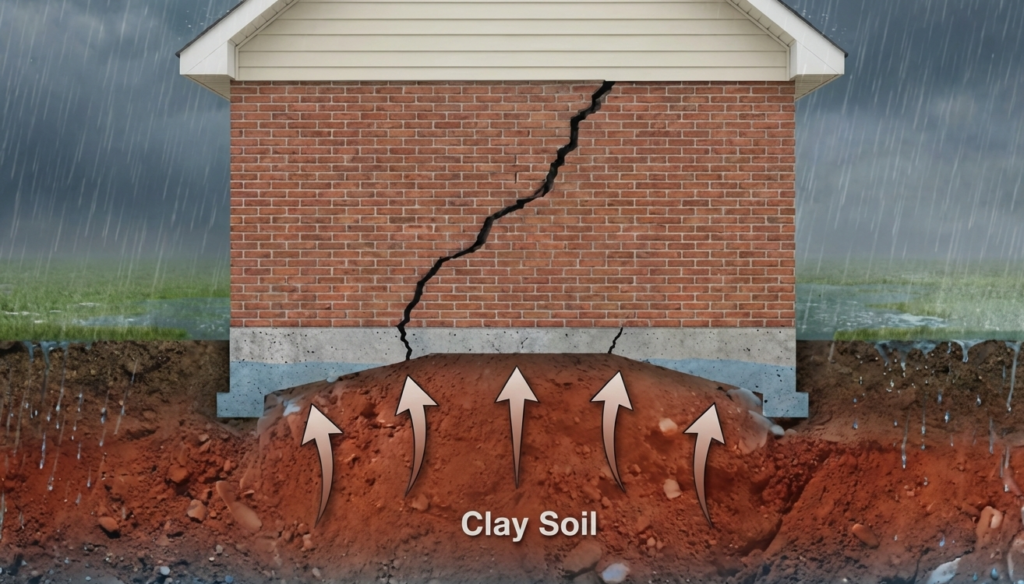
When our heavy Virginia rains arrive, the clay particles in the ground absorb water and expand significantly. This creates hydrostatic pressure—a massive force of water-saturated soil pushing against your crawlspace walls. When the soil expands upward, it’s known as “soil heave.” Conversely, during our humid but dry summer stretches, the clay shrinks, leaving voids beneath your footings.
The Signature of Damage
This constant movement is more than the house “settling.” It is structural fatigue. You’ll often see the evidence in your home’s exterior:
- Diagonal “Step” Cracks: These typically appear in brickwork, following the mortar lines in a stair-step pattern.
- Sticking Doors and Windows: When the foundation shifts, the frames become trapezoids rather than rectangles.
- Gaps in Trim: Crown molding or baseboards pulling away from the wall.
At Hawk Crawlspace and Foundation Repair, we understand that you can’t change the soil, but you can change how your home interacts with it. By stabilizing your foundation with deep-foundation solutions, we help your home remain “the rock” even when the ground beneath it is anything but.
Share with others

Contact Forever Guard Today!
Forever Guard will do everything we can to ensure your experience with us is excellent.